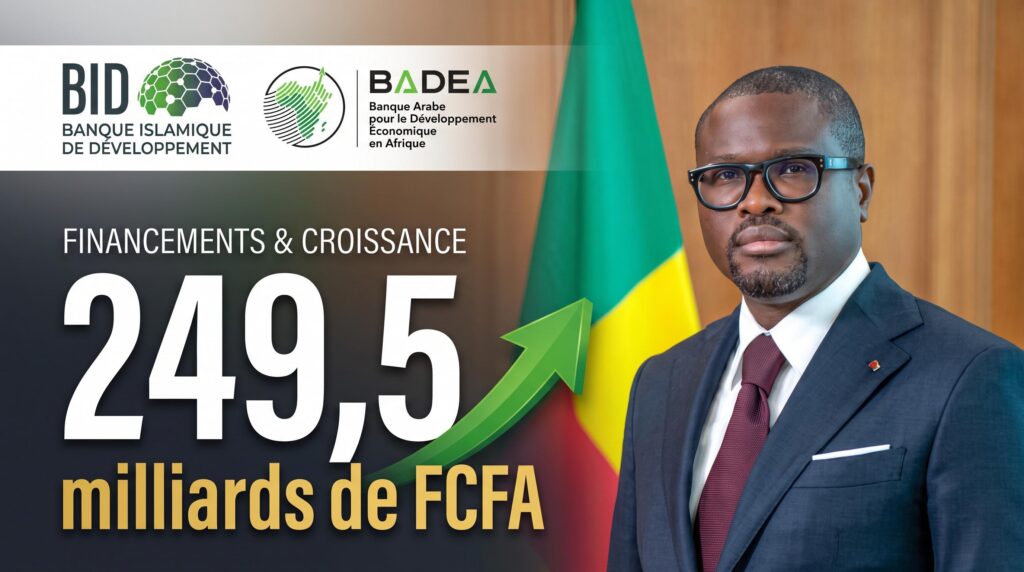
The Republic of Benin has secured a historic $440 million financing package—equivalent to 249.5 billion CFA francs—during the 2026 annual meetings of the International Monetary Fund (IMF) and World Bank in Bangkok. This funding, spread across three agreements with the Islamic Development Bank (IsDB) and the Arab Bank for Economic Development in Africa (BADEA), is set to reshape public infrastructure while reinforcing the nation’s financial credibility. But what does this mean for everyday citizens, local enterprises, and long-term economic stability?
From negotiation tables to real-world impact
The three financing agreements were finalized on October 12 and 13, 2026, marking a significant milestone in Benin’s ongoing effort to diversify its funding sources. While global financial conditions remain tight, with high borrowing costs and growing debt concerns, the country has managed to secure competitive terms, underscoring its growing reputation as a reliable borrower. This credibility is not accidental—it reflects years of disciplined fiscal policy, robust revenue collection, and strategic debt management.
The $440 million injection is more than just a financial figure; it represents a deliberate push to fund large-scale public works, energy projects, and transport networks that directly influence the daily lives of Beninese citizens and the operational environment for businesses. From smoother commutes to reliable electricity, these investments aim to reduce inefficiencies that have long constrained productivity and economic growth.
Balancing growth with fiscal responsibility
While the funding boost is welcome, it has reignited debates about public debt sustainability. Critics caution against over-borrowing, while supporters argue that strategic debt can act as a catalyst for development. The key lies in how these funds are deployed.
According to IMF data, Benin has made remarkable progress in fiscal consolidation. Between 2021 and 2024, the country reduced its budget deficit from 7.2% to 3.1% of GDP. Public debt levels have also shown signs of stabilization after accounting for statistical adjustments related to state-owned enterprises. These improvements reflect deliberate efforts to curb wasteful spending, expand tax bases, and improve expenditure tracking.
Yet, the challenge remains: ensuring that borrowed funds generate tangible returns. Investments in roads, bridges, and energy plants must translate into reduced transport costs, lower business overheads, and expanded access to electricity—especially in rural areas. Only then can public debt be deemed not just manageable, but productive.
How debt can fuel local economies
- Productivity gains: Better roads and logistics reduce transit times and costs for farmers and manufacturers.
- Job creation: Construction and operational phases of infrastructure projects generate employment in construction, maintenance, and related services.
- Revenue growth: Improved economic activity leads to higher tax collections, strengthening fiscal capacity.
- Social equity: Access to reliable electricity and clean water in underserved regions reduces urban-rural disparities.
The role of transparent execution and accountability
The success of this financing package depends not only on securing funds, but on how they are managed. Transparency in procurement, real-time monitoring of project timelines, and independent audits are critical to prevent cost overruns and ensure value for money.
Benin’s public finance reforms—highlighted in the IMF’s April 2026 assessment—include enhanced revenue administration, stricter public expenditure controls, and proactive debt management strategies. These measures are designed to maintain investor confidence while ensuring that debt remains within sustainable limits.
Moreover, the involvement of multilateral institutions like IsDB and BADEA adds an extra layer of oversight. These institutions often conduct their own due diligence, monitoring project progress and financial compliance. This external scrutiny helps mitigate risks of mismanagement and strengthens project outcomes.
What citizens and businesses can expect
For families across Benin, the impact will be felt through improved access to essential services. New and rehabilitated roads will shorten travel times, lower transport costs for goods, and make rural areas more connected to markets. In the energy sector, expanded power generation and distribution can reduce blackouts and lower electricity bills—directly benefiting households and small businesses.
Entrepreneurs, particularly in agribusiness and light manufacturing, stand to benefit from reduced logistical costs and improved energy reliability. These factors enhance competitiveness, attract investment, and create a more dynamic economic environment.
Sustainability and long-term vision
A key question is whether Benin can sustain this momentum without compromising its fiscal health. The answer lies in a balanced approach: continue mobilizing external funds for high-impact projects, while simultaneously strengthening domestic revenue mobilization and expenditure efficiency.
The 2026 funding agreements are a step forward, but their true value will be measured in the years ahead. Will the infrastructure projects be completed on time and within budget? Will the expected economic and social benefits materialize? And will the debt burden remain manageable as repayment schedules mature?
One thing is clear: Benin’s ability to transform borrowed resources into lasting infrastructure and inclusive growth will determine whether this financial strategy secures its long-term prosperity—or becomes a future burden.