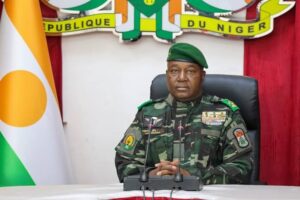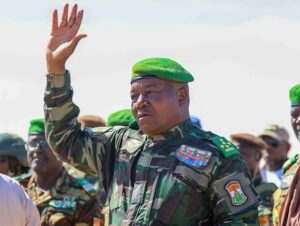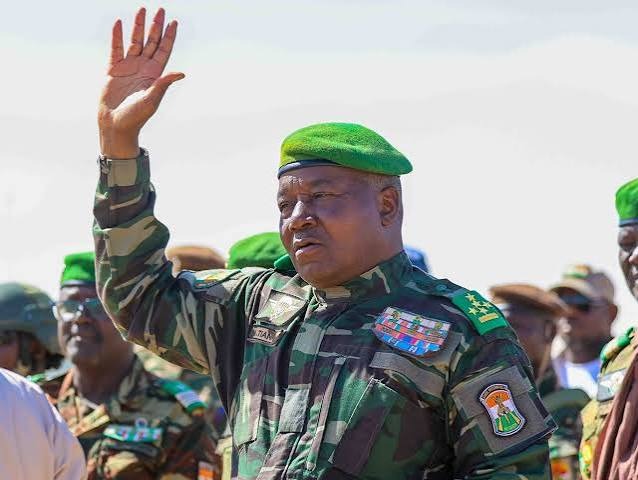
The military regime in Niger, led by General Abdourahamane Tiani, has escalated a high-stakes gamble by demanding over 3,000 billion CFA francs (approximately $5 billion) from China National Petroleum Corporation (CNPC) within a 45-day ultimatum. The move, framed as a corrective measure for alleged delays in oil revenue repatriation, has sent shockwaves through the country’s already fragile economy.
With public coffers nearly empty and facing severe financial strain, the transitional government is attempting to plug a gaping hole in its finances through what many analysts describe as institutionalized extortion. The junta’s financial desperation has reached new heights, exposing the country to unprecedented economic risks.
Financial desperation fuels a risky ultimatum
Niger’s economic crisis has deepened in recent years, compounded by massive budget cuts and uncontrolled military spending. The government’s public spending has been slashed from 3,033.33 billion CFA francs to 2,749.55 billion, while the military regime struggles to justify its authority and expenditures.
The regime’s justification for the $5 billion demand hinges on claims that only 105 billion CFA francs in foreign currency have been repatriated to Niger over two years from the Agadem oil block. However, this narrative conveniently ignores the complexities of international financial arrangements and the fact that Niger secured a $400 million loan from China in 2024, to be repaid from oil revenues.
Seven crippling demands that could strangle CNPC
To back its ultimatum, the Nigerien government has outlined seven sweeping demands designed to cripple CNPC’s operations:
- Cash injection mandates: Immediate repatriation of massive sums in CFA francs under an unrealistic timeline.
- Forced localization quotas: Unilateral imposition of local hiring quotas, disconnected from technical market realities, reaching up to 90% of the workforce.
- Pipeline oversight seizure: Overturning the existing audit of the Niger-Benin oil pipeline (valued at $2.3 billion) to impose unilateral tariff revisions.
- Refinery takeover: Hostile takeover of the SORAZ refinery’s governance, gradually replacing Chinese executives.
- Reserve manipulation: Unilateral reassessment of Agadem’s oil reserves to renegotiate higher tax shares.
- Coerced investments: Pressure to inject an additional $1 billion into exploration projects (Dinga Deep and Abolo-Yogou).
- Administrative infiltration: Placement of junta-appointed officials within CNPC’s decision-making bodies.
Diplomatic brinkmanship with dire consequences
This aggressive move against China’s leading investor is not an isolated incident but the culmination of a series of intimidation tactics. Earlier this year, Chinese executives were expelled within 48 hours, and recurring pressure campaigns have been escalated into full-blown extortion. The regime’s actions reveal a dangerous disregard for economic stability and long-term relationships.
If CNPC complies with the ultimatum, Niger risks losing its primary foreign investor, leading to a potential exodus of Chinese capital. If it resists, the country may face further economic isolation, deeper financial turmoil, and a loss of credibility on the global stage. The junta’s gamble could backfire spectacularly, leaving Niger in an even more precarious position than before.