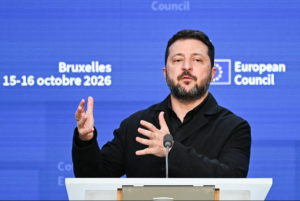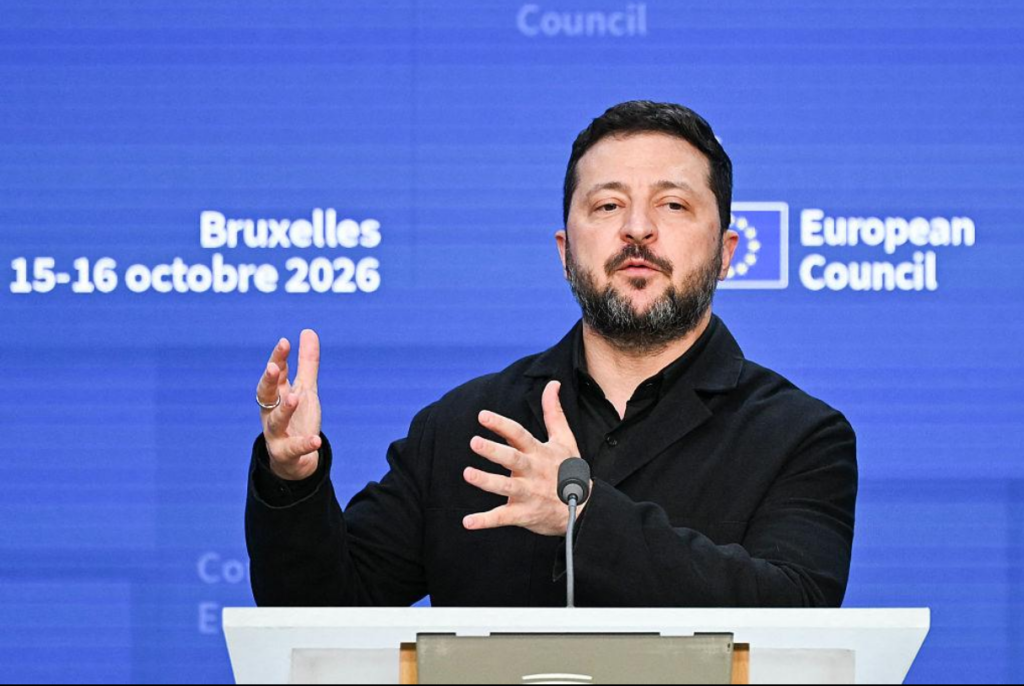
The economic and human toll of Ukraine’s prolonged conflict could deepen significantly under a proposed frontline freeze, as President Volodymyr Zelensky signals readiness to halt active hostilities—while firmly rejecting any territorial concessions to Russia. On 21 October 2026, Zelensky announced Ukraine’s willingness to pause military operations along current battle lines, framing the move as a prerequisite for negotiations on long-term security guarantees with Western allies. Yet, in a subsequent interview with CNN, he emphasized that such a freeze would not equate to recognizing Russian control over occupied regions or surrendering Ukrainian-held areas, particularly in the Donbass.
Frontline pause: a fragile first step toward stability
Zelensky’s proposal to freeze the current military positions, outlined during a 21 October discussion with Fox News, positions a ceasefire as a pragmatic measure to halt the bloodshed and destruction that have plagued Ukraine for years. The president argued that suspending hostilities could create space for political dialogue, offering a temporary reprieve for war-weary civilians and businesses struggling to recover. However, he stressed that this pause would represent a tactical move—not an endorsement of Russia’s territorial claims.
The distinction is critical: a frozen front would maintain the existing battlefield lines without legally validating Moscow’s annexation demands. For Ukraine, this approach separates immediate military realities from the thorny issue of sovereignty, which remains non-negotiable. Still, the proposal hinges on Moscow’s willingness to accept a truce without securing formal recognition of its occupied zones.
Territorial sovereignty: Kiev’s unyielding red line
In his 22 October CNN interview, Zelensky underscored Ukraine’s refusal to cede any land, declaring, “Our land is vital because it’s about the people, not kilometers.” His remarks highlighted the human cost of the war and the nation’s resolve to preserve its territorial integrity, even as the frontline freeze discussion gains traction. The Donbass region, in particular, remains a flashpoint: Russia demands full control, while Ukraine insists on retaining its holdings, rejecting any scenario that legitimizes Moscow’s gains.
This stalemate reveals the core challenge of negotiations: stabilizing the front without conceding political leverage. For Kiev, a ceasefire must not be misconstrued as surrender, yet for Moscow, territorial control is a non-negotiable pillar of any potential agreement. The gap between these positions risks rendering any truce temporary, with the ever-present threat of renewed conflict looming over civilians and economic recovery efforts.
Security guarantees: the linchpin of a lasting peace
Beyond the battlefield, Ukraine’s push for robust security guarantees from the U.S. and European partners emerges as a decisive factor in the viability of any truce. Zelensky’s vision requires more than a pause in fighting; it demands ironclad commitments to deter Russian aggression post-ceasefire. Without such assurances, he warned, any lull in hostilities could merely delay, rather than prevent, further bloodshed.
The nature of these guarantees remains undefined. Would Western allies pledge military support, diplomatic backing, or economic sanctions in response to Russian violations? And how would they reconcile their own strategic interests with Ukraine’s needs? These questions grow more urgent amid recent strains in U.S.-Ukraine relations, particularly regarding military aid and communication systems critical to Kyiv’s defense.
Europe’s role is equally pivotal. While the EU has provided substantial support, Ukraine seeks a long-term security framework that extends beyond humanitarian and financial assistance. The willingness of European nations to underwrite such commitments could determine whether a frontline freeze translates into a durable peace—or merely a precarious intermission.
Diplomatic opening or deadlock in disguise?
Zelensky’s proposal marks a diplomatic overture, but it falls short of signaling an imminent peace deal. Fundamental disagreements persist over territory, ceasefire terms, and the security mechanisms required to prevent a resumption of hostilities. Russian President Vladimir Putin’s 22 October remarks, expressing openness to U.S.-mediated talks while insisting on addressing Moscow’s security concerns, further underscore the chasm between the two sides.
At its heart, Ukraine’s strategy tests a delicate balance: can a frontline freeze exist independently of territorial resolutions? For Kiev, the answer lies in decoupling military realities from legal recognition of borders. Yet, without mutual acceptance of the freeze’s terms and credible security backing, the risk of collapse remains high. As long as Russia and Ukraine remain at odds over sovereignty and post-war guarantees, the specter of prolonged conflict—and its devastating economic and civilian consequences—will linger.
For now, Ukraine walks a tightrope, attempting to carve a diplomatic path that halts the fighting without sacrificing its land or future. The success of this approach may well hinge on whether the West can deliver the security assurances needed to make a truce stick—or whether the cost of inaction proves too steep for a nation already stretched thin.