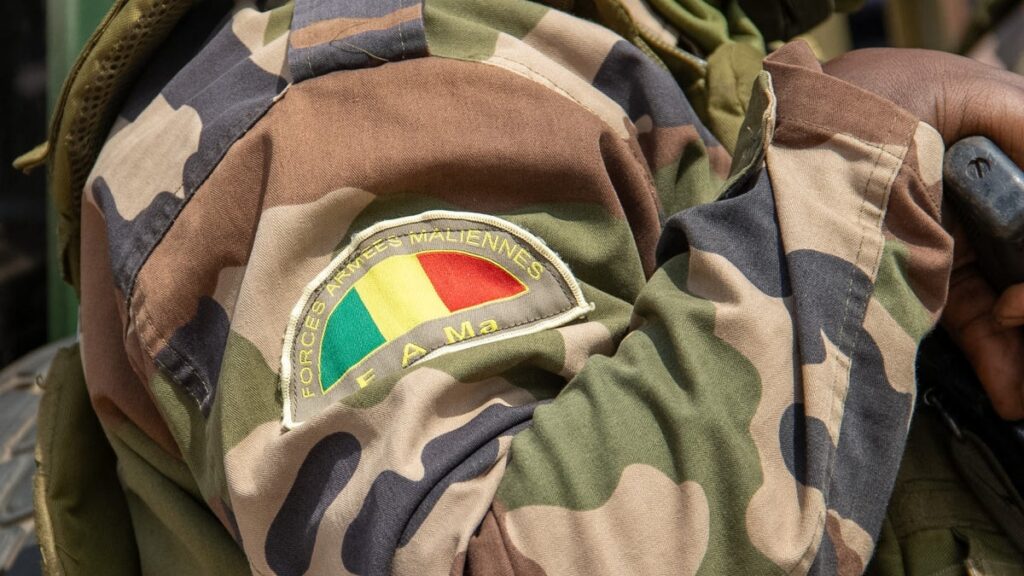
Armed forces and traditional hunters accused of targeted killings in central Mali
In the volatile Mali’s Ségou region, a new wave of violence has left at least 31 civilians dead after coordinated attacks by the Malian armed forces and allied Dozos militias on two villages in early and mid-October. The incidents occurred in an area under the control of the Group for the Support of Islam and Muslims (GSIM), an Al-Qaeda-linked jihadist coalition.
The first assault took place on October 2 in Kamona, where soldiers and Dozos fighters stormed the village searching for men. Survivors reported that soldiers, arriving in seven pick-ups and three armored vehicles, along with Dozos militants on motorcycles, executed at least 21 men and set fire to 10 homes. The attackers accused the villagers of collaborating with the GSIM, though witnesses stated that jihadist fighters had already fled before the military arrived. No clashes between the army and armed groups were reported.
« Those who couldn’t escape were rounded up and executed, » a survivor recounted. The victims, aged 20 to 65, were found under a tree and in surrounding areas, their bodies riddled with bullets. Fourteen additional bodies were recovered elsewhere in the village, with some showing signs of extreme violence, including crushed skulls and broken limbs. The military also torched at least 10 huts and three barns belonging to Fulani residents.
A second attack struck Balle on October 13, where soldiers and Dozos fighters killed nine men and a 55-year-old woman. The victims, aged 22 to 67, were shot point-blank, some with broken bones. The attackers also looted over 100 cattle before retreating. A local testified that the military operation was framed as a « offensive reconnaissance » mission, claiming the neutralization of « around twenty terrorists. » However, residents insisted that Balle had been under GSIM control for years, with the group resolving local disputes and collecting zakat taxes. « The army doesn’t distinguish between us and them, » a villager explained.
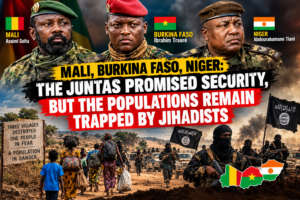
Human rights monitors have documented similar patterns of abuse in central Mali, where state forces and allied militias have been implicated in unlawful killings, village burnings, and looting. The violence follows a surge in GSIM attacks near Bamako, including a blockade that cut off fuel supplies to the capital and forced the temporary closure of schools and universities in September.
International humanitarian law strictly prohibits attacks on civilians, executions, and other war crimes. While Mali withdrew from the International Criminal Court (ICC) in 2025, its obligations under the Rome Statute remain in effect until September 2026. The ICC previously opened an investigation into alleged war crimes in Mali, including those attributed to government forces, militias, and armed groups since 2012.
The African Union has yet to take decisive action despite its mandate to uphold peace and security in the region. Analysts warn that unchecked violence risks further destabilization, with civilians bearing the brunt of the conflict’s escalation.
Calls for accountability and urgent investigations
Human rights advocates urge the Malian authorities to conduct transparent and impartial investigations into the massacres. « The October killings in Ségou are the latest in a long string of atrocities linked to the Malian army and its allied militias, » stated a senior researcher. « Without credible justice, these cycles of violence will continue unabated. »
Investigations into the incidents are ongoing, with survivors and community leaders providing crucial testimonies. However, the lack of response from Malian defense and justice officials to formal inquiries has raised concerns about the government’s commitment to addressing the crisis.