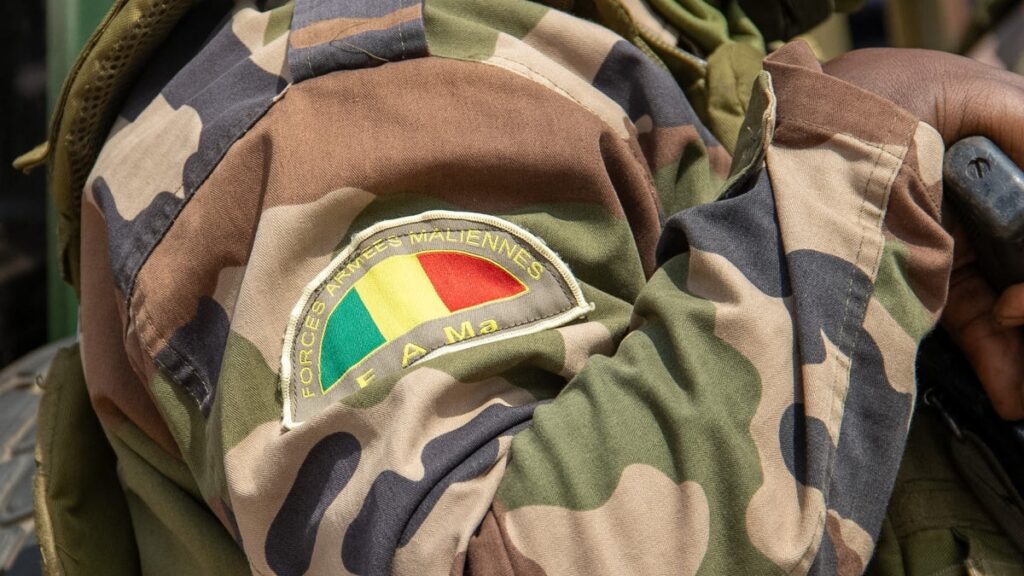
Mali’s military forces and allied militias stand accused of targeted killings and arson in central villages
Over two days in October, soldiers from the Malian Armed Forces and allied dozos militias stormed villages in the Ségou region, resulting in the deaths of at least 31 civilians and the destruction of homes. The incidents occurred on October 2 and 13, with the first attack in Kamona and the second in Balle, approximately 55 kilometers away.
Kamona massacre: soldiers and militias execute villagers
On October 2, around 10 a.m., military personnel arrived in Kamona in at least seven pickup trucks and three armored vehicles, accompanied by dozos on motorcycles. The armed forces, supported by traditional hunters known as dozos—primarily from the Bambara ethnic group—began rounding up men in the village. Many residents had already fled after receiving warnings from GSIM militants about the approaching military.
Witnesses reported that those unable to escape were gathered and executed. “Those who couldn’t flee were assembled and shot,” shared a survivor with investigators. The soldiers and dozos then set fire to at least 10 homes and three storage huts belonging to Fulani residents.
By late afternoon, villagers discovered 17 bodies under a tree and four more bodies to the village’s north. A 40-year-old shepherd, who had hidden with his 9-year-old daughter, described the scene: “The bodies were riddled with bullets. One had a completely crushed head. I saw bullet casings scattered around.”
The victims were all men aged 20 to 65. Villagers later provided a list of 21 names, though some believe additional deaths occurred in the surrounding bush. “We heard at least 15 more men were killed elsewhere,” said a local resident. “But we were too afraid to check.”
Balle attack: civilians targeted in a second brutal raid
Thirteen days later, on October 13, military forces and dozos launched another assault, this time in Balle. Around 1 p.m., five pickup trucks carrying soldiers and at least 30 motorcyclists approached the village. Some residents fled immediately, while others were subjected to violent door-to-door searches. “I didn’t run right away,” recounted a 24-year-old man. “But when I saw soldiers beating men and kicking doors, I hid. From there, I heard gunfire.”
The attackers killed 10 civilians, including nine men aged 22 to 67 and a 55-year-old woman. They also looted at least 100 cattle. A 33-year-old man found the bodies in the village center: “They lay side by side, shot multiple times. Some had broken limbs.”
The victim’s 21-year-old daughter described her mother’s final moments: “She confronted the soldiers, accusing them of mistreating the villagers. They took her to where the men were gathered and shot her.”
Military denies responsibility amid conflicting accounts
The Malian military’s chief of staff issued a statement on October 14, claiming soldiers conducted an “offensive reconnaissance” near Balle, resulting in the “neutralization of about 20 terrorists” and the seizure of military equipment. However, residents disputed this narrative, stating that Balle had been under GSIM control for years. “We pay zakat to them,” said a local man. “If disputes arise, the jihadists resolve them. There are no soldiers here—only them. The army doesn’t distinguish between us and them.”
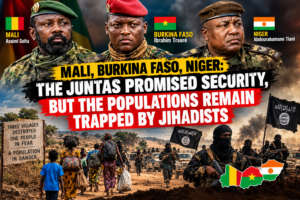
Since 2012, Mali has faced an escalating insurgency involving Islamist armed groups, leading to thousands of civilian deaths and displacing over 400,000 people. Both state forces and armed groups have been implicated in grave abuses, including extrajudicial killings, torture, and arson.
International legal obligations and calls for accountability
Under international humanitarian law, all parties in the conflict must uphold the Geneva Conventions, which prohibit attacks on civilians, executions, and cruel treatment. Despite Mali’s withdrawal from the International Criminal Court (ICC) in September 2025, the country remains bound by the Rome Statute until September 2026. The ICC has been investigating alleged war crimes in Mali since 2013.
Human rights advocates urge stronger action from regional bodies like the African Union, which has yet to take meaningful steps beyond issuing statements of concern. “The AU Peace and Security Council must prioritize Mali,” emphasized a senior researcher. “Regular briefings, diplomatic pressure, and coordinated regional efforts are essential to ensure accountability for atrocities committed by all sides.”