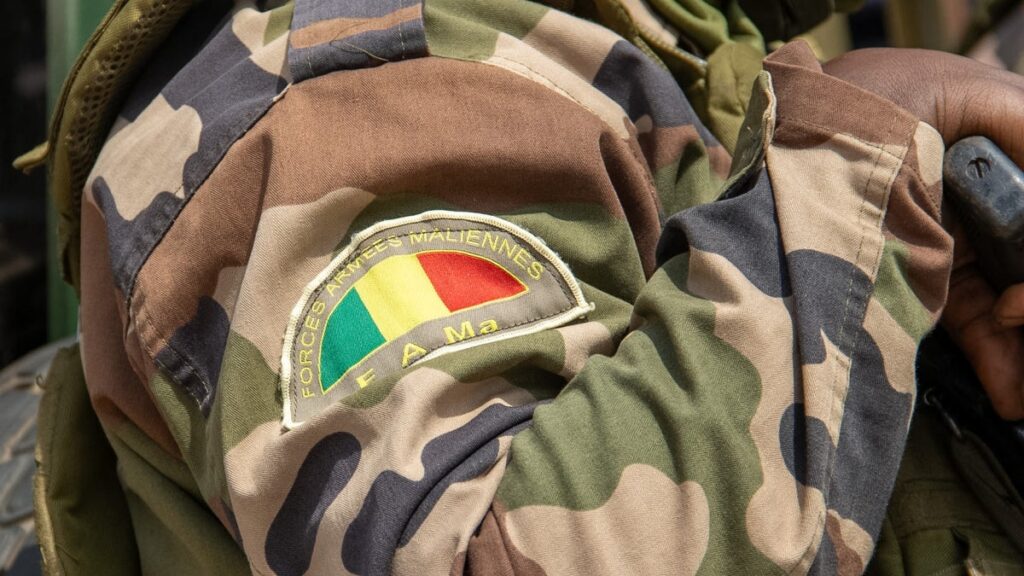
Bamako — In the war-torn heart of Mali, a brutal pattern of violence has escalated as soldiers and allied Dozos militias stand accused of executing at least 31 civilians and torching homes in two villages during early October. The attacks unfolded in the Ségou region, where Islamic extremist factions have long held sway, leaving communities caught in the crossfire between state forces and insurgent groups.
On October 2, coordinated forces comprising Malian army troops and Dozos—traditional hunters from the Bambara ethnic group who have joined counterinsurgency efforts for over a decade—stormed the village of Kamona. Survivors described how soldiers and Dozos rounded up and killed at least 21 men before setting fire to 10 homes. Witnesses reported that Dozos wore traditional amulets, while soldiers donned camouflage uniforms, making their identities unmistakable. Locals fled at the sight of approaching armored vehicles and pickup trucks, but those unable to escape faced summary executions.
«Those who couldn’t run were gathered and shot,» recounted a survivor who hid during the assault. The attackers arrived as Islamic militants from the Group for the Support of Islam and Muslims (JNIM), an Al-Qaeda affiliate, had already warned residents of the impending raid. No clashes between the army and JNIM were reported, leaving the civilian population defenseless.
By the day’s end, 17 bodies were discovered beneath a tree in Kamona, with four more found scattered north of the village. Survivors described bullet-riddled corpses, some with shattered skulls, and spent cartridges littering the ground. A 40-year-old herder, who had taken refuge in an abandoned home with his 9-year-old daughter, later found the grim scene. «The people had been riddled with bullets,» he said. «One man’s head was completely crushed.»
Local leaders compiled a list of 21 male victims, aged 20 to 65, though villagers believe the toll may be higher. «We heard at least 15 more men were killed in the bush that day,» a resident claimed. «But we didn’t dare check, fearing the army would return.» The soldiers also targeted ethnic Fulani homes, burning 10 huts and three storage sheds.
Thirteen days later, on October 13, the same pattern of violence unfolded in Balle, a village roughly 55 kilometers from Kamona. Soldiers in five pickup trucks and Dozos on 30 motorcycles descended on the settlement, prompting many to flee. Those who remained faced brutal treatment. «I didn’t run at first,» a 24-year-old man recalled. «But when I saw soldiers kicking and slapping men during house-to-house searches, I hid. From my hiding place, I heard gunfire.»
The attackers killed 10 civilians, including a 55-year-old woman, and stole over 100 cattle. A 33-year-old man described finding the bodies later: «They lay side by side, riddled with bullets. Some had broken limbs.» The woman’s 21-year-old daughter witnessed the killing. «She confronted the soldiers, accusing them of mistreating villagers,» she said. «They dragged her to where the men were held and shot her.»
Military officials framed the Balle operation as a «successful offensive,» claiming soldiers «neutralized around twenty terrorists» and seized weapons. However, residents disputed this narrative, insisting Balle had been under JNIM control for years. «We pay zakat every year,» one villager explained. «Disputes are settled by the jihadists. There are no soldiers, gendarmes, or police here. The army makes no distinction between us and them.»
The escalating violence in Ségou follows a surge in JNIM attacks near Bamako, the capital, which began in September. The siege disrupted fuel supplies, forcing the military junta to shutter schools and universities temporarily. Since 2012, Mali’s conflicts have claimed thousands of civilian lives and displaced over 402,000 people. Both state forces and insurgent groups have been documented committing grave abuses, from extrajudicial killings to torture.
International humanitarian law prohibits attacks on civilians, murder, and cruel treatment during armed conflict. Those responsible for war crimes—whether acting under direct orders or command responsibility—can face prosecution. Though Mali withdrew from the International Criminal Court (ICC) in September, it remains bound by the Rome Statute until 2026. The ICC opened an investigation into alleged war crimes in Mali in 2013.
The African Union (AU) has faced criticism for its limited response to Mali’s deepening crisis. Despite its mandate to uphold peace and security, the AU’s Peace and Security Council has confined itself to issuing statements of concern, failing to take decisive action as violence intensifies.
«The AU Peace and Security Council must prioritize Mali’s conflict,» emphasized a regional analyst. «It should convene regular briefings, strengthen diplomatic efforts, and coordinate regional and international actions to ensure accountability for abuses by all parties.»