Deadly raids on villages in Ségou region leave 31 civilians dead
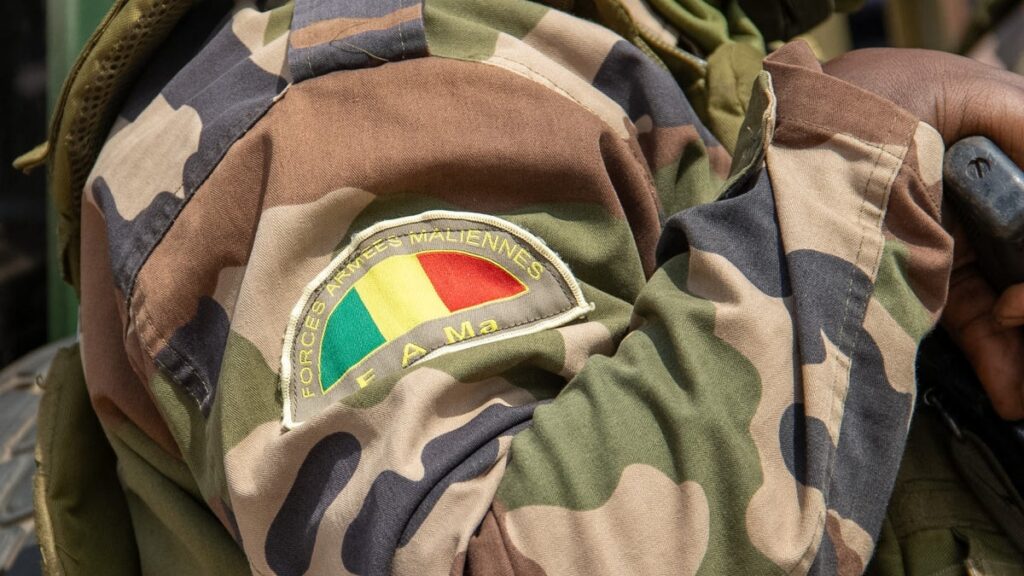
Soldiers from the Malian Armed Forces and allied militias conducted coordinated attacks on two villages in the Ségou region on October 2 and 13, resulting in the deaths of at least 31 civilians. Homes were also set ablaze during the assaults, which unfolded in an area under the control of the Group for the Support of Islam and Muslims (JNIM), an al-Qaeda-linked faction.
The first incident occurred on October 2 in Kamona, where soldiers and Dozos—traditional hunters turned counterinsurgency auxiliaries—stormed the village around 10 a.m. in a convoy of seven pick-ups and three armored vehicles, alongside dozens of motorbikes. Survivors reported that JNIM fighters had warned locals of the approaching force, prompting many to flee. Those who remained were rounded up and executed, according to witnesses.
« Those who couldn’t escape were gathered and shot, » one survivor recounted. « The attackers spared no one—men, women, or children. » At least 10 homes were burned to the ground, and 17 bodies were later discovered under a tree, with four more found nearby. All victims were men aged 20 to 65, though locals suspect additional fatalities in the surrounding bushland.
Second attack leaves 10 more dead in Balle
On October 13, a similar operation unfolded in Balle, roughly 55 kilometers from Kamona. Soldiers in five pick-ups and Dozos on over 30 motorcycles descended on the village at midday, triggering panic among residents. « I didn’t flee immediately, but when I saw soldiers kicking and slapping men during house-to-house searches, I ran, » a 24-year-old man recalled. Gunfire echoed from his hiding place.
By the time the assailants withdrew, 10 civilians lay dead—nine men and one woman aged 55—while over 100 cattle were stolen. A local man described finding the bodies strewn in the village center: « They were riddled with bullets, some with broken limbs. » The woman’s daughter, aged 21, witnessed her mother’s killing after she confronted the soldiers. « She shouted at them, accusing them of abusing villagers. They dragged her to where the men had been gathered and shot her, » she said.
Military denies responsibility amid conflicting accounts
On October 14, the Malian Armed Forces Chief of Staff issued a statement claiming a « reconnaissance offensive » near Balle had « neutralized around twenty terrorists » and seized weapons. However, residents disputed this, stating that JNIM had controlled the area for years, collecting Islamic taxes and resolving disputes without state interference. « We’ve paid zakat for years, » one villager explained. « If there’s a conflict, the jihadists handle it. There are no soldiers or police here—so the army assumes we’re all JNIM fighters. They don’t distinguish between us and them. »
International obligations and accountability gaps
Under international humanitarian law, all parties in the Mali conflict—including state forces and allied groups—are prohibited from targeting civilians, executing prisoners, or committing acts of torture. Violations with criminal intent may constitute war crimes, yet accountability remains elusive. Though Mali withdrew from the International Criminal Court (ICC) in September, the court retains jurisdiction over crimes committed before September 2026, having opened an investigation into alleged war crimes in Mali since 2012.
The African Union has faced criticism for its muted response to the escalating violence. Despite its mandate to uphold peace and security, the Peace and Security Council has limited its actions to issuing statements of concern, failing to implement stronger diplomatic or regional measures to hold perpetrators accountable.
« The situation demands urgent action, » stressed a regional analyst. « The African Union must prioritize this conflict, convening regular briefings and coordinating international efforts to ensure justice for victims and an end to these atrocities. »
The attacks follow a JNIM siege on Bamako that began in early September, cutting off fuel supplies to the capital and forcing authorities to shutter schools and universities temporarily. The violence underscores the deepening humanitarian crisis in Mali, where over 400,000 people have been displaced since 2012.