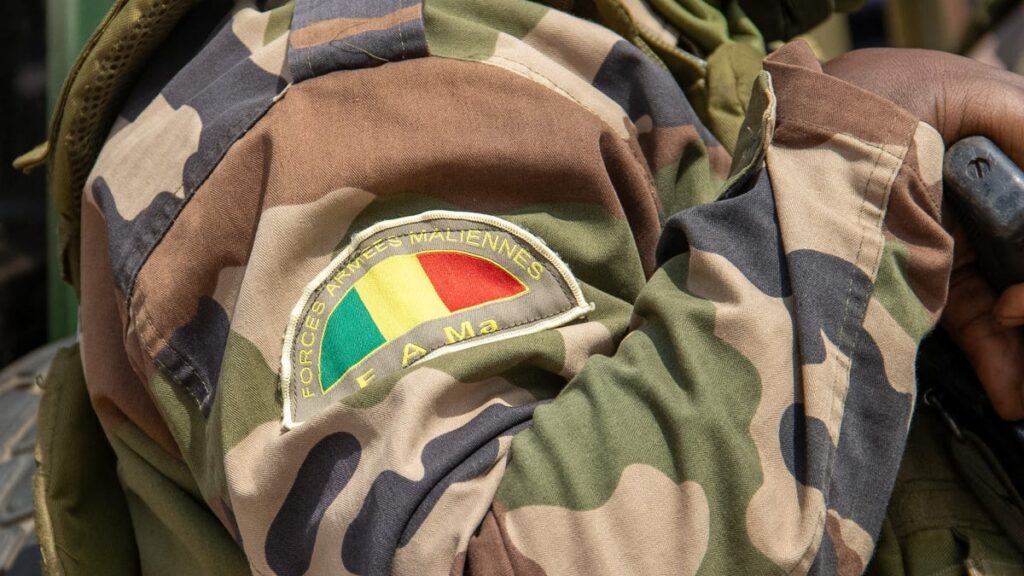
Army and Dozos accused of killing 31 civilians in two villages over two weeks
In early October, coordinated attacks by Malian security forces and allied militias in the Ségou region left at least 31 civilians dead and entire neighborhoods reduced to ashes. The incidents, documented by local survivors and community leaders, took place on October 2 in Kamona and October 13 in Balle—a village 55 kilometers away—both areas under the de facto control of the Group for the Support of Islam and Muslims (JNIM), an Al-Qaeda-linked armed group operating in central Mali.
Execution-style killings and mass destruction in Kamona
On the morning of October 2, Malian troops arrived in Kamona aboard seven pickup trucks, three armored vehicles, and accompanied by motorcycle-mounted Dozos—traditional hunters turned counterinsurgency auxiliaries. According to multiple testimonies, the soldiers and militiamen systematically rounded up men from the village, accusing them of collaborating with JNIM. Survivors reported that those unable to flee were gathered in a central area and summarily executed.
A local herder, who hid with his nine-year-old daughter in an abandoned hut, later discovered 17 bodies under a large baobab tree. “They were riddled with bullets. One man’s head was completely shattered. I saw spent cartridges all around,” he recounted. Community members buried the victims in a mass grave beneath the tree. Four additional bodies were found north of the village, all showing gunshot wounds to the head and torso. Villagers provided a list of 21 male victims aged 20 to 65, though some residents believe the actual toll can reach up to 36, as others may have been killed in the surrounding bush and never recovered.
In addition to the killings, soldiers and Dozos set fire to at least 10 huts and three storage huts belonging to Fulani residents. Witnesses identified the attackers by their camouflage uniforms (soldiers) and traditional attire plus protective amulets (Dozos).
Balle massacre: Ten civilians killed in broad daylight
Thirteen days later, a similar scene unfolded in Balle. Around 1:00 PM, five military vehicles and at least 30 motorcycles carrying soldiers and Dozos entered the village. Some residents fled immediately, but others were caught during door-to-door searches. A 24-year-old man recalled hearing gunfire from his hiding place before witnesses later found 10 bodies in the village center. “They lay next to each other, shot multiple times. Some had broken limbs,” he said.Among the dead was a 55-year-old woman who confronted the soldiers, accusing them of mistreating villagers. “She walked toward them. They took her to where the men were gathered and shot her,” her 21-year-old daughter testified. The attackers also stole over 100 cattle, a critical loss for a community already struggling under JNIM’s taxes and control.
Locals confirmed that Balle has been under JNIM rule for years. “We pay zakat each year. If there are disputes, the jihadists settle them. There are no soldiers, gendarmes, or police here. So the army assumes we are all JNIM fighters. They make no distinction,” explained a resident.
Government narrative contradicted by eyewitness accounts
In a public statement issued on October 14, Mali’s Chief of Army Staff claimed that on October 13, soldiers conducted an “offensive reconnaissance” near Balle, resulting in the “neutralization of around twenty terrorists” and the seizure of weapons. However, no evidence of armed confrontation was found in either village. Witnesses stated that JNIM fighters had already left both locations before the military arrived, and no clashes were reported.
Human rights investigators conducted phone interviews in October with ten individuals—five direct witnesses, community leaders, civil society activists, and journalists. A follow-up letter sent to Mali’s Ministers of Justice and Defense on November 8 seeking official response remains unanswered.
International law and ongoing impunity
Since 2012, Mali has been embroiled in a brutal conflict involving Islamist armed groups, jihadist factions, and government forces backed by local militias. The violence has claimed thousands of civilian lives and displaced over 400,000 people. Reports from human rights organizations, including documented abuses by Malian troops and allied groups during counterinsurgency operations, continue to surface despite official denials.
Both international humanitarian law and Mali’s obligations under the Rome Statute—until its withdrawal takes full effect in September 2026—prohibit attacks on civilians, extrajudicial killings, and cruel treatment. Perpetrators of such violations can be prosecuted for war crimes.
Despite escalating violence and the recent siege of Bamako by JNIM in early September—which disrupted fuel supplies and forced the temporary closure of all schools and universities in the capital—the African Union has yet to take meaningful action. The Peace and Security Council has limited its response to periodic statements expressing concern, failing to coordinate regional or international efforts to hold all parties accountable.
“The AU must prioritize the crisis in Mali,” urged a senior Sahel researcher. “It should convene regular briefings, strengthen diplomatic engagement, and align regional and international efforts to ensure justice for victims and survivors.”