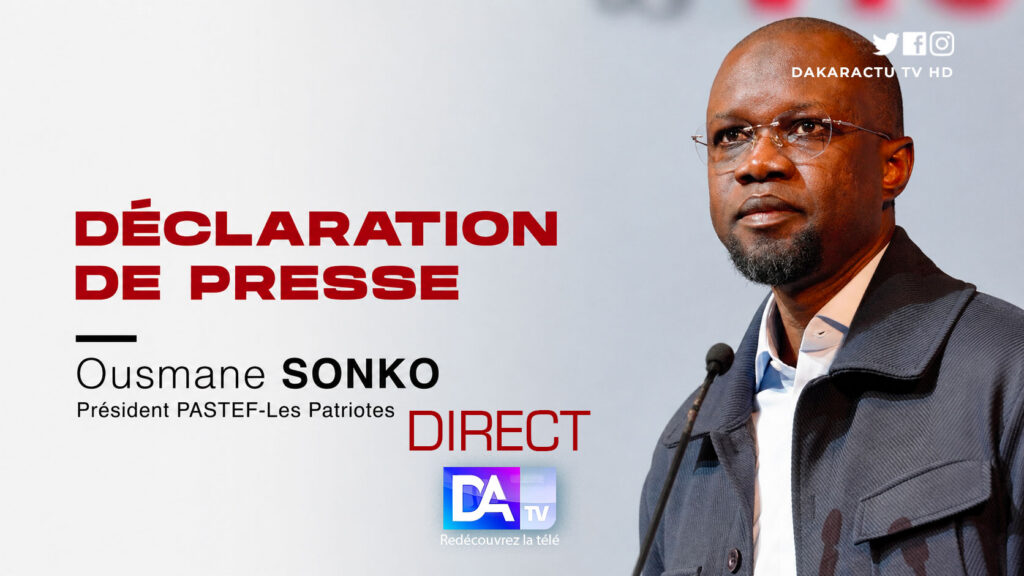
Following the announcement of Mali’s new government lineup, political tensions have escalated as prominent opposition leader Ousmane Sonko took center stage in a press conference. The gathering, which unfolded the day after the cabinet reshuffle, drew significant attention from both national and international observers.
Sonko challenges new government legitimacy amid power concerns
During the press briefing, Ousmane Sonko delivered a scathing critique of the newly formed administration, questioning its composition and influence over policy decisions. His remarks highlighted a growing divide between political factions in Mali, with Sonko emphasizing that his party holds little sway in shaping national priorities.
The opposition leader went on to assert that Mali‘s current political trajectory lacks transparency, calling into question the legitimacy of the government’s formation process. His statements have sparked renewed debate among citizens and political analysts about the country’s democratic trajectory.
Public reaction and political fallout
The press conference has intensified public discourse, with many questioning the long-term stability of Mali‘s political landscape. Critics argue that the government’s structure may further polarize an already divided nation, while supporters of the administration defend its decisions as necessary for progress.
The timing of Sonko’s remarks—just 24 hours after the government’s unveiling—has amplified concerns about the country’s political future. Observers are now closely monitoring how these developments will unfold in the coming weeks.
What’s next for Mali’s political scene?
With Ousmane Sonko taking a bold stance against the new government, the coming days are expected to be critical in shaping Mali‘s political narrative. Political analysts suggest that further statements or actions from Sonko could either de-escalate tensions or push the country toward deeper instability.
As the situation develops, all eyes remain on Bamako, where the political dynamics continue to shift rapidly.