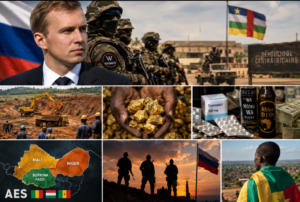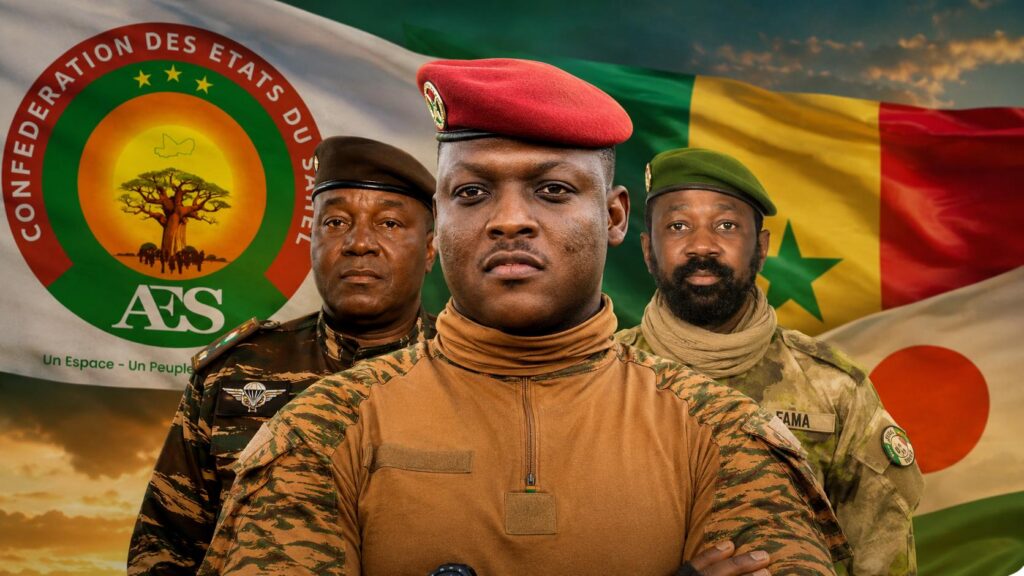
In the wake of expelling French and Western forces, the military regimes of Mali, Burkina Faso, and Niger framed their legitimacy around promises of regained sovereignty. Yet, the arrival of the Africa Corps—Moscow’s official extension of the Wagner Group—has exposed an alarming truth: a costly transfer of dependency is unfolding. Citizens and businesses are now bearing the brunt of this strategic pivot, raising critical questions about the real-world impact on the Sahel’s stability and security.
The myth of a sovereign reset
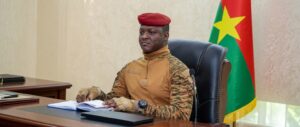
Between 2021 and 2023, military coups led by Colonel Assimi Goïta in Mali, Captain Ibrahim Traoré in Burkina Faso, and General Abdourahamane Tiani in Niger were justified through a shared narrative: ending the remnants of colonial influence. French and Western military presence was framed as a failed experiment, unable to curb the rise of jihadist insurgencies across the region.
By September 2023, the Alliance of Sahel States (AES) formalized this shift with a collective defense charter. For local populations, the promise of self-determination resonated deeply. However, the reality of Moscow’s involvement reveals a far more complicated picture—one where sovereignty is increasingly symbolic rather than tangible.
Mali’s steep price for Russian swords
Mali stands as the starkest example of the financial strain this alliance imposes. Since 2021, Bamako has poured over $1 billion into payments for Wagner’s mercenaries, now transitioning to the Africa Corps, averaging close to $10 million per month. This staggering cost is not just a budgetary concern; it reflects a growing operational reliance that other AES members, Burkina Faso and Niger, have avoided by limiting Russian involvement to training and advisory roles.
Analysts note that despite these expenditures, no major mining concessions have been ceded to Russian forces. This means Mali’s public treasury is shouldering the full burden of a security arrangement that offers diminishing returns. Meanwhile, reports highlight that Russian troops are increasingly deployed in frontline combat, a shift that underscores their central—but unstable—role in Mali’s defense strategy.
Security failures erode public trust
The Africa Corps, estimated to field between 1,000 to 1,500 personnel, has struggled to deliver on its promises. In April 2026, the group’s withdrawal from the Kidal region left a dangerous power vacuum, with rebel forces retaking key towns such as Tessalit, Anéfis, and Aguelhok. Further south, around Gao and Ber, the Malian state’s grip weakens as rural areas slip beyond government control. Security analysts warn that unless a broader political solution is found, the country risks descending into a fragmented conflict reminiscent of the 2012 crisis.
This erosion of stability is compounding the region’s economic woes. Businesses face escalating security costs, while displaced communities continue to strain local resources. The human cost is equally glaring: civilian casualties remain high, and the promise of restored peace feels increasingly hollow for communities caught in the crossfire.
A return to colonial shadows?
Researchers point to a troubling paradox: while the AES juntas have succeeded in diversifying their military suppliers—turning to Turkey, Iran, and China—their reliance on foreign combat forces has deepened their structural vulnerabilities. As noted by the International Crisis Group, what these regimes have gained in political sovereignty—freedom from Western demands—they have lost in operational autonomy. The Africa Corps may offer protection on paper, but its presence entrenches the Sahel’s dependence on external actors.
This dynamic mirrors Cold War-era interventions, where African states like Angola and Ethiopia became pawns in superpower rivalries. Once the external support dried up, the fragility of these regimes became undeniable. Today, the Sahel’s juntas face a similar reckoning: without building indigenous military capacity, they risk trading one form of external control for another.
What’s next for the Sahel’s sovereignty?
The future of the region hinges on whether its governments can break this cycle. While the Africa Corps may provide short-term tactical support, analysts argue that lasting stability requires investing in national defense structures rather than perpetuating a cycle of external dependency. For the citizens of Mali, Burkina Faso, and Niger, the question is urgent: At what point does the cost of this alliance outweigh the perceived benefits of sovereignty?
The answer may determine whether the Sahel’s current trajectory leads to true independence or simply a new chapter of geopolitical subjugation.