Constitutional Court Faces Legal Challenge Over Ousmane Sonko’s Return
Mali’s opposition has escalated a political and legal confrontation by filing a petition with the Constitutional Court, seeking to invalidate the reinstatement of Ousmane Sonko as a deputy—a move that paved the way for his election as President of the National Assembly.
In a joint statement issued on June 1, 2026, a coalition of opposition lawmakers accused the National Assembly leadership of violating constitutional principles by restoring Sonko’s parliamentary status. The petition hinges on Article 54 of the Constitution, which they argue was breached when Sonko—previously Prime Minister and later elected deputy in 2024—retained executive functions while holding a seat in parliament.
According to the signatories, such a combination of roles directly contravenes the constitutional ban on holding incompatible public offices simultaneously. They maintain that the Assembly Bureau’s decision to reinstate Sonko on May 24, 2026, and subsequently elect him to the presidency of the legislature on May 26, amounted to a clear violation of the separation of powers and the integrity of parliamentary mandate.
Beyond the constitutional argument, the opposition also raised procedural concerns. The lawmakers claim they were denied access to critical documents—including the official reinstatement decree and the plenary session minutes—despite formal requests. These documents, which they describe as public records, were withheld by the Assembly Secretary-General and Deputy Speaker, prompting the opposition to resort to formal summons via bailiffs to obtain them. They denounce this obstruction as an attack on democratic transparency and parliamentary rights.
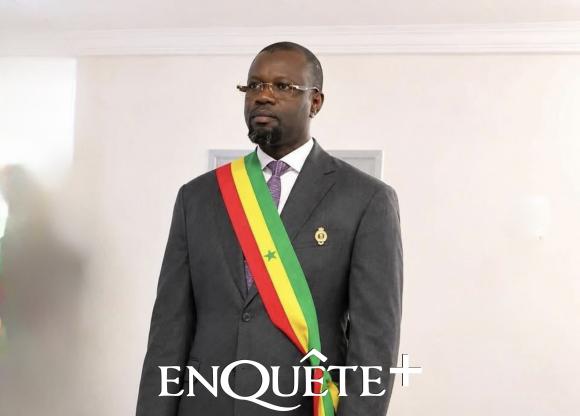
Ousmane Sonko’s rapid political resurgence marks one of the most dramatic shifts in recent years. Just days earlier, on May 22, 2026, he was dismissed as Prime Minister by President Bassirou Diomaye Faye. Yet within four days, he secured 132 out of 133 votes to become the new Speaker of the National Assembly, succeeding El Malick Ndiaye, who had resigned. The vote was boycotted by opposition members, who labeled the process a de facto constitutional coup.
The legal debate remains fiercely contested. Legal scholars are divided over the interpretation of Article 54, with some arguing it does not automatically trigger the loss of a parliamentary seat upon appointment to government, while others insist that any reinstatement after such an appointment is constitutionally flawed. Supporters of Sonko’s return point to Article 123 of the Assembly’s internal rules, which allows for the replacement of deputies appointed to ministerial positions.
Yet a major procedural hurdle looms: the admissibility of the opposition’s petition. Legal experts note that parliamentarians may not have standing to directly petition the Constitutional Court on this matter. That authority typically rests with the President of the Republic, who, according to official statements, has not filed a case. The Court’s first task will be to determine whether the opposition’s challenge meets the procedural requirements for review.
The outcome of this case could redefine the balance of power in Mali’s institutions and set a precedent for how constitutional conflicts are resolved in the country’s evolving political landscape.