From battlefield to boardroom: the hidden cost of Russia’s Sahel security pacts
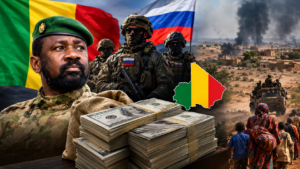
The security crisis gripping the Sahel is forging an unlikely currency: gold. Behind the headlines of Russian-backed military support in Mali, Burkina Faso, and Niger lurk contracts that trade protection for access to mineral wealth. But what happens when the same force guarding a regime also controls the gold mines that fund it?
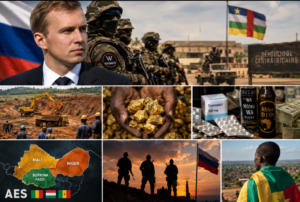
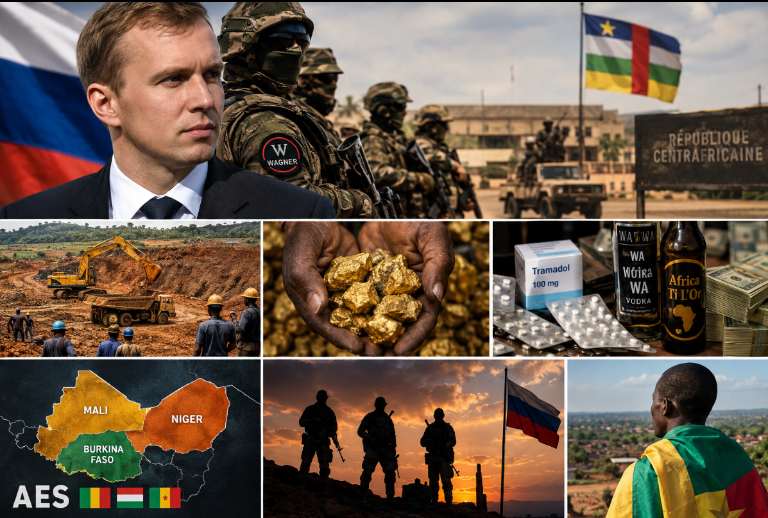
In the Central African Republic, a shadowy network linked to the late Wagner boss Yevgeny Prigozhin is estimated to generate over $400 million annually from gold mining, commercial ventures, and illicit trade. The revelation exposes a growing trend: where Russian-backed security teams go, economic leverage follows—and with it, questions about national sovereignty.
The Central African blueprint: security as currency
Bangui has become the testing ground for a new model of influence. Wagner-linked forces—now reportedly under the control of Prigozhin’s son, Pavel—have stood as the backbone of President Faustin-Archange Touadéra’s regime. In exchange for stability, the network has secured sweeping commercial privileges, including access to gold concessions worth an estimated $250 million per year.
The arrangement blurs the line between soldier and stakeholder. While fighters patrol streets and battle insurgents, affiliated companies operate mines, export gold, and control transport routes. The result? A security partnership that doubles as a resource pipeline—one that enriches private networks while leaving the state with opaque deals and uncertain revenue.
When protection becomes profit
The Central African model reveals a troubling pattern: military support is no longer a standalone service. It comes bundled with commercial rights, political influence, and financial stakes that may not align with national priorities. Reports suggest that gold revenues generated under these arrangements rarely flow transparently into public coffers. Instead, they appear to fund private logistics firms, trade networks, and, in some cases, allegedly fund the trafficking of controlled substances like tramadol.
These activities do not exist in a legal void. Prosecutors and investigators warn that when armed groups operate as de facto economic actors, accountability erodes. Contracts signed under duress, opaque payment structures, and the absence of independent oversight create fertile ground for exploitation. The question lingers: who truly benefits from this exchange—citizens, governments, or shadowy intermediaries?
The Sahel’s turning point: lessons from instability
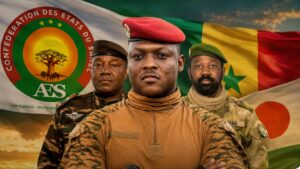
The Central African experiment is resonating across the Sahel. In Mali, Burkina Faso, and Niger—countries bound by the Alliance of Sahel States—the demand for security has never been higher. Jihadist violence continues to spread, and traditional Western partners have scaled back involvement. Facing existential threats, these governments have turned to Moscow for military support. But history shows that where guns and gold intersect, sovereignty is at risk.
In Mali, controversial Wagner-linked operations have sparked public debate over civilian casualties and the true cost of “protection.” Burkina Faso and Niger face similar dilemmas as Russian advisors expand their footprint. While these partnerships may provide immediate relief against armed groups, they also introduce long-term risks: mineral concessions with unclear terms, opaque financial flows, and dependence on external actors who hold both guns and gold.
Power, profit, or partnership? The Sahel’s strategic dilemma
Governments in the Sahel are not merely choosing between partners—they are navigating a high-stakes negotiation where the currency is no longer just bullets or diplomacy, but natural resources. The real question isn’t whether to partner with Russia, but how to structure such deals without surrendering control over national wealth.
Clear contracts. Transparent audits. Public oversight of mining revenues. These are not academic ideals—they are essential safeguards. Without them, a security alliance can quietly become an economic takeover. The Central African case shows how quickly military necessity can slide into corporate dominance. The Sahel must learn from that experience before it’s too late.
Beyond the guns: who really controls Africa’s gold?
The heart of the issue lies not in Moscow’s ambitions, but in the local consequences. When a foreign-backed force secures a government, protects its borders, and simultaneously controls gold exports, the state’s authority weakens. The revenue that should fund schools, hospitals, and infrastructure instead flows through private channels, enriching select networks while leaving communities behind.
Russia’s Africa Corps—a successor to Wagner—officially represents state interests. But in practice, many of the economic networks established under the old guard remain intact. Pavel Prigozhin, though operating with greater autonomy, still benefits from long-standing relationships with Central African elites. This hybrid structure—part state, part private enterprise—creates a system where influence is diffuse, responsibilities are unclear, and oversight is nearly impossible.
Sovereignty isn’t traded in silence
The Central African experience poses a stark question for the Sahel: what remains of national independence when security and sovereignty are bought with gold concessions?
For governments in the region, the path forward demands more than military support. It requires transparent agreements, independent audits of resource revenues, and public mechanisms to track how security partnerships impact the lives of citizens. Gold must fund development, not private empires. Armies must protect people, not corporate interests.
The alternative is a future where the Sahel’s golden wealth funds foreign influence rather than African progress—a future where gold becomes the price tag of sovereignty, and the real cost is paid by the people.
Conclusion: gold, guns, and the future of the Sahel
The Central African Republic offers a cautionary tale. Where security partnerships intersect with gold mining, the risks of exploitation, opacity, and long-term dependency are high. The Sahel has the chance to chart a different course—one where military support does not become a Trojan horse for economic control.
That path begins with accountability: clear contracts, public oversight, and a commitment to ensure that every ounce of gold mined in the Sahel benefits its citizens first. Otherwise, the choice between rival powers may prove less important than the question of who ultimately controls the region’s wealth. In the end, gold doesn’t just glitter—it reshapes power.