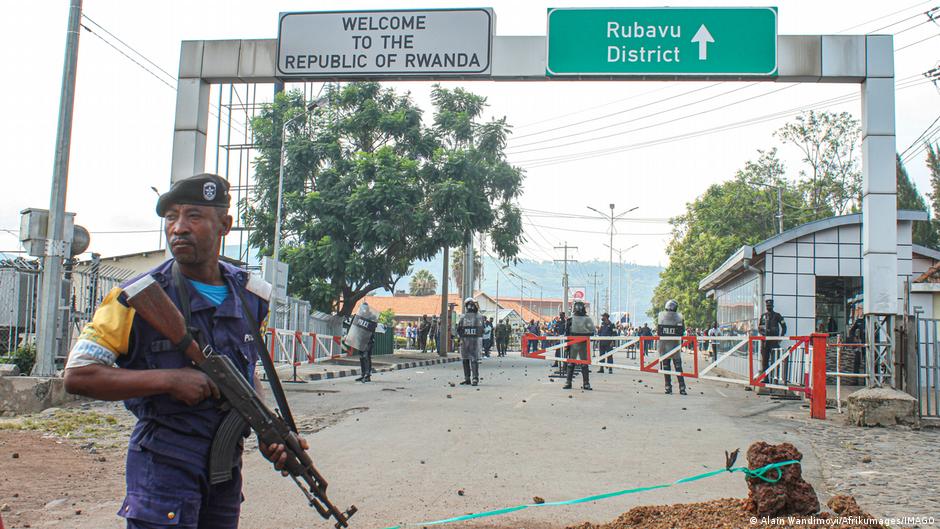
Goma, a key commercial hub in eastern Democratic Republic of the Congo (DRC), is grappling with severe disruptions to its economic lifelines following the closure of its border crossing with Rwanda. The halt in cross-border trade has sent shockwaves through local markets, leaving businesses and residents scrambling to adapt to the new reality.
The decision by Rwandan authorities to seal the border stems from efforts to contain the spread of Ebola, prompting stringent sanitary measures at all entry points. While the move aims to protect public health, its economic repercussions are becoming increasingly evident in Goma.
Local vendors bear the brunt of trade restrictions
Jacques Safari, a seasoned street vendor near the Goma border, has watched his daily earnings plummet since the closure. Once selling up to five trays of eggs per day to travelers and cross-border commuters, his sales have dwindled to barely two trays. The absence of regular foot traffic has crippled his livelihood, with most of his former customers relying on border crossings for their purchases.
“The economic hardship stems directly from the border shutdown. Most of my customers were travelers, and without them, business has ground to a halt,” he shared, reflecting the widespread frustration among small-scale traders.
Wholesalers face supply chain breakdowns
At Birere Market, the impact is equally stark. Wholesalers who once relied on swift, regular deliveries from Rwanda now face mounting challenges. Hamuli Kasilembo, a local trader, describes how the shutdown has triggered a cascade of problems—logistical bottlenecks, plummeting demand, and a sharp slowdown in financial transactions. The once-thriving trade route that kept inventories stocked has ground to a near halt, leaving shelves understocked and customers frustrated.
Economists warn that the border closure’s economic fallout was inevitable. Alphonse Muanda, an economist monitoring the situation, emphasizes that daily trade between Goma and Gisenyi forms the backbone of the local economy in both cities. He notes that countless small-scale traders depend entirely on cross-border commerce for their daily income, traveling regularly to Rwanda to purchase essential goods like rice, soap, and other wholesale items.
“When authorities close the border, it’s the informal traders who suffer the most. Many survive on daily earnings and cannot afford to absorb such a sudden loss of income,” Muanda explained. The prolonged closure has left many in Goma fearing deeper economic distress in the coming weeks, as the social and financial strain intensifies.