The strategic trade route between northern Nigeria and Cameroon’s Far North region has been a battleground for years. But as security improves, a critical question emerges: can this revitalized corridor sustain its momentum? The answer lies in the fragile balance between safety gains and economic survival.
From terror to trade: the corridor’s difficult rebirth
After years of being paralyzed by Boko Haram’s violent raids, the Cameroon-Nigeria border trade route is experiencing a remarkable recovery. Since 2019, this critical corridor has seen a steady flow of goods resuming its vital role in regional commerce. But the journey hasn’t been without its challenges and lingering threats.
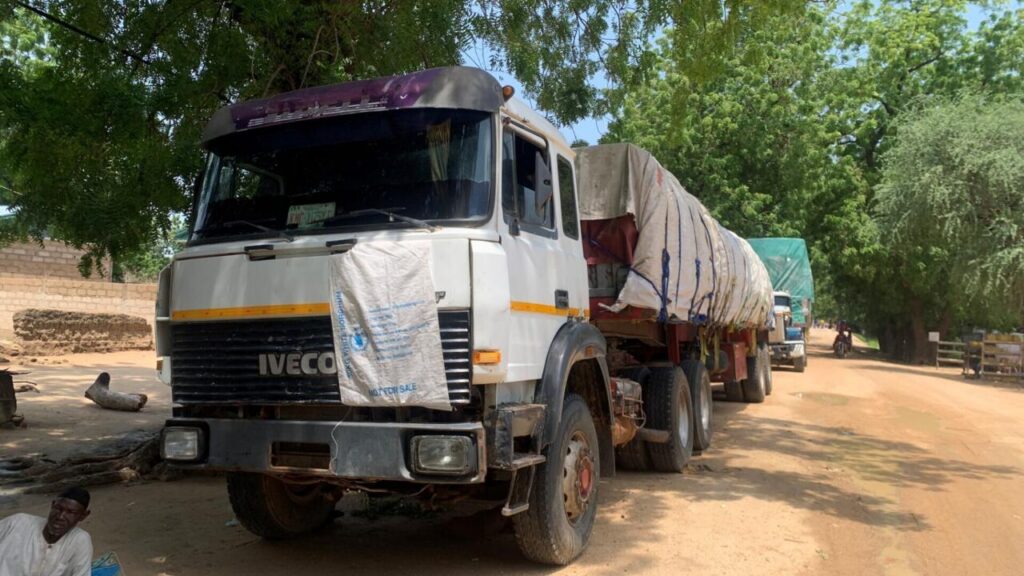
Aboubacar Mahamed, a Nigerian truck driver transporting millet to N’Djamena, Chad, shares his perspective: « From Kano through Maiduguri to Banki, then entering Kourgui, we’ve encountered no problems. There’s security from Kourgui to Amchidé and Yagoua — no issues on the road. » His testimony reflects the improved conditions that have made cross-border trade possible again.
However, the security situation remains precarious. Mahamed advises: « The Cameroonian Rapid Intervention Battalion troops are making significant efforts, but if a truck breaks down between 6 PM and 7 PM, it’s better to spend the night in the village or bush. Traveling from 6 AM to 5 PM is safer. » This practical advice underscores the ongoing need for vigilance along this trade lifeline.
The economic lifeline for a region in crisis
The Limani customs post, the main border crossing on the Cameroonian side, stands as a symbol of this transformation. Closed in 2014 due to Boko Haram’s atrocities, it reopened seven years ago, marking the beginning of a new era for regional trade.
Célestin Delanga, a security specialist at the Institute for Security Studies’ Lake Chad Basin program, highlights the corridor’s importance: « Cameroon exports food products and livestock to Nigeria while importing fuel, textiles, electronics, and spare parts. This trade ensures economic security. The improved traffic and enhanced security measures along transborder commercial axes have particularly revitalized trade flows. »
The benefits extend beyond commerce itself. According to Delanga, cross-border trade now serves as an economic lifeline for populations facing multiple crises: « Two years ago, floods destroyed crops and livelihoods. This year, drought has disrupted the rainy season. Transborder commerce has become a crucial survival strategy for communities in this challenging environment. »
Customs revenue soars as trade revives
The economic revival is reflected in impressive customs revenue figures. Between January and September 2026, customs collections reached 741 billion CFA francs — a staggering increase from just 1 billion CFA francs in 2023. This surge demonstrates the corridor’s growing importance to both national economies.
The Cameroonian Ministry of Trade reported that trade volumes between Nigeria and Cameroon’s Far North region have surpassed pre-crisis levels. Local businesses report increased access to Nigerian markets for Cameroonian agricultural products and livestock, while Nigerian consumers benefit from more affordable goods flowing in the opposite direction.
The challenges ahead: climate and security threats
Despite these promising developments, the corridor faces significant challenges. Climate change presents a growing threat, with alternating floods and droughts disrupting agricultural cycles and supply chains. Security remains a concern, as evidenced by truckers’ cautious travel schedules and the need for continuous military presence.
Infrastructure development has been another hurdle. Poor road conditions and limited border crossing facilities have led to congestion and delays. Local authorities are calling for international investment to upgrade the corridor’s infrastructure to match its economic importance.
- Key trade flows: Food products and livestock from Cameroon to Nigeria; fuel, textiles, electronics, and spare parts from Nigeria to Cameroon
- Customs revenue growth: From 1 billion CFA francs in 2023 to 741 billion CFA francs in 2026 (first nine months)
- Main border crossing: Limani customs post, reopened in 2019
- Security measures: Enhanced patrols by Cameroon’s Rapid Intervention Battalion
- Travel recommendations: Daytime travel preferred between 6 AM and 5 PM
Can this fragile recovery weather future storms?
The Cameroon-Nigeria trade corridor’s revival offers hope for regional integration and economic resilience. However, its future depends on multiple factors: sustained security improvements, climate adaptation strategies, and infrastructure investments. The success of this economic lifeline could determine whether the Far North region can finally break free from decades of conflict and deprivation.
The stakes couldn’t be higher. For millions of people living in this fragile region, this corridor represents more than just trade — it’s a path toward economic survival and perhaps, eventually, prosperity.