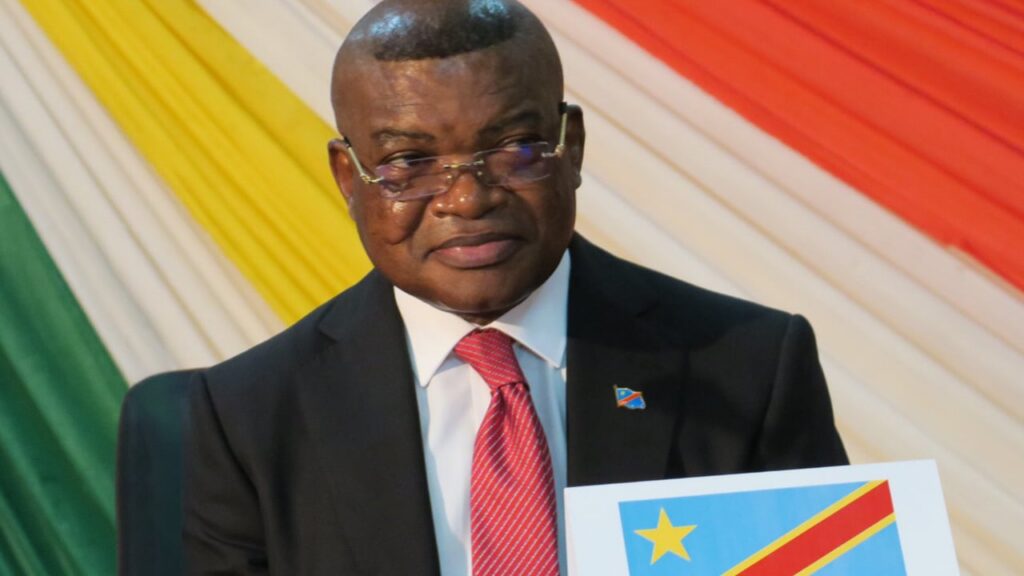
DR Congo is reeling after the sudden death of Kalev Mutond, the nation’s long-time spy chief whose influence stretched from Kinshasa boardrooms to the remotest security outposts. The loss casts long shadows over the country’s stability, leaving citizens and businesses scrambling to weigh the implications for both national security and daily life.
From behind the curtain to center stage: Mutond’s enduring shadow
Kalev Mutond wasn’t just another official in the Democratic Republic of Congo. As the former administrateur général des services de renseignement, he wielded power that reshaped Congo’s intelligence landscape for more than a decade. His authority extended far beyond the capital, embedding him as a key figure in both political maneuvering and security operations across the country.
The late intelligence chief’s strategies often blurred the lines between intelligence gathering and political control, leaving an indelible mark on Congo’s institutions. His death doesn’t just mean the loss of a prominent figure—it signals a potential erosion of the delicate balance that has long defined Congo’s security apparatus.
Economic ripple effects: what Mutond’s death means for businesses
The private sector is already feeling the tremors. Kalev Mutond’s formidable reputation once created a veneer of predictability for investors and corporations, especially those navigating volatile regions or engaging in politically sensitive sectors like mining and energy. His departure removes a critical stabilizing force, raising questions about future security guarantees for business operations.
The uncertainty is palpable.
- Foreign investment decisions: Without Mutond’s stabilizing influence, international firms may hesitate to expand or initiate new projects in high-risk zones, delaying economic growth.
- Local enterprise confidence: Congolese-owned businesses, particularly those in Kinshasa and resource-rich regions, face heightened risks as the intelligence vacuum leaves gaps in protection and dispute resolution.
- Insurance and compliance costs: As the threat perception rises, companies may face soaring premiums and stricter compliance demands from global partners and insurers.
Analysts warn that prolonged instability in intelligence leadership could deter much-needed foreign capital, derailing post-pandemic economic recovery efforts.
The intelligence void: a security vacuum or a chance for reform?
Mutond’s absence leaves a glaring void in the Agence nationale de renseignements (ANR). The agency, already criticized for its opaque operations, now faces a critical moment: will it double down on centralized control or open the door to much-needed transparency and reform?
“The ANR’s future direction hinges on who steps into Mutond’s role—and whether they can break with the past,” said a senior analyst who requested anonymity. “The agency’s credibility is at stake.”
Public sentiment is equally divided. Some citizens view Mutond’s departure as an opportunity to dismantle a system long associated with surveillance and repression. Others fear the vacuum will invite instability, enabling non-state actors and armed groups to exploit the chaos.
Citizens on the frontline: daily life in the balance
Beyond boardrooms and political corridors, ordinary Congolese are feeling the impact. Kalev Mutond’s name was synonymous with surveillance and intelligence operations, but his reach was broader—it extended into communities where rumors swirled about his influence over local security forces and judicial processes.
Now, communities are asking tough questions. Without Mutond’s iron grip, will local security improve? Or will vigilantism rise as state institutions struggle to fill the gap? The fears are real:
- Residents of conflict zones worry about escalating violence and reduced safety nets, especially in eastern provinces where armed groups remain active.
- Urban dwellers, particularly in Kinshasa, are bracing for disruptions as rival factions jockey for position in the intelligence power vacuum.
- Civil society activists hope for a more open climate, but they also fear backlash from entrenched interests afraid of losing control.
What’s next? The road ahead for Congo
The path forward is fraught with challenges—and potential. Kalev Mutond’s death opens a pivotal chapter for DR Congo, one that could redefine the nation’s security architecture or plunge it deeper into instability. The choices made in the coming months will determine whether this moment becomes a turning point or a descent into further uncertainty.
In a country where trust in institutions is fragile, the death of Kalev Mutond is more than a personal loss—it’s a national inflection point. The repercussions will ripple through boardrooms, neighborhoods, and the highest levels of government for years to come.