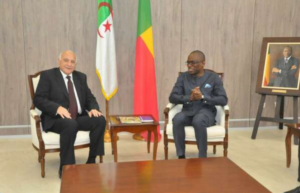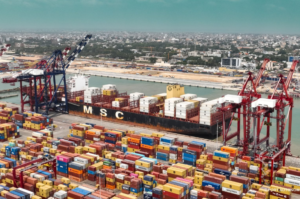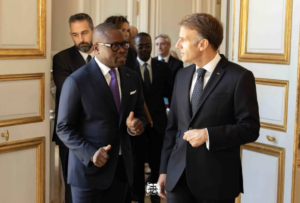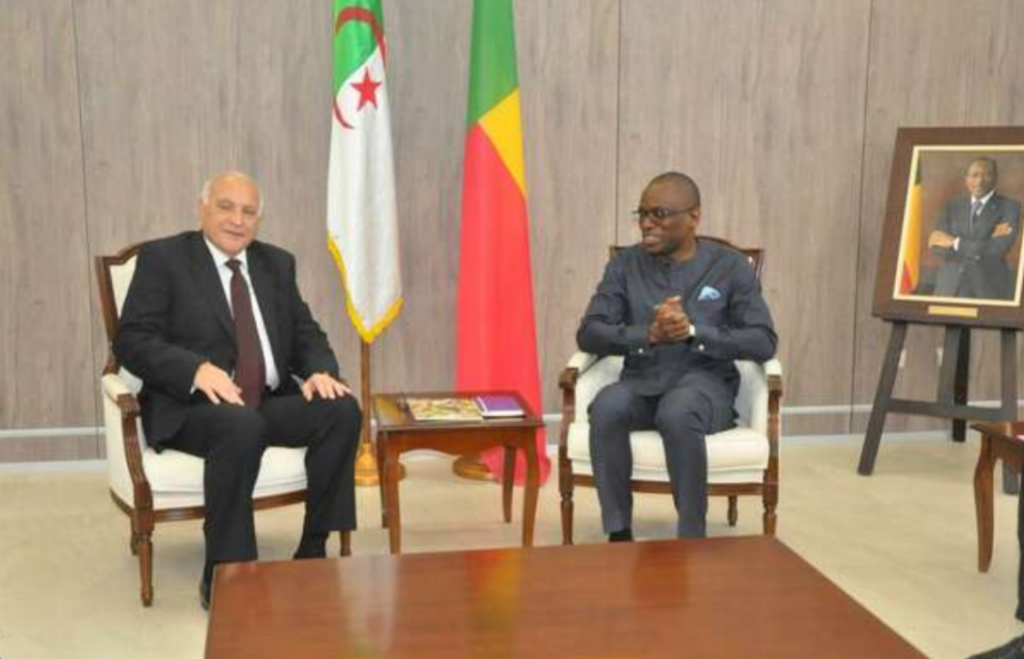
When Algeria sent a high-powered delegation to the 2026 Cotonou Deal Room, the message was clear: Africa’s largest oil and gas producer is betting big on west African partnerships. But beneath the headline-making contracts and handshakes lies a harsh reality—one that is already reshaping trade flows, investment decisions and economic forecasts across the region.
The annual Benin Deal Room, held in Cotonou on 16–18 September 2026, transformed the coastal city into a financial matchmaking hub for more than twenty projects worth an estimated $2.5 billion. Sectors such as agro-industry, pharmaceutical manufacturing, renewable energy and logistics drew African investors, development banks and government officials alike. Among them was a 120-strong Algerian delegation featuring executives from Sonelgaz, Saidal, and Sonatrach—firms that see their own surplus capital, expertise and industrial capacity as the key to unlocking west Africa’s growth potential.
From political rhetoric to hard-currency contracts
For Algiers, the shift from talk to trade is not cosmetic. After decades of focusing on security cooperation with Sahel neighbours, Algeria now frames economic outreach as the next pillar of its African strategy. The 2026 Cotonou visit confirmed that focus: pharma exports, electricity distribution, solar-component assembly and downstream gas infrastructure are all on the table.
Sonatrach’s drilling operation in the Kafra block, begun in August 2026 with the prime ministers of both Algeria and Niger present, illustrates the new calculus. By 2028 the project aims to transport 20 000 barrels per day through pipelines that could eventually feed regional refineries, create jobs in Agadez and link the Algerian gas grid to Europe via the Trans-Saharan Pipeline. All of this would be impossible without reliable overland routes—routes that remain blocked just 500 km west of Agadez.
Niger-Benin border: the invisible tariff no one can afford
The 2023 military takeover in Niger and the subsequent closure of the 1 500 km-long border with Benin have created a $400 million annual headache for landlocked economies. Petroleum products destined for Niamey now travel via costly detours to Lomé or Lagos, adding 8–12 days to delivery times and inflating transport costs by up to 25 %. Cosmetics, medical supplies and construction materials face similar delays, pushing retail prices beyond reach for millions of households.
For smallholder farmers, the effect is immediate. Cotonou-based exporters of cashews, cotton and sesame report purchase orders slashed by 30 % since the gate slammed shut. Local agro-processors, already struggling with erratic electricity, now face compounded losses because key inputs cannot enter Niger in time for harvest season.
Why the stalemate won’t break soon
Nigerian officials cite security concerns—jihadist threats, arms flows and human trafficking—as reasons to keep the frontier closed. Algeria, however, faces a delicate balancing act: it cannot simultaneously bankroll military support in Niamey, finance new gas pipelines across Nigerien soil, and accept a de facto embargo that undermines its own industrial outreach in Benin.
Unofficial talks in September 2026 produced a roadmap for gradual reopening—customs inspections via electronic seals, joint patrols, and a pilot corridor for pharmaceutical cargo—but no firm date was published. Without it, the Algerian pharma firms eyeing regional distribution hubs in Cotonou must still charter air freight or reroute via Lomé, eroding profit margins.
Infrastructure on paper vs. reality on the road
Algeria’s infrastructure gambit is impressive: the Algiers–Lagos highway, the Trans-Saharan Pipeline, and planned solar farms across the Sahel. Yet every megaproject faces the same bottleneck—the absence of seamless transit. Sonelgaz engineers, for example, admit that while they can complete the grid interconnections between Adrar and Tamanrasset, they cannot guarantee continuity when goods leave the port of Cotonou without administrative delays or outright refusal at the Niamey border post.
Regional logistics providers echo the concern. “We can ship solar panels from Ghardaïa to Agadez in 72 hours,” says one logistics director. “But getting the same panels from Cotonou to Niamey now takes 12–15 days. If borders open, that drops to 48 hours—and our fleet utilisation rate jumps from 55 % to 90 %.”
Beyond Cotonou: designing an Africa-first value chain
The Algerian delegation did not arrive empty-handed. At the Deal Room, Sonatrach inked a memorandum with the Beninese Ministry of Energy to supply 2.5 million litres of diesel per month and co-develop a 50 MW solar farm near Porto-Novo. Saidal promised to supply APIs for generic medicines, while the Algerian Electrical and Gas Industries Corporation pledged to train Beninese technicians in smart-grid maintenance.
Individually, these agreements are promising. Collectively, however, they risk remaining isolated islands of cooperation unless the broader environment changes. The acid test will be whether Algiers can persuade Niamey and Cotonou to synchronise their policies so that energy, goods and labour flow as freely as capital and ideas.
The wake-up call for African investors
For the first time, west African entrepreneurs are seeing capital from within the continent rather than from distant financiers. Algerian banks presented term sheets for local-currency loans, while Algerian industrialists explored local assembly plants in Benin’s Glo-Djigbé Industrial Zone. The message is unmistakable: African money is chasing African opportunities—provided the physical infrastructure follows.
Yet the paradox persists. Algeria’s new partnership agenda will under-deliver if the region’s central trade corridor remains closed. Citizens in Niamey pay the price in higher food prices. Farmers in northern Benin see their exports stall. And Algerian executives walk away from Cotonou wondering how to turn handshakes into sustained bottom-line growth.
The choices facing all three capitals are now stark. Open the border, compromise on immediate security concerns, and watch trade volumes surge. Or keep it shut, accept the hidden tax on every container, and forfeit the very integration that the Algerian Deal Room aimed to accelerate.
Cotonou 2026 delivered the contracts. Only Niamey and Cotonou can deliver the borders—or deliver the new era of African economic cooperation.