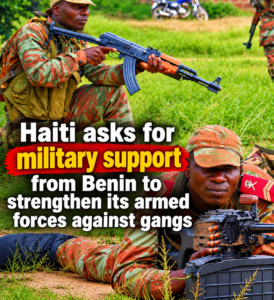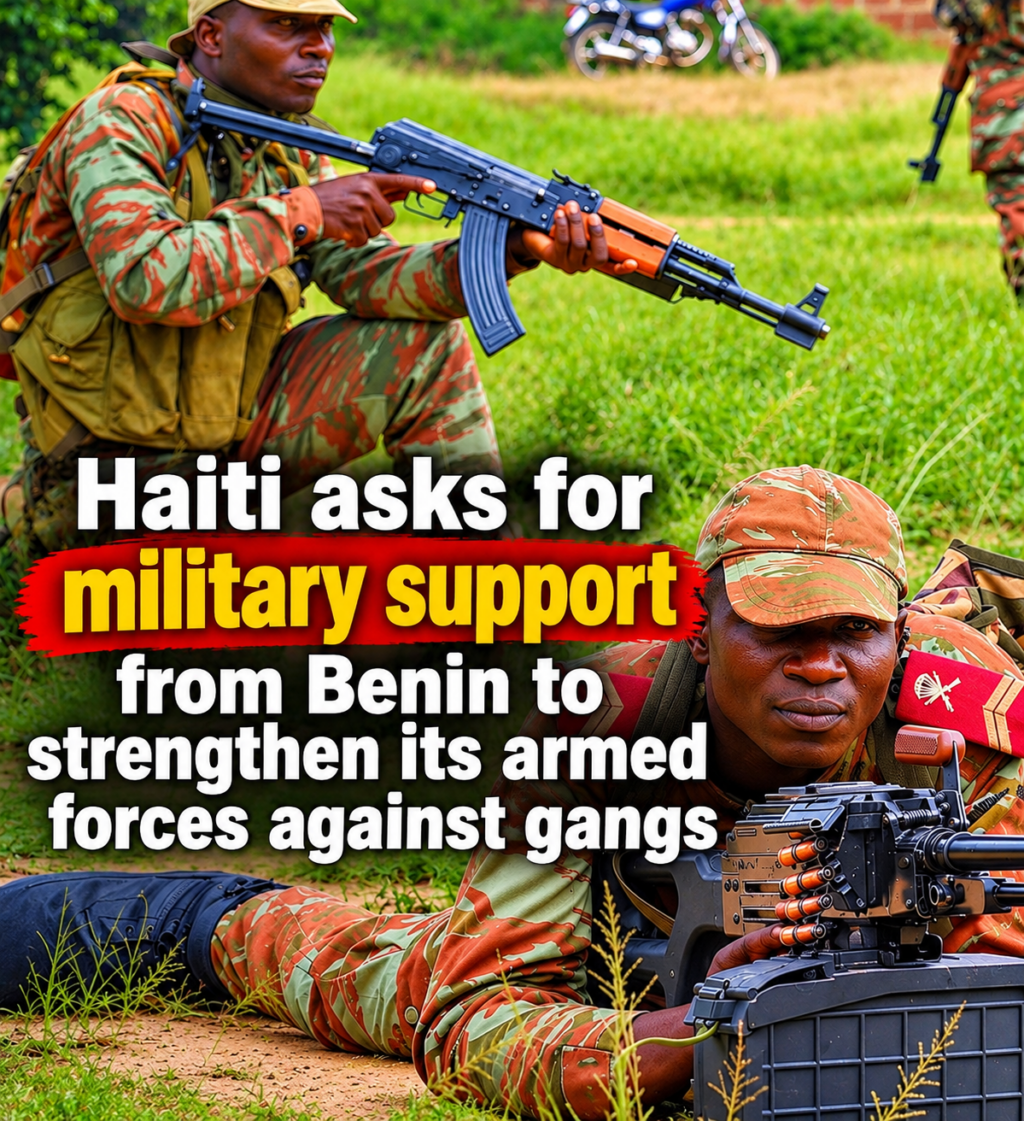
With armed gangs tightening their grip on key urban centers and rural zones across Haiti, the capital’s leaders are seeking a transformative shift in their nation’s security strategy. A bold new partnership with Benin’s military is now under consideration, promising to bolster Haiti’s operational capabilities through specialized training and tactical expertise. This initiative reflects a growing recognition that sustainable security solutions must emerge from tailored, regionally relevant approaches rather than reliance on imported models.
The growing threat of armed gangs and its economic fallout
Haiti’s escalating gang violence has become more than a security crisis it has evolved into a full-scale economic and humanitarian disaster. Widespread kidnappings, territorial control by armed factions, and relentless attacks on infrastructure have crippled daily life, paralyzed commerce, and eroded public trust in institutions. From 2023 to 2026, the number of internally displaced persons surged, schools closed in gang-dominated neighborhoods, and foreign investors withdrew, leaving local businesses struggling to survive. The annual economic loss due to gang activity is estimated in the hundreds of millions of dollars, draining public resources and deepening poverty.
Why Benin’s military model is gaining attention in Port-au-Prince
Benin, though smaller in size, has faced its own challenges in countering insurgent threats in the north, particularly in border regions where smuggling and extremist movements posed significant risks. Over the past decade, the country has invested in rebuilding its defense sector, modernizing training curricula, and fostering a culture of operational discipline within its armed forces. These efforts resulted in improved troop readiness and a more responsive security apparatus lessons now being viewed as highly relevant in Port-au-Prince.
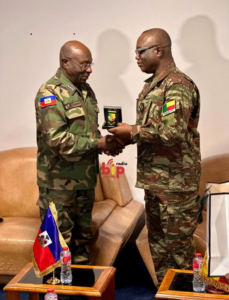
During high-level talks in Cotonou, military chiefs from both nations identified core areas for collaboration: officer training, tactical doctrine development, and the establishment of rapid-response units capable of operating in contested urban environments. The focus is not on direct intervention by foreign troops, but on equipping Haitian soldiers with the skills, strategy, and resilience needed to reclaim control from armed groups.
The role of military training in breaking gang networks
Military training, when properly structured, can serve as a force multiplier in urban conflict zones. Haitian forces currently face two critical gaps: inconsistent operational standards across units and a lack of specialized urban combat training. Benin’s approach emphasizes small-unit tactics, improved intelligence integration, and community protection protocols elements that align closely with Haiti’s current needs. Such training could enable Haitian troops to conduct precision operations, dismantle gang command structures, and secure civilian areas without indiscriminate force.
The partnership also includes a mentorship framework where Beninese instructors would work alongside Haitian counterparts to refine tactics in real time. This hands-on guidance is expected to accelerate learning and build confidence within Haiti’s armed forces, especially among younger officers who will lead the next phase of the campaign against gangs.
The challenge of adapting solutions to local conditions
While Benin’s experience is valuable, Haitian officials are acutely aware that no two security environments are identical. Haitian gangs operate with deep local roots, complex socio-economic ties, and sophisticated networks that extend beyond traditional military engagement. To address this, any training program must include cultural and social intelligence components, enabling soldiers to distinguish between hostile actors and civilians caught in the crossfire. The training curriculum is being designed to emphasize restraint, proportional response, and the protection of vulnerable populations principles that have been central to Benin’s counterinsurgency doctrine.
Measuring success: from training to tangible results
The true test of this partnership will be measured not in classrooms or conference rooms, but in the streets of Port-au-Prince, Cap-Haïtien, and Gonaïves. Success will be defined by measurable improvements in three key areas: reduction in major gang-related violent incidents, restoration of public services in recovered zones, and an increase in civilian trust in security forces. Military gains must translate into civilian security and economic revival otherwise, the initiative risks becoming another unfulfilled promise in Haiti’s long struggle for stability.
Early indicators of progress will include the deployment of trained units in high-risk zones, the reopening of schools and markets under military protection, and measurable declines in kidnapping and extortion rates. These outcomes will determine whether Benin’s expertise can truly become a catalyst for change in Haiti’s fight against organized crime.
A new chapter in south-south military cooperation
This partnership underscores a growing trend in global security: the recognition that effective solutions often come from within the region rather than from traditional Western military powers. Countries like Benin, Senegal, and Rwanda have pioneered models of community-based security, decentralized command structures, and adaptive training that reflect their own historical and cultural contexts. By choosing to collaborate with a fellow African nation, Haiti is not only seeking expertise it is affirming a broader shift toward self-reliant, culturally attuned security strategies.
The Cotonou meeting on November 3, 2026, marks more than a diplomatic exchange it represents a potential turning point. If implemented with clarity and commitment, this cooperation could serve as a blueprint for other nations facing similar challenges, proving that sustainable security is built through shared experience, not just shared weapons.
By Rose Njoya — Journalist