Budget defeat exposes growing rift between Faye’s government and Sonko-led parliament
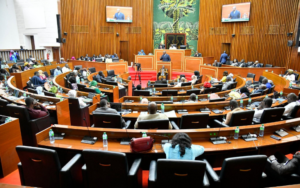
The political schism between Senegalese President Bassirou Diomaye Faye and his former political ally Ousmane Sonko has now triggered serious institutional fallout. On November 3, 2026, the National Assembly dealt a severe blow to the government by rejecting the 2026 supplementary budget law, marking a significant escalation in the ongoing power struggle between the executive branch and the parliamentary majority controlled by Sonko’s Pastef party.
Parliamentary vote reflects deepening institutional fractures
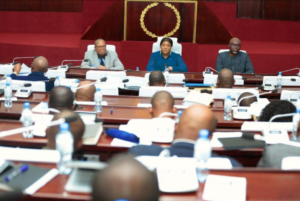
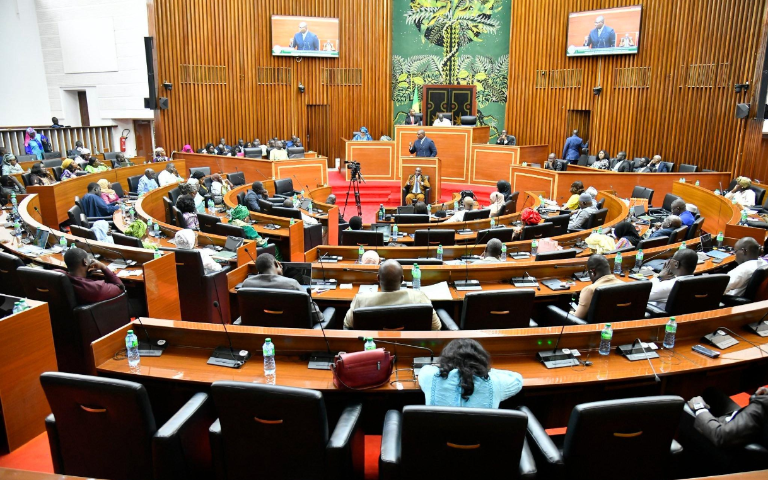
The decisive rejection came after a procedural challenge led by Pastef deputy Amadou Ba, whose motion for a preliminary question terminated the budget debate without substantive discussion. The final vote count showed 109 deputies supporting the motion to block the budget, 20 opposing it, and three abstentions—out of 132 voting members.
This outcome delivers a major setback to the government, which had sought to adjust public finances to address new economic pressures. The political implications, however, extend far beyond budgetary mechanics, revealing the widening rift between Faye’s administration and the parliamentary bloc that was once its political ally.
From political allies to institutional rivals
The current standoff stems from a rapidly deteriorating relationship between President Faye and former Prime Minister Sonko, who now leads the National Assembly. Their once-shared political vision has eroded since Sonko’s departure from government in May 2026, leaving the president to face a parliamentary majority that, despite shared origins, no longer offers automatic support.
The rejection of the supplementary budget exemplifies this new reality. It signals that the government can no longer rely on unconditional parliamentary backing, even on critical economic measures.
Budget disagreements highlight competing fiscal priorities
The core conflicts center on fiscal credibility, debt management, and public spending choices. The proposed budget revisions included revenue projections of 5.85 trillion CFA francs (down from an initial 6.19 trillion), expenditures of 7.58 trillion, and a budget deficit increase to 7.6% of GDP from 5.4% in the original plan.
Parliamentarians also challenged a 555 billion CFA franc reduction in investment credits, which threatens funding for key infrastructure projects. Pastef lawmakers have demanded greater transparency in financial decision-making, while the Ministry of Economy and Finance asserts it has addressed their concerns, particularly regarding energy subsidies and family security grants.
Economic stability at risk amid political deadlock
The fallout from this legislative impasse extends beyond domestic politics. Senegal is currently negotiating a new financing program with the International Monetary Fund (IMF), and the adoption of this budget revision was expected to reinforce credibility in those talks. The rejection risks complicating negotiations, raising concerns about debt sustainability and macroeconomic stability.
Domestically, the budget freeze could delay essential payments to businesses, suppliers, and public sector contractors, disrupting economic activity. The crisis thus threatens not only political cohesion but also the country’s economic resilience.
Unprecedented institutional tension without clear resolution
While not a formal cohabitation, Senegal now faces a unique institutional dynamic: a president leading the executive branch while confronting a parliamentary majority that actively resists key policies. The November 3 vote raises a critical question: how long can this confrontation persist without destabilizing the country’s governance?
For now, no consensus solution is in sight. The government may need to explore alternative legislative strategies, while Pastef parliamentarians appear determined to assert their oversight powers. One thing is clear: the rejection of the 2026 supplementary budget represents a pivotal moment in Senegal’s political evolution, reshaping the balance of power between Faye and Sonko within the very heart of the Republic’s institutions.