The hidden truth behind Africa’s military suppliers as terrorism spreads
Across Africa’s battle-scarred Sahel and beyond, the fight against terrorism has intensified—but the map of who supplies the weapons to do that job tells a different story from the headlines. While Russia’s high-profile security deals grab global attention, the real heavyweights in Africa’s arms market are quietly reshaping the continent’s security landscape. Fresh data shows Beijing and Washington are the dominant players, leaving Moscow in a distant third place.
Why Moscow’s share in Africa’s arms market is slipping behind
The latest figures from the Stockholm International Peace Research Institute (SIPRI) paint a stark picture: between 2021 and 2025, the United States accounted for 19% of Africa’s major arms imports, while China led in sub-Saharan Africa at 22%. Russia, once seen as Africa’s go-to arms dealer, now holds only 15% of the continent’s weapons purchases—trailing both Beijing and Washington. This shift comes despite Russia’s growing political visibility in countries like Mali, Burkina Faso, and Niger.
The decline is even more pronounced when looking at global trends: Russian arms exports plunged by 64% from 2016–2020 to 2021–2025, a drop driven by sanctions, war demands in Ukraine, and the Kremlin’s own rearmament needs. While Moscow still provides trainers and advisors, its commercial influence in African arms sales is fading.
This doesn’t mean Russia’s influence is gone—just different. Its focus on operational support, private military contractors, and political alliances gives it outsized influence despite lower export volumes. But when it comes to equipping African armies with weapons, data shows it’s no longer the top supplier.
What Beijing offers that Moscow doesn’t: a full defense package
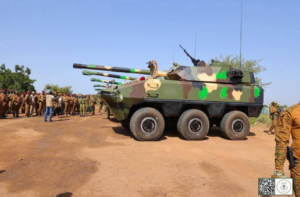
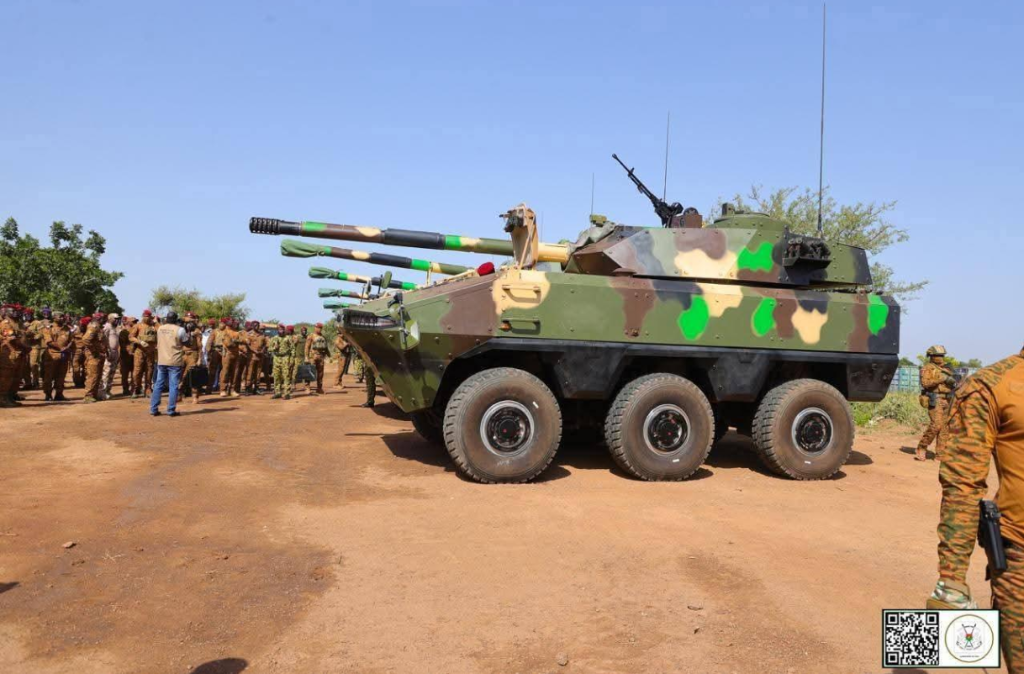
China has quietly built a reputation as Africa’s most reliable arms partner—not just seller. From armored vehicles and surveillance drones to anti-aircraft systems and radar, Beijing provides a diverse portfolio tailored to counterterrorism needs. In 2024 alone, Burkina Faso received 116 infantry carriers and six assault vehicles from Chinese manufacturers. Mali’s military cooperation with NORINCO includes arms deliveries, training, and technology transfer—something Moscow hasn’t matched in scale or consistency.
The appeal is clear: China doesn’t just sell weapons; it builds long-term defense relationships. Maintenance support, local training, and technology transfer programs give African nations more than firepower—they offer sustainability. Drones for surveillance, armored transport for troop mobility, and air defense systems for base protection are turning into game-changers in high-risk zones where terror groups operate.
Beyond the headlines: what African governments actually need
What matters most isn’t who sells the most weapons—it’s who delivers real security outcomes. Terrorism doesn’t respect borders, so defeating it requires more than rifles and tanks. African nations need aerial surveillance, cross-border intelligence sharing, and the ability to project force across vast, remote areas. None of these can be achieved with weapons alone.
While new suppliers expand options, they also bring challenges: reliance on foreign technology, high maintenance costs, and the risk of weapons falling into the wrong hands. Some governments risk trading one dependency for another—this time, to Beijing instead of Moscow or Paris. The danger isn’t just financial: it’s strategic. Can African armies maintain autonomy and operational effectiveness when their equipment and training come from a single foreign source?
Is Africa heading toward a new arms supplier monopoly?
The data is clear: the era of Russian dominance in African arms sales is over. China now leads in sub-Saharan Africa, while the U.S. holds the top spot continent-wide. But leadership in arms supply doesn’t equal leadership in security results.
As African governments reassess their partnerships, they face a critical choice: do they prioritize immediate firepower and political alliances, or do they invest in long-term capabilities that address the root causes of terrorism? The answer will shape not just the Sahel’s future—but the entire continent’s.