Gabon and Spain forge stronger economic and diplomatic ties in Madrid talks
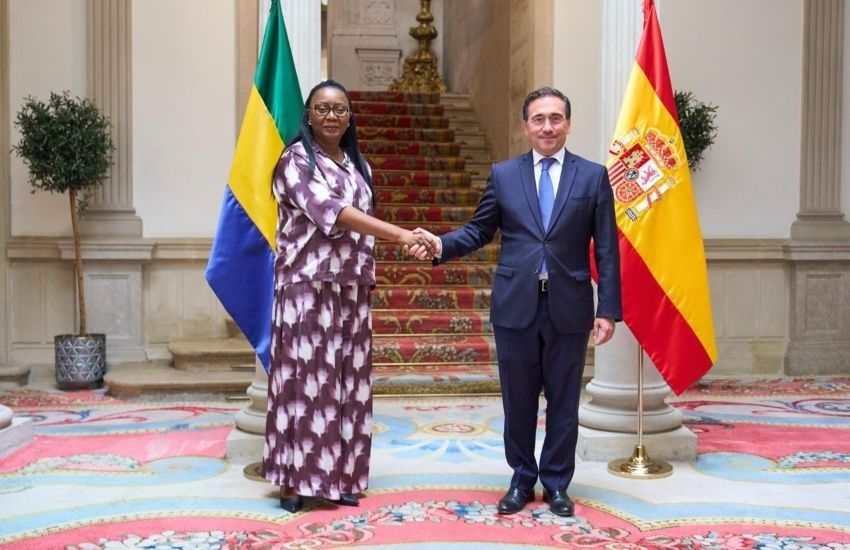
Libreville, 19 July 2026 — Gabon has taken a decisive step toward strengthening its ties with Spain by institutionalizing political dialogue and paving the way for new Spanish investments. This move reflects a shift in Gabonese foreign policy toward influence, diversification, and economic attractiveness.
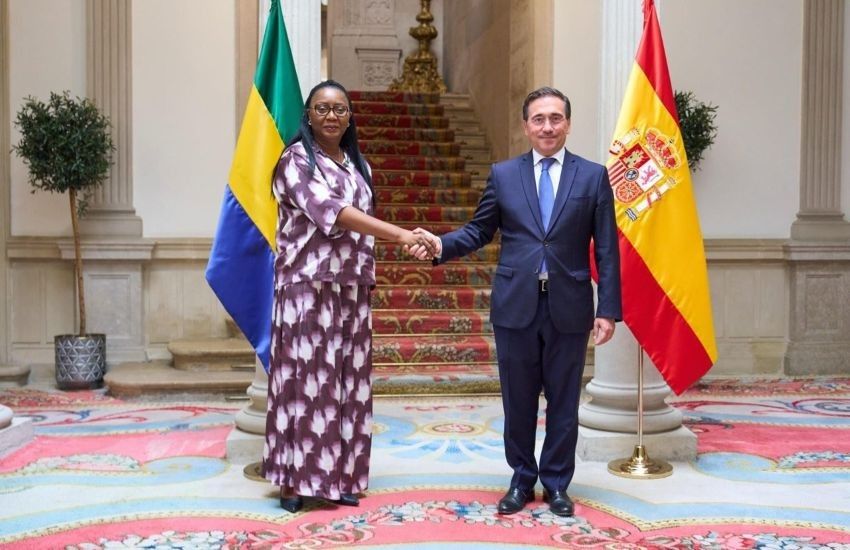
Historically, relations between Gabon and Spain were limited to discreet cooperation without a structured political framework. However, the official visit to Madrid by Gabon’s Minister of Foreign Affairs and Cooperation, Marie-Edith Tassyla-Ye-Doumbeny, signals a new chapter. In just a few days, Libreville and Madrid have laid the groundwork for a partnership poised to transcend traditional diplomacy and embrace a far more ambitious economic and technological dynamic.
At the Palacio de Viana, the ceremonial headquarters of Spain’s Ministry of Foreign Affairs, the signing of a memorandum of understanding between the Gabonese minister and her Spanish counterpart, José Manuel Albares, establishes a permanent mechanism for diplomatic consultations. Behind this agreement lies a shared commitment to making political exchanges more regular, structured, and results-driven on major international issues.
Economic diplomacy takes center stage
The real significance of this diplomatic engagement lies in its economic ramifications. Gabon is progressively embracing a strategy where diplomacy is no longer just about international representation but also serves as an economic tool to attract investments, facilitate technology transfers, and support the diversification of the national economy.
Discussions between the two ministers covered key sectors such as sustainable tourism, maritime security, mobility, workforce training, and opportunities arising from Spain’s Africa Strategy 2025-2028. Both sides acknowledged that trade exchanges remain far below the true potential of their economies.
This realization has set the stage for the creation of a Gabon-Spain Business Council, designed to connect businesses, streamline investments, and support joint industrial projects. For Libreville, this initiative aligns directly with the presidential ambition to expand productive partnerships with European economies.
INDRA: a symbol of new ambitions
This strategic shift was underscored by a meeting between the Gabonese delegation and Spain’s INDRA, a leading player in digital technologies, transport infrastructure, defense, and digital transformation.
With Ghislain Moandza Mboma, Director General of Gabon’s National Investment Promotion Agency, and Ambassador Allegra Pamela Bongo, several priority areas were identified.
The modernization of airport infrastructure, digitalization of the unified port system, digital transformation of the healthcare sector, modernization of the judiciary, and tourism development now stand as the primary axes of cooperation. The prospect of an INDRA exploratory mission to Libreville marks a critical step, potentially opening doors to concrete investments in sectors crucial to modernizing public administration and boosting Gabon’s economic competitiveness.
This approach reflects a profound evolution in Gabon’s strategy. The government is now actively seeking partners who can bring capital, technology, expertise, and tailored solutions to meet national needs.
Expanding alliances to enhance sovereignty
Beyond the signed agreements, this visit reveals a broader geopolitical strategy. In an international environment marked by fierce competition among economic powers, Gabon is pursuing a policy of diversifying its partnerships.
While not undermining its historical ties, Libreville is expanding its cooperation network to reduce dependence on a limited number of actors and unlock new growth opportunities.
The meeting with Gabon’s diplomatic staff at the embassy in Madrid underscores this logic. The minister emphasized the priorities of Gabonese diplomacy: modernizing external action, economic diplomacy, and mobilizing the diaspora.
This strategy positions diplomatic missions at the heart of the country’s economic attractiveness.
The emerging partnership between Libreville and Madrid exemplifies a significant shift in Gabonese foreign policy. By making political dialogue a permanent tool and investment a natural extension of diplomatic cooperation, Gabon is asserting its ambition to play a more active role in African and global economic balances.
The success of this vision will hinge on the ability of both nations to translate political commitments into tangible projects. If the announced exploratory missions yield concrete results, this visit to Madrid may well be remembered as the starting point of a deeply renewed bilateral relationship, built on innovation, value creation, and a sustainable strategic partnership.