Gabon advances public revenue modernization with tax and customs integration
Libreville, July 19, 2026 — A nation’s capacity to fund its development hinges on its ability to secure revenue streams. In Gabon, this principle is taking on renewed significance as authorities accelerate efforts to modernize public revenue collection.
The initiative represents more than an administrative reshuffle. It reflects a fundamental shift in public governance where enhanced cooperation between customs and tax authorities serves as a catalyst for budgetary sovereignty, economic transparency, and the fight against fraud networks.
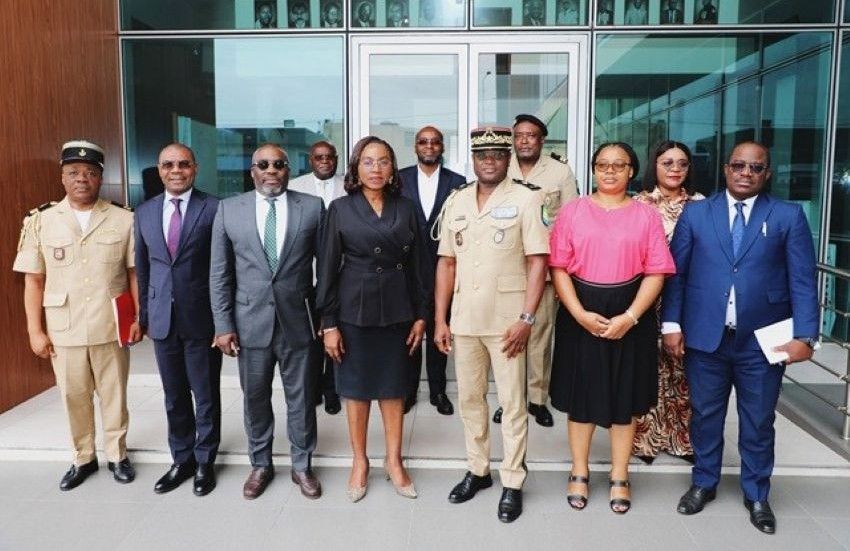
On July 14 in Libreville, the Director-General of Customs and Indirect Taxes, Brigadier General Hugues Modeste Odjangou, and the Director-General of Taxes, Édith Laure Oyaya Mbiguidi, initiated a comprehensive review aimed at deepening operational coordination between Gabon’s two primary revenue agencies. This move aligns with the government’s broader strategy to prioritize domestic resource mobilization, supporting major investments in infrastructure, public services, and economic diversification.
Establishing a unified approach to public revenue management
In modern economies, fiscal and customs administrations no longer operate in isolation. Data sharing, information cross-referencing, and coordinated enforcement significantly boost tax yields while shrinking opportunities for fraud. Gabon is now formalizing this proven model.
During their working session, the two directors identified key priorities including shared fiscal and customs intelligence, synchronized field inspection operations, pooled operational resources, and joint strategies targeting tax evasion, customs violations, and illicit trafficking.
This alignment directly supports the vision outlined by President Brice Clotaire Oligui Nguema, who advocates for a more cohesive, efficient, and results-driven administration.
In a climate where every public franc counts, securing revenue streams has become central to sound governance.
A legally reinforced cooperation framework
This transformation is not merely political will—it is now backed by legal structure. The two agencies confirmed that Decree No. 073/MEFDPLVC of April 10, 2026, establishing the Joint Tax-Customs Commission, now serves as the institutional foundation for this partnership. The decree mandates joint inspections under CEMAC customs regulations and facilitates seamless information exchange between the two agencies.
Gabon is thus aligning with best practices seen in several African nations that have revamped their fiscal administrations. Experiences from Rwanda, Morocco, and Côte d’Ivoire show that close collaboration between tax and customs authorities markedly improves budgetary performance while curbing tax evasion and informal economic activity.
Upcoming technical meetings will focus on establishing the joint commission, ensuring rigorous follow-up on decisions, and coordinating future joint operations.
A reform with national implications beyond finance
This collaboration signals a pivotal moment in Gabon’s public administration philosophy. Once viewed as distinct entities with separate mandates, Customs and Taxes now operate under a unified vision. Together, they account for the bulk of state revenue—making their integration a critical lever to strengthen fiscal margins without imposing additional burdens on compliant taxpayers.
The primary targets remain fraud, false declarations, opaque trade circuits, and practices that siphon vital resources away from public coffers.
This institutional alliance also sends a strong signal to international partners, investors, and financial agencies. It demonstrates Gabon’s commitment to modernizing economic governance, securing domestic revenue, and enhancing the credibility of its financial administration.
Beyond administrative restructuring, this cooperation embodies a larger ambition: building a state capable of better protecting its resources, funding national priorities through its own means, and fostering a more effective, transparent, and performance-oriented administration. In this context, the partnership between Customs and Tax authorities is not just an administrative alignment—it is a cornerstone of Gabon’s emerging financial architecture.