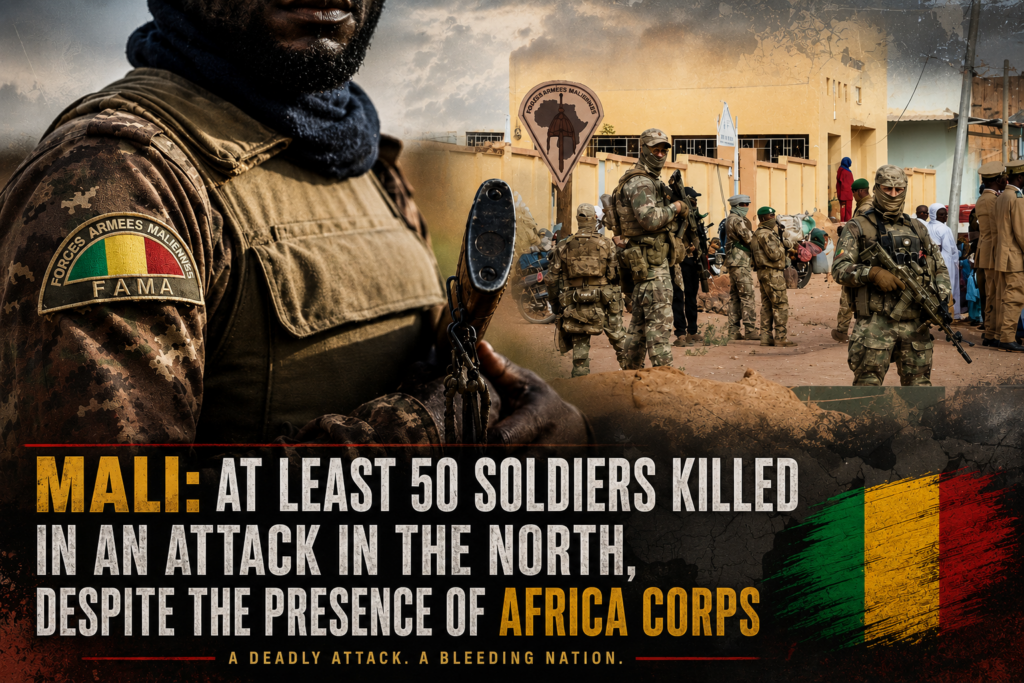
A devastating assault in northern Mali has left at least 50 soldiers dead, according to verified reports. The coordinated offensive, launched by separatist fighters in collaboration with jihadist factions, underscores the ongoing erosion of security across the country.
Persistent violence despite international support
The attack has reignited scrutiny over the effectiveness of Bamako’s military partnerships, particularly following the deployment of Africa Corps. Touted by officials as a game-changing strategic ally, the force was expected to bring decisive military expertise to the fight. Yet, the surge in deadly attacks and mounting casualties among Malian troops suggest otherwise.
Limited operational involvement fuels skepticism
Analysts argue that Africa Corps’ role appears confined to advisory, training, and technical assistance, with minimal direct engagement in high-risk operations. This perceived restraint has led many to question the tangible benefits of international cooperation amid a worsening crisis. Critics contend that a military partnership should be judged not by promises or political declarations, but by its ability to shift the battlefield dynamics in favor of government forces.
The lack of sustained progress in curbing attacks or safeguarding military personnel has fueled doubts about the mission’s credibility. Many observers argue that without a clearer operational footprint, the partnership risks becoming unsustainable in the eyes of Malian citizens and regional partners alike. The persistent violence raises concerns that foreign support, while well-intentioned, may not be translating into real-world security gains.
Calls for greater accountability and results
In response, voices across Mali are demanding transparency regarding Africa Corps’ mission parameters, operational commitments, and measurable outcomes since its arrival. The demand for clarity stems from frustration over the continued loss of life among both soldiers and civilians. Until concrete improvements materialize, the debate over the alliance’s value will persist, shaping discussions on Mali’s broader security strategy.
For regional observers, the Malian experience serves as a cautionary tale. They emphasize that partnerships must be evaluated not on diplomatic agreements or symbolic gestures, but on their demonstrated ability to reduce threats and protect populations. As the crisis deepens, the pressure mounts on Africa Corps and its Malian counterparts to deliver tangible results—or risk further erosion of trust in international cooperation.