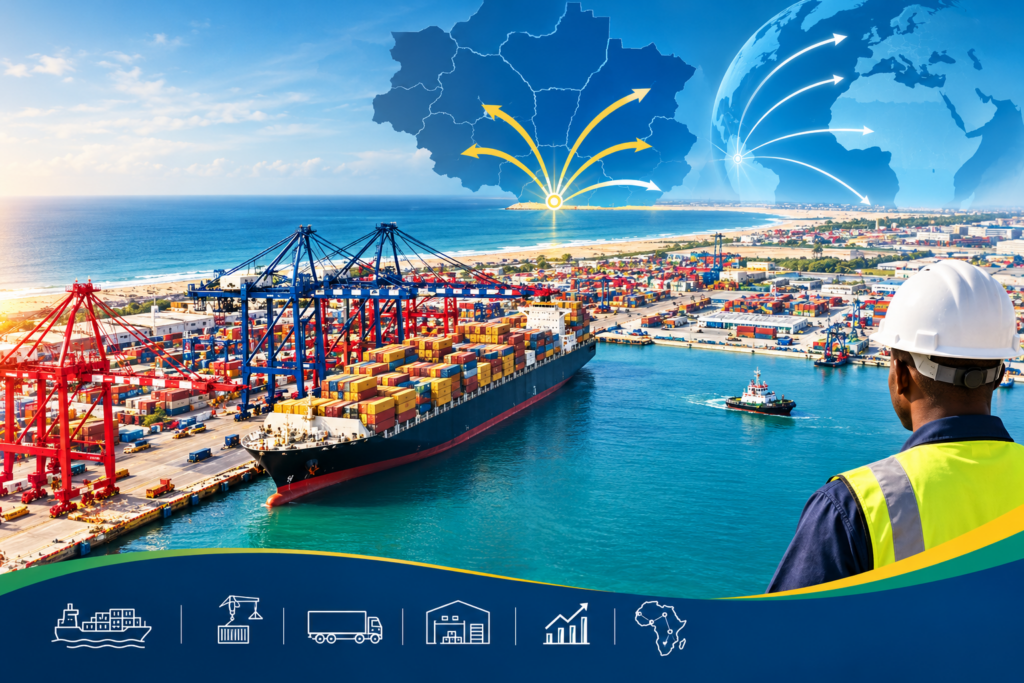
Benin’s Port of Cotonou is undergoing a remarkable transformation, one that extends well beyond its docks to reshape the nation’s economic fabric. As regional trade corridors face unprecedented disruptions, the port is not just holding steady it is expanding, diversifying, and redefining its role as a gateway for West African commerce.
The Port’s Strategic Expansion: Beyond Old Trade Routes
The Port Autonomous of Cotonou (PAC) has long been a vital artery for Benin’s economy, but recent data reveals a fundamental shift. Traffic flows are no longer confined to traditional hinterland routes. Instead, the port is aggressively pursuing new sources of revenue, including transshipment, redistribution, and export-driven logistics. This strategic pivot is evident in the port’s 2025 performance: a 52% rise in overall tonnage to 14.7 million, a 75% surge in exports, and a staggering 313% climb in transshipment volumes.
Transshipment Takes Center Stage
The explosion in transshipment activity up 313% in 2025 and another 152% in the first half of 2026 signals a fundamental change. The port is no longer just a destination; it is positioning itself as a redistribution hub for goods bound for Nigeria, Togo, Ghana, and beyond. This shift reduces reliance on any single trade route, a critical advantage in an era of geopolitical and logistical volatility.
Resilience Amid Regional Instability
The Port of Cotonou’s growth story is all the more remarkable given the headwinds in West Africa. The closure of the Benin-Niger border, once a critical corridor, could have crippled activity. Instead, the port’s traffic continued to climb. This resilience stems from years of targeted investment: the expansion of Terminal 5, deepening of the harbor basin, modernization of quays, and digitalization of customs processes. A $120 million financing package from the African Development Bank has further accelerated these upgrades, targeting bottlenecks and enhancing the port’s capacity to handle larger vessels.
A Port No Longer Tethered to One Corridor
For decades, the PAC’s fortunes were tied to the fortunes of its hinterland primarily Niger, Burkina Faso, and Mali. Today, that dependency is fading. The port is cultivating new trade partnerships, including direct links with Nigeria and coastal nations further west. This diversification isn’t just strategic; it’s essential. As regional conflicts, diplomatic tensions, and fluctuating oil prices disrupt traditional trade patterns, a port must be agile to survive. Cotonou is proving it can adapt.
Economic Ripple Effect: How the Port Fuels Benin’s Growth
The PAC is more than just a transit point it’s an economic engine. Every ton of cargo that passes through the port generates activity across Benin’s economy: road transport, warehousing, insurance, banking, retail, and professional services all benefit. The port’s modernization program, valued at over €450 million, is designed to slash delays, improve predictability, and lower logistical costs for businesses. The result? A more competitive Benin in regional and global markets.
Export growth is another bright spot. In the first half of 2026, export tonnage reached 2.87 million, a 33% jump from the previous year. Much of this surge is driven by industrial production and refined petroleum exports, particularly from Niger. The development of the Glo-Djigbé Industrial Zone (GDIZ) is further amplifying this trend, shifting Benin from a re-export economy toward higher-value manufacturing and processing industries.
Measuring Success: Beyond Tonnage
The Port of Cotonou’s true test of success lies not in volume alone, but in its ability to secure long-term economic ties, stabilize supply chains, and capture market share in West Africa. Early indicators suggest progress. The World Bank’s Container Port Performance Index ranked Cotonou 303rd out of 403 ports in 2024 a dramatic leap from 402nd out of 405 in 2023 a performance that reflects improved efficiency and reliability.
Challenges Remain
Yet the path forward is not without obstacles. Reducing logistics costs, enhancing port security, and streamlining corridor transit times will be critical. Reclaiming lost hinterland markets, particularly in Niger, will also require sustained diplomatic and infrastructure efforts. But one fact is undeniable: the Port of Cotonou is no longer just surviving it is thriving, and its growth is rewriting the rules of regional trade.
A New Phase for Benin’s Economy
For Benin, the stakes are high. The PAC is evolving from a regional transit hub into a cornerstone of national economic strategy. With rising export capacity, a diversified client base, and a modernized infrastructure, the port is helping transform Benin from a trade-dependent economy into a producer and exporter of value-added goods. In doing so, it’s not just reshaping Benin’s future it’s redefining West Africa’s commercial map.
The message from Cotonou is clear: this port doesn’t just handle cargo. It moves economies.