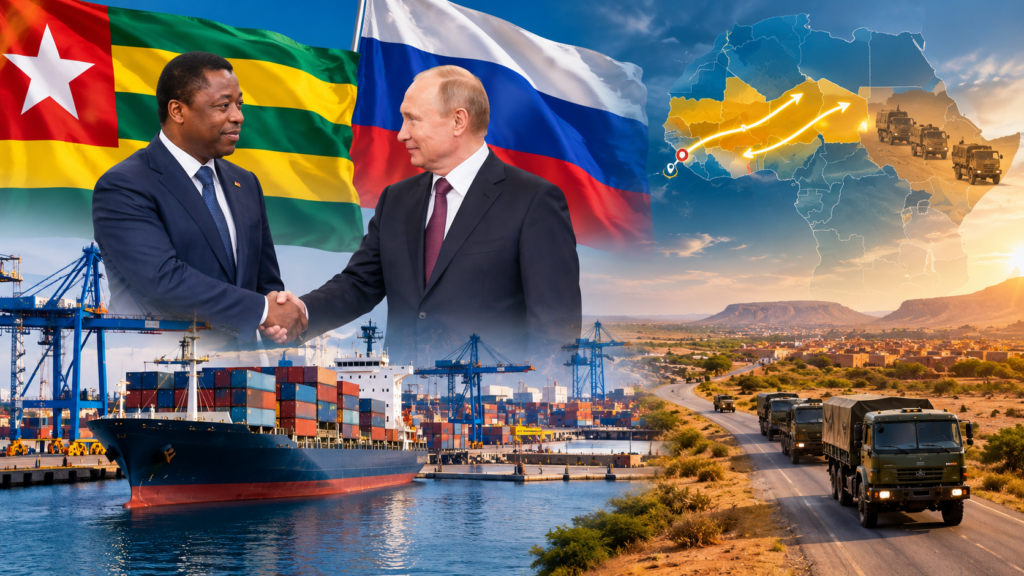
How a small West African port is becoming Moscow’s critical link to the Sahel
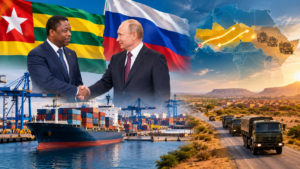
In October 2026, Togo and Russia formalised plans to transform Lomé’s port into a key transit hub for Russian goods bound for West Africa and the Sahel. While presented as a commercial agreement, the initiative signals broader ambitions—reshaping regional trade routes, strengthening supply chains, and embedding Russian influence across critical African corridors. The stakes extend beyond economics: the project’s timing, infrastructure commitments, and documented precedents suggest a strategic pivot that could redefine logistics, trade flows, and security dynamics across the Sahel.
The Russia–Togo transport corridor, unveiled during the first session of the intergovernmental commission in Lomé, represents more than just enhanced commercial ties. With a Russian delegation of 29 officials visiting key infrastructure sites—including the Autonomous Port of Lomé, Gnassingbé Eyadéma International Airport, and the Adétikopé Industrial Platform—the initiative underscores a deliberate effort to integrate Togo’s logistical capabilities into Moscow’s broader Sahel strategy. But the project’s real significance lies in its continuity with prior events that already demonstrated Lomé’s role as a gateway for sensitive cargo destined for conflict zones.
From sanctions-busting to strategic transit: the Mikhail Britnev precedent
Before the corridor was announced, Lomé had already served as an entry point for Russian military logistics. In July 2026, the cargo vessel Mikhail Britnev, subject to U.S. sanctions since 2024, docked in Lomé. Evidence subsequently emerged linking the ship to a military convoy observed days later in Bamako, Mali. Satellite imagery and maritime tracking data confirmed that the vessel transported approximately 50 military vehicles—including armored personnel carriers—which convoyed through Togo and Burkina Faso before reaching their destination.
The sequence of events—sanctions evasion, port clearance in Lomé, and onward military shipment—illustrates a working model for Russian logistics to the Sahel. While the proposed corridor is framed as a commercial venture, the Mikhail Britnev episode reveals a proven pathway for dual-use cargo: civilian trade infrastructure being leveraged for military supply chains. This precedent raises urgent questions about the end-use monitoring, regulatory oversight, and potential militarisation of trade flows through Lomé.
Togo’s strategic pivot: from diplomacy to operational integration
The current initiative builds on a year of intensified cooperation between Lomé and Moscow. In November 2025, Togolese President Faure Gnassingbé met with Vladimir Putin in the Kremlin, where the two leaders discussed expanded economic, energy, and security cooperation—particularly regarding Sahel stability. Since then, the relationship has evolved from high-level diplomacy to tangible infrastructure and logistics projects, culminating in the 2026 commission session.
Togo’s leadership is positioning the country as a neutral yet strategically vital partner in the region. With land borders to the Sahel through Ghana, Burkina Faso, and Benin—and a deep-water port capable of handling large cargo volumes—Lomé offers Moscow a flexible logistics node. The inclusion of the Adétikopé Industrial Platform in discussions signals intentions beyond mere transit: the development of storage, light manufacturing, and value-added services, transforming Lomé from a brief stopover into a regional distribution and processing hub.
This transformation could enable Togo to become a key redistributor of Russian goods—not only to Sahelian markets but also across West Africa. Such a role would enhance Lomé’s economic relevance while embedding Russian logistics deeper into African commercial networks, potentially altering trade balance dynamics across multiple countries.
Geopolitical implications: corridors, competition, and control
The Togo–Russia corridor initiative unfolds amid a rapidly shifting Sahel landscape. Closures of critical trade routes—such as the Benin–Niger border—have disrupted traditional supply pathways, forcing Sahelian states to seek alternative gateways. Lomé’s proximity to landlocked markets, coupled with its modern infrastructure, positions it as a viable alternative to congested or politically restricted corridors.
Yet the strategic value of Lomé extends beyond trade efficiency. Control over logistics infrastructure translates into influence over supply chains, economic dependencies, and potentially, military mobility. With Russian military presence already established in Mali under the Africa Corps banner, the integration of Lomé into a broader logistical network raises concerns about unintended escalation and regional security.
Moreover, the corridor’s dual-use potential blurs the line between civilian commerce and geopolitical leverage. While Russia may prioritise trade and energy partnerships, the precedent set by the Mikhail Britnev demonstrates that strategic end-use cannot be excluded. The risk of sanctions circumvention, illicit financial flows, or military resupply through Lomé poses challenges for regional stability and international enforcement.
Economic dividends and sovereignty concerns
For Togo, the corridor promises economic gains: port revenues, job creation, and industrial development around Adétikopé. Foreign investment in transport and logistics could stimulate broader growth, particularly if value-added industries emerge. However, the long-term implications for national sovereignty remain ambiguous. Reliance on Russian logistics infrastructure could create dependencies that constrain Togo’s policy choices—especially in areas such as sanctions compliance or regional diplomacy.
The question facing Lomé is not merely whether it can become Russia’s Sahel gateway, but at what cost. Will enhanced connectivity bring equitable prosperity, or will it entrench asymmetric trade relations and expose Togo to external political pressures? The answers will depend on the governance structures, transparency measures, and diversification strategies adopted in the corridor’s implementation.
What lies ahead: infrastructure, oversight, and consequences
As of now, no definitive timeline has been set for the corridor’s full rollout. Yet the groundwork is being laid through technical discussions, infrastructure assessments, and pilot shipments like those involving the Mikhail Britnev. The project’s evolution will hinge on three critical factors:
- Regulatory transparency: Clear customs, cargo tracking, and end-use verification mechanisms are essential to prevent misuse and ensure compliance with international sanctions.
- Infrastructural preparedness: Expansion of port capacity, road links to Sahelian markets, and integration with regional transit systems will determine the corridor’s efficiency and scalability.
- Strategic accountability: Togo’s leadership must balance economic opportunity with national interests, ensuring that the corridor serves broader development goals rather than becoming a conduit for foreign strategic agendas.
One thing is certain: Lomé is no longer just a passive port in a changing Sahel. It is rapidly becoming a node in a new geoeconomic and geopolitical architecture—one where trade routes, state influence, and security interests intersect. Whether this evolution strengthens or destabilises the region will depend on the choices made today in boardrooms, customs offices, and diplomatic chambers across Africa and beyond.