The latest findings from Niger’s audit authority have sent shockwaves through communities and boardrooms alike, revealing a water utility system teetering on the edge of collapse. The provisional report, covering 2023 and 2024 operations, paints a stark picture of widespread mismanagement, financial hemorrhage, and serious public health risks that threaten to destabilize everything from household budgets to national economic stability.
From contaminated taps to collapsing infrastructure: the human cost
The audit uncovered alarming bacterial contamination in water supplies across multiple regions, far exceeding World Health Organization (WHO) safety limits. In Doutchi, microbial contamination levels soared to 50,100 colony-forming units per 100 milliliters — more than 500 times above acceptable levels. Comparable violations were recorded in Maradi (30,200 CFU) and Filingué (17,120 CFU), posing direct risks of waterborne diseases including cholera, dysentery, and typhoid for over two million residents.
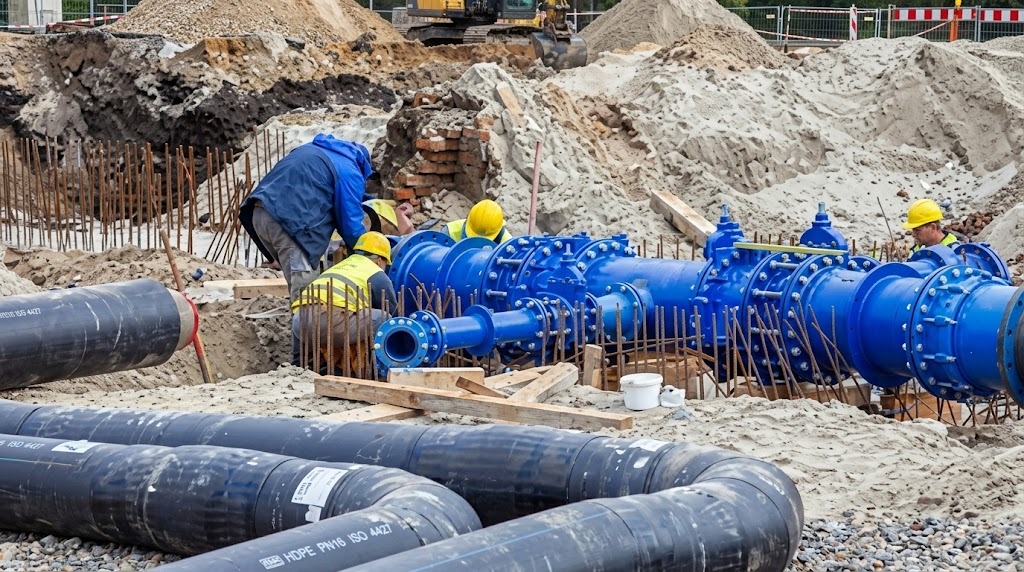
The root cause lies in a crumbling 6,957-kilometer distribution network, plagued by 20,000 to 40,000 leaks annually. These ruptures not only waste millions of cubic meters of water each year but also allow untreated sewage to infiltrate pipes, compounding contamination risks. Compounding the issue, chlorine dosing — critical for disinfection — has become unpredictable. Some areas face dangerous under-dosing, while others suffer erratic over-chlorination, creating both health hazards and public distrust in the water supply.
Broken pipes, broken trust: how unreliable water service disrupts daily life
For citizens like Aïcha, a mother of three in Niamey, the crisis has already upended daily routines. “We can’t use tap water anymore,” she says. “We buy bottled water for drinking, but even that costs half our monthly food budget. Every time we open the tap, we worry about what we’re exposing our children to.” In rural areas, women now spend up to four hours daily collecting water from distant, often contaminated, sources — time that could be spent on education or income-generating activities.
Financial hemorrhage: how mismanagement drains Niger’s economy
The financial toll of the water crisis is equally devastating. Unbilled water losses — primarily due to leaks and illegal connections — cost the state an estimated 5.3 billion West African CFA francs annually in lost revenue. These funds could have been reinvested in expanding clean water access or improving rural sanitation infrastructure.
Delays and irregularities in critical public contracts have further eroded public trust and economic efficiency. A recent tender for network equipment (lot DAO 001/2025), valued at 950 million CFA francs, has been stalled for months. Despite an advance payment of nearly 250 million CFA francs, the contracted supply remains stuck in Tunisia, paralyzing new household connections. Another procurement initiative — for essential chlorine-based disinfectants (DAO 009/2026) — was launched under emergency conditions, highlighting the urgent need for reliable supply chains.
Corruption whispers: the hidden cost of procurement failures
Audit findings suggest issues not only of inefficiency but of favoritism. The assignment of contracts to unqualified or politically connected suppliers has led to substandard materials and delayed deliveries. “The integrity of procurement processes has been compromised,” noted one internal auditor. These irregularities not only inflate project costs but delay critical repairs and upgrades across the network.
Inside the management crisis: poor governance sabotages public trust
The audit also exposed systemic governance failures within the Niger Water Utility (NDE). Spending decisions were made without oversight, with several managers receiving rapid promotions bypassing standard criteria. Many technical staff remain untrained, leaving a gap in expertise needed to maintain aging infrastructure and ensure safe water delivery.
The absence of certified training programs for field technicians further weakens institutional capacity. “We are operating with a skeleton crew of competent engineers,” admitted a senior operations manager. “Without investment in human capital, no technical solution can be sustained over the long term.”
No time to wait: urgent calls for reform amid rising public anger
Public reaction has been swift and fierce. Protests have erupted in urban centers like Niamey and Maradi, with citizens demanding accountability and immediate action. Business leaders warn that repeated water disruptions threaten industrial production, deter foreign investment, and could derail economic growth targets in one of Africa’s fastest-growing economies.
Civil society groups are urging the government to fast-track reforms, including stricter oversight, transparent procurement, and investment in pipeline rehabilitation and staff training. “Water is not a luxury — it’s a lifeline,” stated a coalition of NGOs. “Failure to act now isn’t just a public health risk; it’s a national economic emergency.”
Looking ahead: the road to recovery starts today
Reforms are not optional. They are essential to restore public confidence, protect public health, and secure the country’s economic future. With the audit’s final report pending, the window for action is closing fast. Niger’s citizens, businesses, and economy cannot afford another year of inaction.
The stakes are sky-high. The question is not whether change will come — but whether it will come in time.