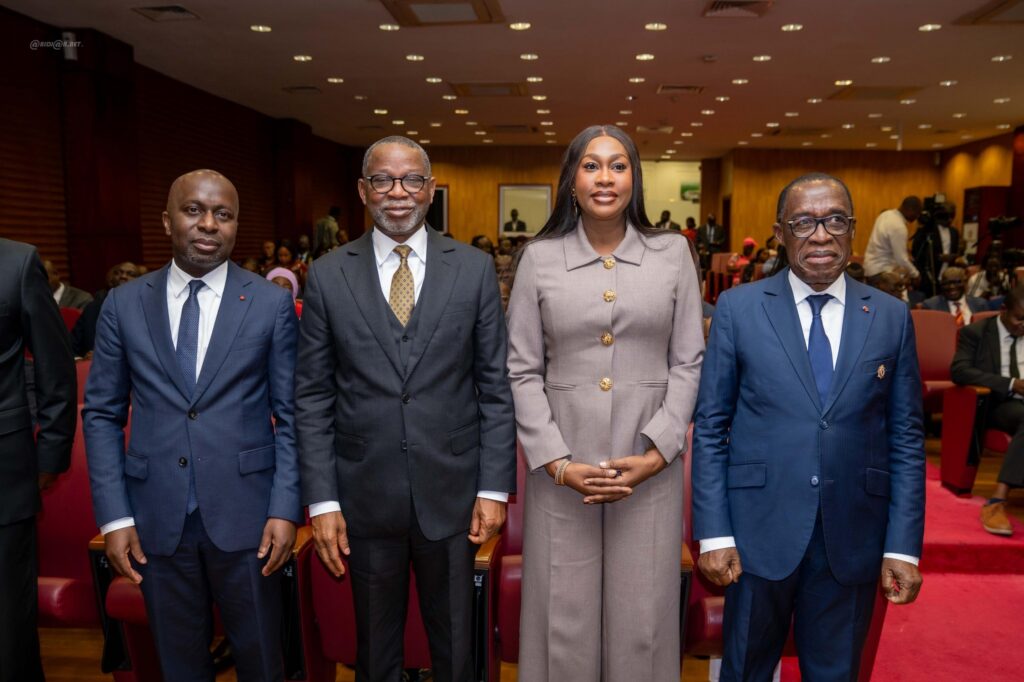
The National Agency for Vocational Training (AGEFOP) has unveiled a groundbreaking skills-needs assessment report in Abidjan, outlining a bold initiative to align young workers’ competencies with market demands. The findings, presented on June 18, 2026, stem from a pilot study across South-Comoé, Yopougon, and the Savanes District, involving over 800 formal and informal sector entities.
This study, a cornerstone of the national Passeport-Compétences program, will soon expand nationwide to address critical skill mismatches in Côte d’Ivoire’s labor market.
From data to action: closing the skills gap
Dr. Eugène Aka Aouélé, Chair of the Economic, Social, Environmental, and Cultural Council (CESEC), emphasized the study’s role in eliminating guesswork in workforce development. ‘The alignment of training and employment isn’t a distant ideal—it’s a systematic process grounded in real-world data,’ he stated. ‘This initiative places human capital at the heart of Côte d’Ivoire’s growth, offering a precise roadmap for future vocational policies.’ He also highlighted President Alassane Ouattara’s long-standing commitment to youth employability.
The Passeport-Compétences program goes beyond traditional training by certifying experience, a milestone CESEC calls ‘a transformative leap’ in human capital valorization. ‘Today’s ceremony marks the nationwide rollout,’ he added. ‘To young Ivorians, this passport is a pledge: the State is investing in your skills as your strongest asset for success.’
Government’s roadmap for qualified employment
Minister of Employment, Social Protection, and Vocational Training, Adama Kamara, framed the program as an accelerator, not a corrective measure. ‘It amplifies existing momentum to ensure growth translates into skilled jobs,’ he explained. The initiative aims to:
- Map national skills gaps;
- Train and integrate beneficiaries into the economy;
- Certify informal workers through experience validation;
- Equip businesses with a qualified workforce.
‘Field feedback will guide curriculum revisions, redirect training resources to high-demand sectors, and strengthen ties between companies, local authorities, and state services,’ the minister pledged.
Vocational training as a strategic investment
AGEFOP Director-General Karitia Coulibaly De Medeiros hailed the program as a paradigm shift, where vocational training is no longer a social expenditure but a strategic lever for competitiveness, job creation, and sustainable prosperity. ‘We train where needs exist,’ she asserted. ‘By listening to businesses, analyzing evolving professions, and anticipating future demands, we ensure qualifications remain relevant.’
The Passeport-Compétences framework bridges employers, local governments, training institutions, and communities, creating a unified ecosystem where skills become a strategic national asset. ‘Our goal is simple: empower every Ivorian to convert potential into recognized competence, turning that competence into a passport to employment, economic autonomy, and dignity,’ she concluded.
The national program, launched in March 2025 in Grand-Bassam, is a pillar of Côte d’Ivoire’s human capital development strategy, designed to foster lasting workforce integration.