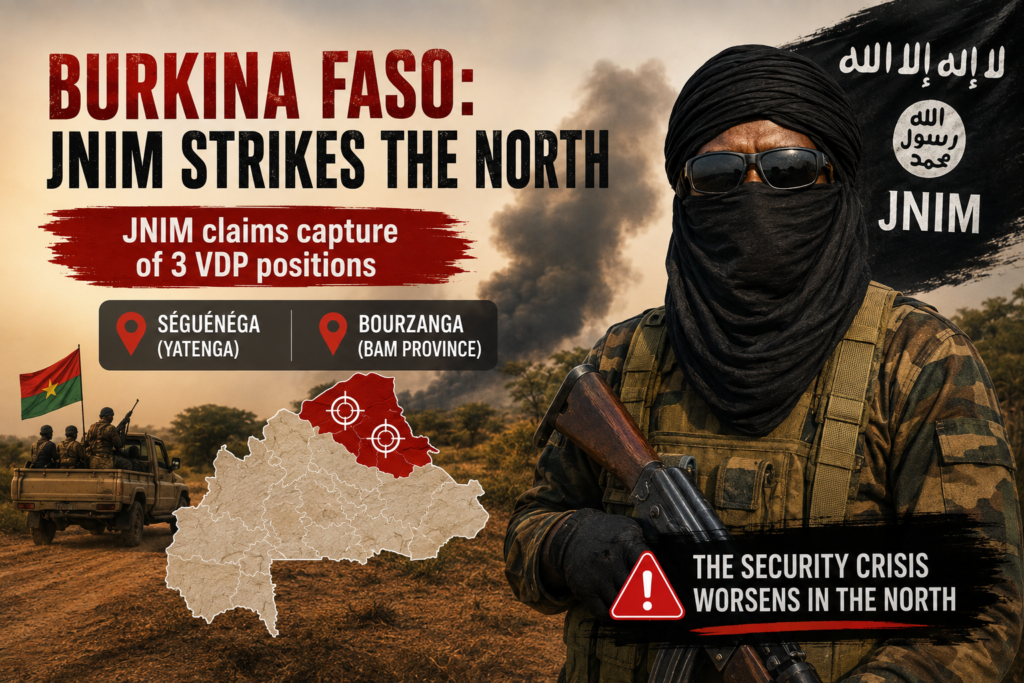
The persistent security crisis gripping Burkina Faso has intensified scrutiny of the government’s communication strategy, as authorities face mounting public skepticism. On August 19, the JNIM militant group claimed responsibility for seizing three strategic positions held by the Volunteers for the Defense of the Homeland (VDP) in the northern region. The assaults, executed with striking force, targeted Séguénéga in the Yatenga province and Bourzanga in Bam province, exposing yet another tactical setback in the country’s embattled security landscape.
The latest offensive underscores a recurring challenge: the inability of security forces to sustain control over recaptured or secured zones. The surge in militant attacks, relentless pressure on civilian populations, and the continued vulnerability of certain outposts demonstrate that military reconquest alone cannot guarantee long-term stability. A comprehensive approach combining robust state presence, intelligence capabilities, logistical support, and genuine civilian protection is essential to address the crisis effectively.
Strained Frontline Forces And Eroding Public Trust
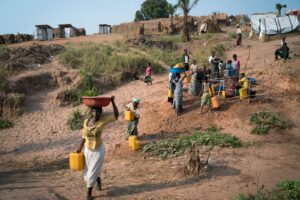
The escalating violence places the VDP, a cornerstone of Burkina Faso’s security strategy, in increasingly precarious positions. These volunteer forces, often deployed at the forefront, face well-armed militant groups known for their mobility and destructive capacity. Each territorial loss extends beyond a military failure; it erodes public confidence, triggers mass displacements, and obstructs humanitarian access, further destabilizing communities.
Despite these mounting challenges, the transitional government under Captain Ibrahim Traoré has responded with a series of disjointed public statements. Rather than addressing the glaring security vulnerabilities with clarity and purpose, the leadership’s rhetoric has veered into populist detours, seemingly designed to deflect criticism rather than confront the crisis head-on. Such evasive communication tactics risk deepening public frustration amid daily threats to safety and livelihoods.
Words Alone Cannot Secure The Nation
In a conflict of this magnitude, political speeches cannot substitute for tangible action. Rhetoric centered on sovereignty, resilience, or breaking from past alliances may resonate with certain segments of the population, but it does not shield villages, safeguard roads, or prevent attacks on military or auxiliary bases. Citizens demand concrete, measurable progress measures that tangibly improve their security and quality of life.
The central issue is no longer the narrative presented by the government, but the tangible changes unfolding or failing to unfold in the daily lives of Burkinabè. When towns remain exposed, villagers are forced to flee, or military positions fall despite deployed resources, the shortcomings extend far beyond rhetoric. They reflect the effectiveness or ineffectiveness of the national security strategy and the government’s capacity to fulfill its obligations.
Media Suppression And The Cost Of Silence
The space for critical analysis has all but vanished in Burkina Faso. The once-vibrant Burkinabè press now operates under severe restrictions. Journalists and dissenting voices attempting to investigate or report on ground realities face systematic repression harassment, arrests, or forced conscription into so-called re-education camps. Others are coerced into frontline service under the guise of patriotism, punished simply for reporting the truth.
This suppression of independent media carries grave implications. In a wartime context, free press serves as a vital mechanism for assessing progress, identifying failures, and alerting authorities to civilian hardships. Silencing those who document the truth does not erase the problems it widens the gap between official narratives and ground realities, fostering distrust and misinformation.
Denial Will Not Win The War
By tightening control over the national narrative, the government may project an image of control, but it cannot control the crisis itself. Attacks continue, civilians continue to flee, and lives continue to be lost realities that no amount of institutional messaging can conceal indefinitely.
Therein lies the paradox: as the security situation demands greater transparency, accountability, and open debate, the space for criticism narrows. Yet, an effective counterterrorism strategy requires acknowledging setbacks, diagnosing their causes, and correcting course swiftly. Avoiding contradiction may offer short-term political relief, but it deprives leaders of the critical insights needed to refine their approach.
By denying citizens access to free and independent information, the government entrenches itself in a cycle of denial that offers no solutions to the urgent security crisis. While firmness and mobilization are essential in combating terrorism, they must be paired with transparency, responsibility, and a willingness to confront hard truths.
The ultimate measure of success remains the safety of the people. As long as militant groups retain the ability to strike, advance, or maintain pressure on vulnerable regions, the government must be held accountable for the outcomes of its strategy. Communication may shape perceptions, but it cannot, by itself, secure the nation.