Rebel faction releases footage of captured soldiers in Niger
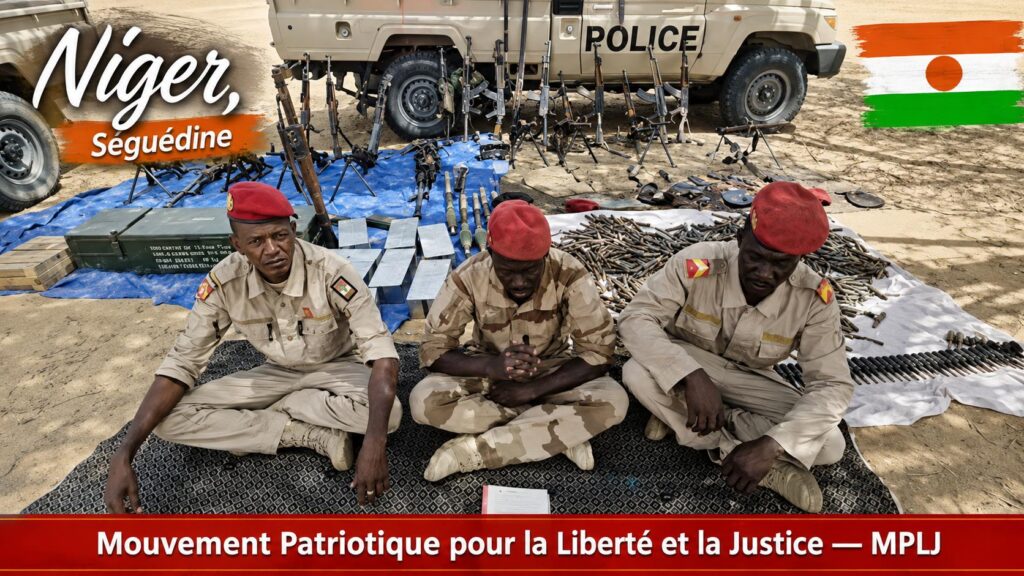
The Patriotic Movement for Liberty and Justice (MPLJ), a rebel group active in the Sahel, has published a video showing Nigerien soldiers taken hostage during a deadly assault on Séguédine on August 15, 2026. While the captives claim to be treated humanely, the incident has deepened fears among civilians in northern Niger and disrupted local trade.
The MPLJ video, circulated on encrypted messaging platforms and social media, features a group of Nigerien soldiers seated in a row, addressing the camera one by one. They assert that their living conditions are acceptable, medical care has been provided to the wounded, and they are being held in compliance with humanitarian principles. However, security analysts warn that such testimonies, given under duress, are part of a deliberate propaganda strategy to project the group’s military strength and challenge the central government’s authority.
The footage also showcases a significant haul of military equipment seized during the raid, including armored vehicles, automatic rifles, and ammunition. The MPLJ, led by Moussa Kounaï, appears to be reinforcing its image as a dominant force in the region.
Military and civilian reactions
In Niamey, the video has sparked strong emotions among the soldiers’ families and military command. While the sight of their loved ones alive offers some relief, the uncertainty surrounding their fate remains overwhelming. No official statement has been issued by the Nigerien military, though operations to locate and secure the affected areas are reportedly ongoing.
Séguédine: a strategic yet vulnerable outpost
The attack on Séguédine, a remote garrison in the Sahara, highlights the persistent vulnerability of isolated military posts in the Kawar region. Located near the Libyan border in the Bilma department, Séguédine serves as a critical transit point for migration and trade routes crossing the desert. The MPLJ’s ability to breach its defenses, inflict heavy casualties—at least 15 soldiers killed—and seize captives and weapons underscores its growing operational capacity.
This rebel faction, which claims to advocate for local communities and criticizes the central government’s policies, exploits the vast, sparsely monitored terrain to launch rapid, commando-style attacks before retreating into remote hideouts or across borders. Their actions further complicate the already volatile security landscape for Nigerien defense forces, who are stretched thin combating jihadist groups in the Liptako-Gourma and Lake Chad basin.
Economic paralysis grips northern Niger
The humanitarian and economic fallout from the attack is severe. The road connecting Agadez to the Libyan border, a vital artery for transporting food, fuel, and essential goods, has ground to a near halt. Transport companies and traders, terrified of ambushes or forced vehicle seizures, refuse to traverse the desert routes without heavy military escorts.
« The price of a sack of rice and a jerrycan of oil has doubled in just 48 hours, » shared a local aid worker from Bilma via phone. « Supply convoys now only move under heavy armed protection. If this continues, we risk severe shortages of basic food and medicine within days. »
The crisis has also devastated the region’s mining and artisanal economy, particularly traditional salt extraction and small-scale cross-border trade, which sustain the livelihoods of countless households. Young people, caught between mass unemployment and the looming threat of violence, fear being forcibly recruited or wrongly associated with insurgent groups.
A call for a comprehensive response
The MPLJ’s video release presents a direct challenge to Nigerien authorities. While securing the release of the hostages and restoring safe passage through the north remain top priorities, a purely military response may prove insufficient.
Local observers emphasize that sustainable stabilization will require strengthened community dialogue, the restoration of essential services in isolated areas, and guarantees for the free movement of people and goods. Until an official government reaction materializes, the residents of the Kawar hold their breath, dreading that Séguédine could become the flashpoint for an enduring conflict.