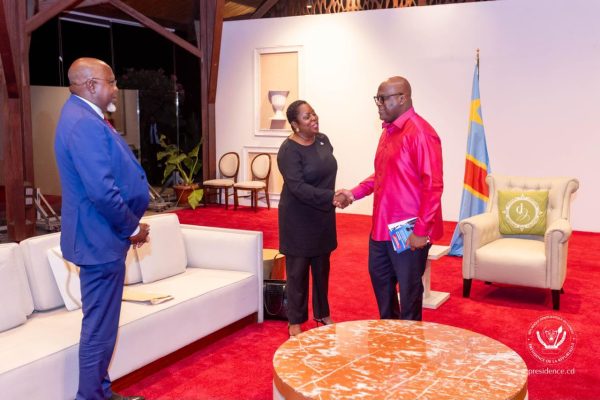
French lawmakers of Congolese descent are preparing a sweeping diplomatic campaign aimed at securing formal recognition of the GENOCOST genocide during France’s upcoming parliamentary term. The announcement follows a high-level meeting with President Félix Tshisekedi at the African Union City in Kinshasa.
The initiative spearheaded by the Collectif des élus français originaires du Congo-Kinshasa (CEFOCK) will unfold through targeted advocacy, educational forums, and coordinated outreach to local governments, French state institutions, and the Congolese diaspora across France.
At its core, this effort seeks to shift the narrative around Congo-Kinshasa’s tragic history from a footnote in policy discussions to a central pillar of national and international discourse. By leveraging their political influence in France, CEFOCK members aim to elevate the issue from advocacy circles to the floor of the National Assembly, where it can be debated as a matter of public policy.
Uniting memory and justice through institutional partnerships
A strategic alliance with the Commission interinstitutionnelle d’aide aux victimes et d’appui aux réformes (CIA-VAR) has been forged to reinforce the campaign’s credibility and scope. This government body is tasked with documenting atrocities, supporting survivors, and preserving historical memory — a critical foundation for future reparations and justice mechanisms.
The partnership will focus on two parallel tracks: first, ensuring that the suffering of victims is preserved in collective memory; second, advancing official recognition of the genocide, which would unlock pathways for legal restitution and institutional accountability.
President Tshisekedi welcomed the initiative during the meeting, emphasizing its role in strengthening Kinshasa’s memorial diplomacy on the world stage.
The diaspora steps into political leadership
This diplomatic push coincides with a broader push by the Democratic Republic of the Congo to secure international acknowledgment of crimes committed since 1996 as genocidal acts — particularly those linked to resource exploitation and regional conflicts. The Congolese diaspora, now represented in municipal, departmental, and regional councils across France, is playing a pivotal role in this transformation.
No longer confined to sharing personal testimonies, the diaspora is now wielding political influence to advocate for legislative recognition. By targeting French lawmakers at local and national levels, the CEFOCK-led campaign aims to replicate the momentum seen in previous genocide recognition efforts in France, such as those related to Rwanda and Armenia.
This continental-scale mobilization mirrors groundwork laid within Congo-Kinshasa itself. Just days before the diplomatic outreach, on August 2 — the national GENOCOST memorial day — President Tshisekedi led a solemn ceremony honoring the victims. During the event, he unveiled plans to construct the National GENOCOST Museum and a dedicated memorial, signaling a long-term commitment to institutionalizing remembrance and education.
Together, these domestic and international actions reflect Kinshasa’s coordinated strategy to secure formal recognition of the genocide and advance justice for its victims, particularly in the context of systemic exploitation of natural resources.