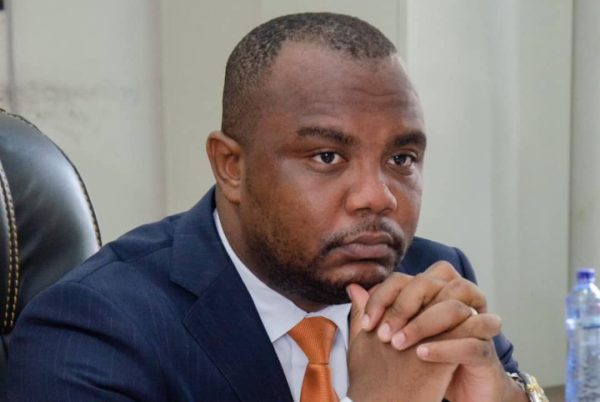
The head of the Democratic Republic of Congo’s High Council for Audiovisual and Communication (CSAC), Christian Bosembe, is taking decisive action. He has announced the imminent suspension of TikTok accounts that spread propaganda for the AFC-M23 rebel group. Negotiations with the platform’s management are already underway to implement the ban.
For the regulator, it is unacceptable for individuals like Corneille Nangaa—whom he describes as a terrorist—to have a digital megaphone in a nation at war. He condemns the platform for allowing content that jeopardizes national security to thrive.
CONTINUED AFTER ADVERTISEMENT
« Would an Al-Qaeda account be allowed in the U.S.? »
Christian Bosembe doesn’t mince words. He has directly questioned TikTok’s leadership, asking:
« Would a Hezbollah account operate in France? Would an Al-Qaeda account be tolerated in the United States? »
The implication? In the DRC, rebel leaders accused of atrocities against civilians continue to spread propaganda without restriction. Bosembe calls this tolerance grave and undignified for a sovereign state.
Facing no satisfactory response from TikTok, he has decided to enforce the ban himself. The CSAC cites its duty to protect public order and national unity, pointing to neighboring Gabon as an example where TikTok was already blocked.
The AFC-M23 rebels stand accused of massacres, mass displacements, and terrorizing communities in eastern DRC. Kinshasa alleges these operations are coordinated by Rwanda to exploit Congo’s mineral wealth. For Bosembe, cutting off the rebels’ digital reach is not just urgent—it’s a matter of state dignity.
« At some point, the Congolese state must simply respect itself. And to do that, these platforms must be shut down, » he insists.
Beyond TikTok, this move underscores a broader debate on digital sovereignty in the DRC. Amid a fierce information war, Kinshasa seeks to reclaim control over platforms it accuses of amplifying enemy narratives. The CSAC’s decision could mark a turning point in how social media is regulated during conflict.