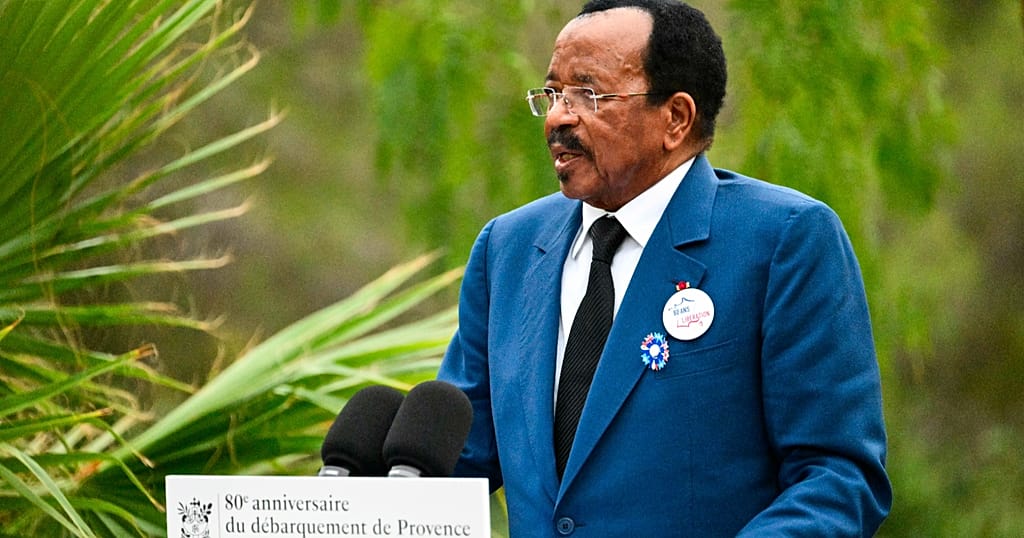
As allegations of a power vacuum intensify due to his prolonged absence, President Paul Biya of Cameroon has adopted a proactive approach by issuing a series of decrees to affirm his ongoing governance and decision-making authority.
The 93-year-old leader left Cameroon with his wife on June 7, initially described as a “brief private trip to Europe.” However, nearly two months later, Biya remains out of public view, fueling widespread speculation about his health and whereabouts.
In response to mounting doubts, the government has shifted its communication strategy, emphasizing the president’s continued engagement through presidential decrees. This tactic aims to reassure both domestic and international stakeholders of Biya’s active role in national affairs.
On July 28, the president signed a decree empowering the Economy Minister to finalize agreements with the Islamic Development Bank, securing nearly 28 billion CFA francs in funding. Then, on August 3, Biya reshuffled top military leadership, promoting five colonels to brigadier general rank and appointing General Ebaka Hypolite as the new Chief of Staff of the Armed Forces. These moves not only reinforce his presence in state affairs but also tighten control over the country’s security apparatus.
Government officials have dismissed concerns about the president’s health, insisting he will return to Cameroon in due course. Yet, the prolonged absence has drawn sharp criticism from opposition figures, who warn of institutional paralysis and describe the nation as operating on “autopilot.” Many have highlighted the long-overdue formation of a new government and the appointment of a vice president as critical pending tasks.