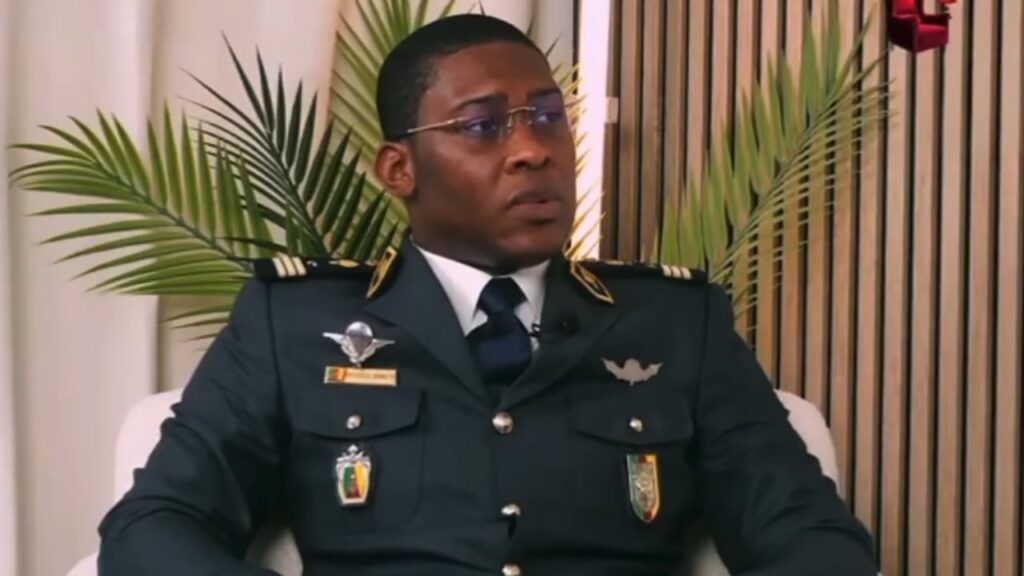

Allegations of serious misconduct involving a prominent government official have sent shockwaves through Cameroon’s political landscape. The accusations, leveled by Captain Romuald Effoudou, have ignited a firestorm of debate and raised pressing questions about accountability at the highest levels of the administration.
Captain Effoudou’s explosive claims
In a stunning development, Captain Effoudou, a military officer with a distinguished record, has publicly accused Ferdinand Ngoh Ngoh, a key figure in the Cameroonian government, of grave improprieties. The captain’s statements, delivered with precision, detail alleged abuses of power, financial irregularities, and ethical breaches that, if proven, could have far-reaching consequences for the nation’s governance.
The officer’s testimony, delivered in a candid and detailed manner, leaves little room for interpretation. Effoudou’s allegations are not mere speculation; they are grounded in documented evidence and firsthand accounts that demand serious scrutiny. His willingness to step forward, despite potential risks, underscores the gravity of the situation.
Ferdinand Ngoh Ngoh’s response
Ferdinand Ngoh Ngoh, a longtime confidant of President Paul Biya, has not remained silent in the face of these accusations. In a rare public statement, he dismissed the claims as baseless and politically motivated, accusing unnamed adversaries of seeking to destabilize his reputation and influence. Ngoh Ngoh’s defense hinges on his long-standing service to the state, during which he has played a pivotal role in shaping Cameroon’s policies and international relations.
His response has done little to quell the controversy. Critics argue that his denial lacks transparency, particularly given the specificity of Effoudou’s allegations. The absence of a thorough investigation has only fueled public skepticism, with many questioning whether the truth will ever emerge.
Political and social repercussions
The fallout from this scandal is already reshaping Cameroon’s political discourse. Opposition figures have seized on the allegations to call for greater transparency and reform, while civil society groups demand an independent inquiry into the accusations. The government’s handling of the situation will be closely watched, as perceptions of fairness and justice hang in the balance.
Meanwhile, the public reaction has been swift and divided. Some view Effoudou’s actions as a courageous act of whistleblowing, while others see them as a dangerous escalation in an already volatile political climate. The debate has spilled into social media, with hashtags and discussions amplifying the divide between supporters and detractors of both parties.
The role of President Paul Biya
At the heart of this controversy is President Paul Biya, who has led Cameroon for over four decades. His administration’s response—or lack thereof—to the allegations against Ngoh Ngoh will be scrutinized as a test of its commitment to accountability. With the country facing mounting challenges, from economic strain to security threats, the outcome of this scandal could have lasting implications for stability and governance in Cameroon.
What happens next?
The coming days and weeks will be critical in determining the trajectory of this crisis. Will an independent investigation be launched? Will Effoudou’s allegations lead to concrete actions, or will they fade into the background of Cameroon’s ever-evolving political narrative? One thing is clear: the stakes have never been higher, and the nation’s future may hinge on the resolution of this explosive dispute.