The promise of ‘100% Burkinabè gold’ under scrutiny
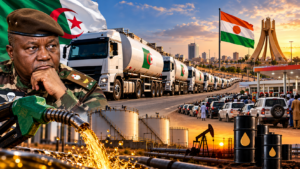
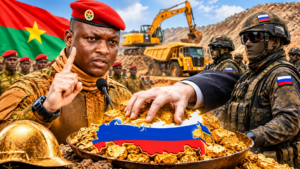
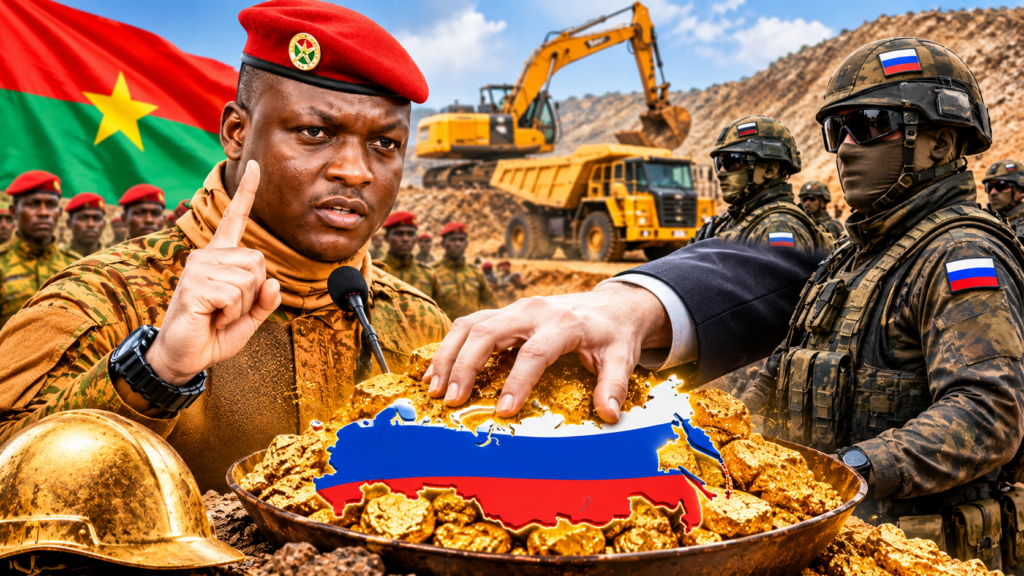
Amid bold declarations by Burkina Faso’s military leadership about reclaiming economic sovereignty, a closer examination reveals a complex reality. While President Ibrahim Traoré insists that the nation’s gold wealth belongs exclusively to its people, the growing role of Russian security firms in protecting mining operations casts doubt on the true extent of national control over this vital resource.
The administration’s commitment to nationalizing mineral wealth and prioritizing its benefits for local communities has become a cornerstone of its political narrative. However, the practical implications of this stance are now being tested not just by global market forces, but by the expanding footprint of foreign actors in the country’s most sensitive economic sectors.
Security partnerships that challenge national authority
The integration of Russian security companies into Burkina Faso’s mining landscape introduces a critical dilemma. The junta in Ouagadougou has framed its strategic alignment with Moscow as an assertion of sovereignty a deliberate move away from traditional partners and toward reclaiming territorial and economic control. Yet when these foreign firms begin to assert influence over operations as sensitive as gold extraction, the question of who truly holds authority over national resources becomes unavoidable.
A mine is more than a site of mineral extraction; it is a hub of economic activity, requiring oversight of security protocols, material transport, financial transactions, and operational execution. When foreign entities are entrusted with such responsibilities, the need for clear contractual terms, financial transparency, and state oversight intensifies. Without these safeguards, the risk of external influence whether intended or incidental grows, complicating Burkina Faso’s ability to dictate the terms of its own development.
Beyond rhetoric: measuring true sovereignty in practice
For a nation to claim genuine sovereignty over its resources, mere ownership claims are insufficient. Sovereignty demands tangible control: the ability to enforce decisions, regulate access, and ensure that generated wealth flows to the intended beneficiaries. The presence of Russian security firms in roles that intersect with these functions raises pressing questions.
What are the exact mandates of these foreign security providers?
How are their contracts structured, and who monitors their execution?
Do their operations align with national priorities, or do they introduce new dependencies?
These are not peripheral concerns. The paradox of declaring gold to be entirely Burkinabè while outsourcing its protection to external entities underscores a deeper issue: the difference between legal ownership and operational control. Nationalization laws may transfer formal rights, but they do not automatically confer the capacity to manage the complexities of extraction, security, and revenue distribution.
Who benefits from Burkina Faso’s gold wealth?
The ultimate test of sovereignty lies in the distribution of economic benefits. For gold mining to fulfill its promise as a driver of national development, the proceeds must support public infrastructure, social services, and job creation. Yet when external actors whether foreign governments or private firms play a decisive role in the ecosystem surrounding extraction, the risk arises that financial flows and decision-making power shift beyond national boundaries.
This is not to suggest that international partnerships are inherently negative. Strategic alliances can bring expertise, stability, and investment. But they must be structured in ways that reinforce not undermine the sovereignty they are meant to uphold. The Burkinabè people deserve clarity on who safeguards their mines, who profits from security contracts, and how revenues are ultimately allocated.
Sovereignty demands more than declarations it requires proof
President Traoré’s assertion that Burkina Faso’s gold is 100% Burkinabè resonates with nationalist sentiment. But sovereignty cannot be proclaimed; it must be demonstrated. It requires a robust framework of transparency, independent oversight, and national capacity to enforce decisions. The presence of Russian security firms in critical roles does not automatically negate sovereignty but it does necessitate rigorous scrutiny, strong governance, and a clear definition of national authority.
The challenge facing Burkina Faso is not merely to replace one external influence with another, but to build a system in which all partnerships regardless of origin serve the public interest. The gold beneath the soil belongs to the people of Burkina Faso. The task now is to ensure that its extraction, protection, and economic returns reflect that principle in practice, not just in policy.
By Rose Njoya — Journalist