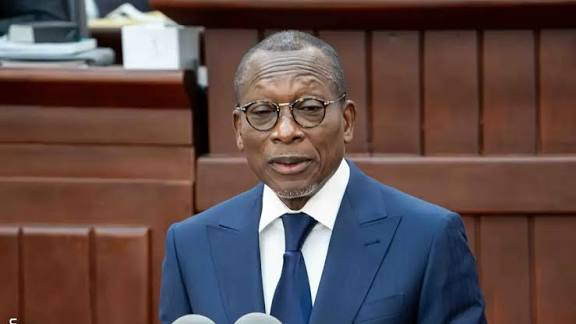
When Benin’s National Assembly prepares to scrutinise the 2027 finance bill in November 2026, the name of Patrice Talon—President of the Senate—is notably absent from the lineup. While government ministers and agency heads are scheduled for public hearings, the chamber’s highest-ranking official will not be called to explain the Senate’s own expenditure plans. The reason is not oversight or privilege; it lies in the institutional fine print that governs how parliament’s budgets are drafted, approved and merged into the national accounts.
Behind the silence: Why the Senate’s budget follows a separate trail
Every year, the Senate prepares a self-contained draft budget after the government sets the macro-budgetary ceiling. This internal budget covers staff salaries, committee operations, information services and upkeep of the building—essentially the day-to-day running costs of the upper house. The draft then moves through a three-step pipeline defined by the Senate’s internal rules:
- Step 1 – Orientation & drafting (Article 97)
The Senate enjoys administrative autonomy: it can shape its own spending priorities within the overall ceiling announced by the Executive. Budget officers, under the direction of the Senate President, translate policy priorities into line-item estimates.
- Step 2 – Internal approval (Article 98)
The full Senate debates and votes on the draft in a closed session. No outside interference is permitted; the chamber’s rules shield the document from last-minute ministerial edits. Once adopted, the budget becomes a binding annex to the Senate’s internal accounts.
- Step 3 – Transmission to Treasury (Article 99)
The President of the Senate signs the final document and forwards it to the Minister of Finance. At that point the Senate’s budget ceases to be an independent ledger. Instead, the aggregate of its credits is slotted into the Ministry’s consolidated budget proposal and presented to the National Assembly as part of the annual Finance Bill.
The domino effect: What happens when Senate credits land in the Finance Bill
Once integrated, the Senate’s expenditures lose their identity. They become indistinguishable from other line items—education, health, infrastructure—in the giant spreadsheet that deputies will debate line by line. The National Assembly’s Finance Committee can still veto or trim the overall envelope, but it cannot single out Senate salaries or committee funds for special treatment. In short, the Senate’s internal budget is protected until it merges with the national budget; after that, it is subject to the same parliamentary arithmetic as every other vote.
No anomaly, just procedure: Lessons from the bicameral switch
Five years after Benin adopted a bicameral system, the Senate’s budget ritual remains unchanged. The 2027 Finance Bill is no exception: the Senate President does not appear before the National Assembly’s Budget Committee because the Constitution and the Senate’s own rules already say so. The same silence was observed when the Assembly’s President, Joseph Djogbénou, stayed away from the same committee in 2025. Each chamber prepares its own numbers, then hands the totals to the executive, which repackages them for deputies. What looks like an empty seat on the calendar is simply the mechanics of a well-oiled system.
Real-world fallout for citizens and taxpayers
Far from being a procedural quirk, the Senate’s separate budget cycle has tangible consequences. Because the Senate can fine-tune its spending ceiling months before the Finance Bill is published, the upper house can accelerate or postpone repairs to its historic building, for example, without waiting for cabinet approval. Conversely, if deputies later slash the overall budget, the Senate has no legal cushion: its expenses are treated like those of any government ministry. Taxpayers therefore shoulder the risk that austerity measures voted in the National Assembly will trickle down to the chamber responsible for overseeing the executive branch.
In the end, Patrice Talon’s absence from the November hearings is not a sign of opacity or exemption. It is a reminder that Benin’s bicameral architecture splits the budgetary workload—one part shielded by internal procedures, the other exposed to open parliamentary scrutiny. Citizens can track the money, but they must follow two separate trails to trace how every franc is planned, protected and finally paid.