Bénin’s Senate commences work in Porto-Novo amid expectations of stability
July 30, 2026
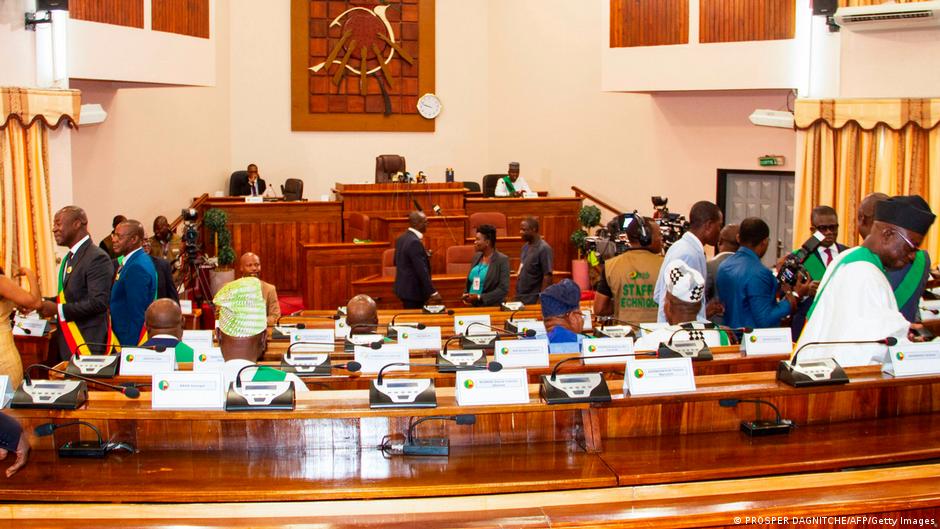
Bénin’s Senate is now fully operational with the swearing-in of its 25 members, including former presidents, marking a significant milestone in the nation’s democratic evolution.
Designed as both a regulatory chamber and a council of elders, the Senate aims to strengthen social cohesion and prevent political tensions. While expectations run high, some citizens remain cautiously optimistic about its potential impact.
Established through the November 2025 constitutional amendment, the Senate will initially operate from the National Assembly building until its permanent headquarters is completed. Before today’s official launch, senators gathered in Cotonou last Friday under the leadership of Robert Dossou, former president of the Constitutional Court, to lay the groundwork for their legislative agenda.
The Senate’s primary mission is to act as a stabilizing force in Bénin’s political landscape. Comprising ex-officio members and appointed figures, it is seen as a collective of experienced leaders capable of mediating disputes and guiding the nation toward calmer political waters.
Governance expert Joël Atayi-Guèdègbé shares this sentiment, stating, “I sincerely expect this upper house to embody wisdom and serve as a true council of elders, given the wealth of experience among its members. This chamber holds immense responsibility—it cannot afford to falter or repeat past political divisions.”
An institution built for consensus
The Senate’s composition includes prominent figures such as former presidents Patrice Talon, Boni Yayi, and Nicéphore Soglo, whose political paths have not always aligned. In a country still grappling with the remnants of past political strife, many see the Senate as a crucial mechanism for fostering dialogue and stability.
“We view this institution as a pathway to peace, especially considering our nation’s history of political conflicts driven by self-interest,” remarks political analyst Eugène Allossoukpo. “What we anticipate now is a more balanced and regulated political ecosystem in Bénin, where dissenting voices can still be heard without escalating tensions.”
Financial implications and public scrutiny
The Senate’s establishment has sparked discussions about its financial burden on the national budget. The government has allocated 100 million West African CFA francs solely for the inauguration ceremony.
“There will undoubtedly be additional costs. While the Senate is smaller in size, it will still incur recurring expenses,” notes Joël Atayi-Guèdègbé. “We hope that beyond the four planned annual sessions, extraordinary meetings remain minimal. Despite the high remuneration tied to these positions, we trust that proportionality will be maintained. Democracy, after all, comes with a price.”
With all eyes now on the Senate’s leadership, speculation swirls around whether former president Patrice Talon will assume the presidency of the chamber. As the 25 inaugural senators begin their mandate, their greatest challenge lies in demonstrating that national stability justifies this new democratic investment.