Addis-Abeba
Le Bénin trace les contours d’une présidence africaine attendue
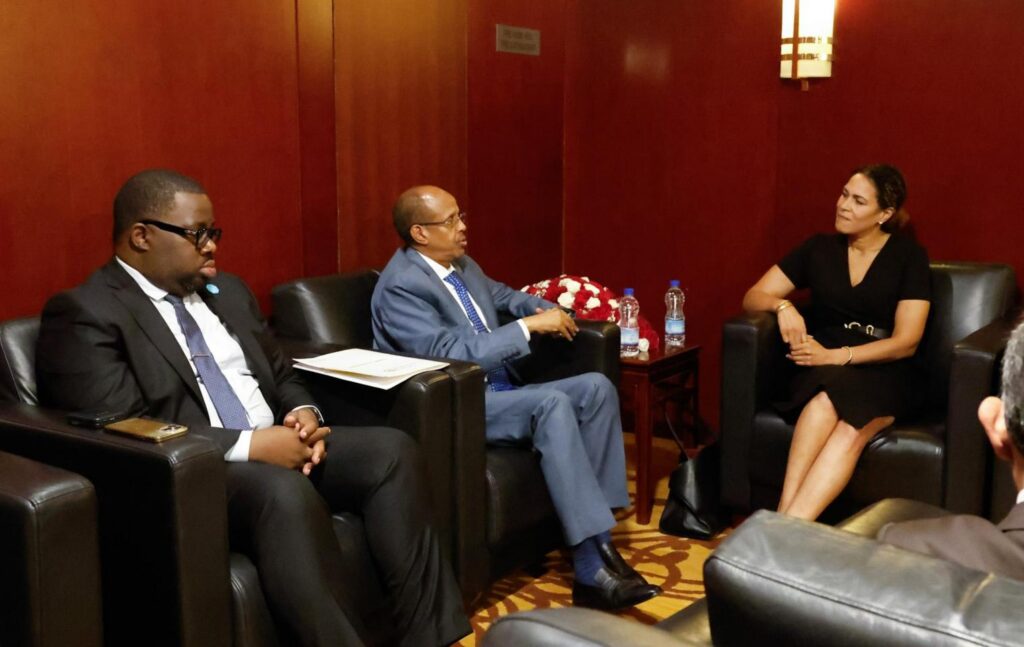
A pivotal moment unfolded within the esteemed halls of the African Union headquarters. On July 28 and 29, 2026, Bénin’s Minister of Foreign Affairs, Corinne Amori Brunet, engaged in crucial discussions with Mahmoud Ali Youssouf, the Chairperson of the pan-African organization’s Commission. These talks, held on the sidelines of the 49th ordinary session of the Executive Council, were far more than a mere courtesy. They laid the groundwork for a significant event Cotonou intends to transform into a diplomatic masterclass: the rotating presidency of the African Union’s Peace and Security Council in September.
This important responsibility is the culmination of a strategic trajectory. On February 11, 2026, also in Addis-Abeba, Bénin secured its election as a member of this vital body for the 2026-2028 term. The upcoming September rotating presidency is a natural progression, yet it represents the most visible and challenging test. The Peace and Security Council remains the most scrutinized institution within the continental framework, tasked with mediating crises, authorizing missions, and adjudicating political transitions. Assuming its leadership, even for a limited period, places a nation squarely in the international spotlight.
The timing further amplifies the significance of this period. Bénin’s presidency will coincide with the 81st session of the United Nations General Assembly in New York, a global platform where the continent’s priorities can achieve worldwide resonance. Cotonou views this as an unparalleled opportunity to articulate an African perspective on peace and security issues and to deepen the dialogue between the African Union and the UN – an institutional partnership crucial for effective responses to crises, from the Sahel to the Horn of Africa.
For a medium-sized nation, historically perceived as a quiet actor on the regional stage, this elevated diplomatic exposure is far from insignificant. It aligns with a deliberate strategy adopted since President Romuald Wadagni’s ascent to power, whose initial sub-regional tour already signaled an ambition: to position Bénin as an influential partner, capable of impacting major continental issues while maintaining the measured approach that has long defined its reputation.
The recent events in Addis-Abeba underscore this growing influence. By meticulously preparing its presidency through direct engagement with the Commission, Cotonou signals its intention to actively shape the agenda rather than merely react to it. Bénin steps into this role amidst a deteriorating security landscape, characterized by the expansion of armed groups towards the coastal states of the Gulf of Guinea, the fragility of Sahelian transitions, and rising tensions within regional blocs. These challenges demand a nuanced understanding of geopolitical balances. On such critical matters, the credibility of a presidency is measured less by pronouncements and more by its capacity to forge consensus.
The challenge for Corinne Amori Brunet will be precisely to translate this visibility into tangible influence. Guiding the Peace and Security Council requires setting the agenda, navigating often arduous negotiations between states with divergent interests, and maintaining a discourse that is both firm and unifying. It is a delicate balancing act where the slightest misstep can incur significant political cost. However, it also presents a rare opportunity to demonstrate that a nation can, through the quality of its diplomacy, compensate for its geographical footprint.
Nevertheless, the rotating presidency is merely one month within a two-year mandate. Its enduring success will be judged over time, based on Bénin’s consistent advocacy for its priorities once the presidential gavel has been passed. The coming weeks will reveal whether the meticulous preparation observed in Addis-Abeba translates into concrete initiatives during the UN session in September.
In a region where security fractures are deepening, the voice of a state committed to dialogue and methodical engagement is invaluable. By methodically embedding itself at the core of the continental peace apparatus, Bénin is banking on patient diplomacy as a strategic asset. The demonstration begins this September.