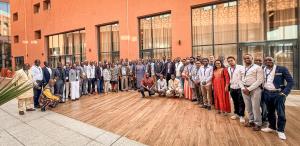
African experts gather in Dakar to sharpen data strategies for polio eradication
Dakar – More than 80 specialists from 19 African nations are collaborating in Dakar this week to elevate the quality, consistency, and application of polio surveillance data. This collective effort is a fundamental step toward improving disease detection, guiding immunization drives, and ensuring children across the entire Region are shielded from polio.
This initiative is part of a comprehensive workshop focused on data quality assessment and the coordination of polio workstreams, held from June 8 to 19, 2026. The program is designed to unify efforts across various technical sectors to ensure a more robust response to potential outbreaks.
Bringing together delegates from Ministries of Health, national polio reference laboratories, and international health experts, the workshop focuses on fortifying the data frameworks that underpin polio surveillance and outbreak management. The ultimate goal is to facilitate evidence-based decision-making throughout the African Region.
Participants are conducting a deep dive into data quality across several vital sectors of the eradication program. This includes the monitoring of acute flaccid paralysis (AFP), environmental and laboratory surveillance, electronic tracking systems, and supplementary immunization activities (SIA). By analyzing the primary obstacles to high-quality data, the experts aim to find practical ways to ensure the consistent and timely reporting of reliable information.
The workshop features practical sessions centered on digital solutions and tools designed to promote data-driven strategies at every level of public health. Discussions are also highlighting the operational maintenance of digital platforms that support high-performance information systems, which are essential for the rapid collection, analysis, and reporting of critical health data.
The event was opened by Dr Yao N’da Konan Michel, a prominent health official in Sénégal. During his remarks, he expressed appreciation to the government and the Ministry of Health of Sénégal for hosting the summit in Dakar, while also commending the country’s strong track record in managing infectious diseases within the Region.
Dr Yao pointed out that although the African Region reached a landmark achievement in 2020 by being certified free of indigenous wild poliovirus, the continued presence of variant polioviruses means that vigilance cannot waver. He stressed that high-quality surveillance, rapid response capabilities, and effective vaccination campaigns are essential to closing immunity gaps. A robust digital ecosystem, supported by strong data governance, sits at the heart of these efforts.
While outlining the workshop’s objectives, Kebba Touray, a lead in data and information management, stated that the gathering reflects a shared promise to protect the legacy of the polio program and strengthen public health surveillance systems across Africa. He noted that these systems have been built through dedicated leadership and years of targeted technical and financial support.
Touray urged the participants to use this two-week period to create durable mechanisms for addressing data quality gaps. He cautioned that failing to improve in this area would make it difficult to monitor surveillance sensitivity or the effectiveness of vaccination responses. Such a failure, he noted, would put the Region’s progress toward total polio eradication at significant risk.