
In the heart of Mali’s Kidal region, a new power dynamic is taking shape under the leadership of Alghabass Ag Intalla. His rise marks a pivotal shift in the region’s political and security landscape, drawing attention from both local communities and international observers. The alliances shaping his inner circle reveal a complex web of influence that extends beyond traditional boundaries.
Jihadist factions and former military figures: unexpected alliances
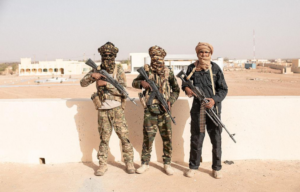
The foundation of Ag Intalla’s authority rests on a carefully constructed coalition that unites disparate groups under a shared vision. At the core of this alliance are jihadist movements operating in the Sahel, whose influence has long shaped the region’s volatile security environment. These factions, once seen as adversaries, now find common ground with ex-military leaders who once served in Mali’s armed forces.
This convergence of interests is not merely coincidental. Former soldiers bring with them tactical expertise and institutional knowledge, while jihadist groups contribute a network of grassroots support and ideological alignment. Together, they form a formidable force capable of reshaping the balance of power in Kidal.
Key players in Ag Intalla’s inner circle
The inner circle of Alghabass Ag Intalla is a microcosm of Mali’s fractured yet interconnected political landscape. Among the most influential figures are:
- Iyad Ag Ghaly: A seasoned rebel leader whose name resonates across the Sahel. His involvement signals a strategic pivot toward consolidating regional influence.
- Bilal Ag Acherif: A prominent figure whose background in both political and military spheres provides critical leverage in negotiations and operations.
- Assimi Goïta: The transitional president’s inclusion underscores the delicate interplay between national leadership and local power structures.
- Tuareg notables: Traditional leaders from the Tuareg community play a pivotal role in legitimizing Ag Intalla’s authority, bridging gaps between urban and rural factions.
Security and stability: a fragile equilibrium
The alliance forged by Alghabass Ag Intalla presents both opportunities and challenges for Mali. On one hand, it offers a potential pathway to stabilise the Kidal region, where decades of conflict have left deep scars. On the other, the integration of former adversaries raises concerns about long-term cohesion and the potential for renewed hostilities.
International actors closely monitor these developments, wary of the implications for regional security. The success or failure of this coalition could set a precedent for how Mali navigates its complex political terrain in the years ahead.
What the future holds for Kidal
The trajectory of Kidal under Alghabass Ag Intalla remains uncertain. While his leadership brings a fresh perspective, the road to lasting peace is fraught with obstacles. The ability to balance competing interests, address grievances, and foster trust among diverse factions will determine whether this new era can deliver stability or merely another chapter in Mali’s ongoing struggle.
As Mali continues to grapple with instability, the dynamics unfolding in Kidal serve as a microcosm of the broader challenges facing the nation. The choices made today will echo through the region for years to come.