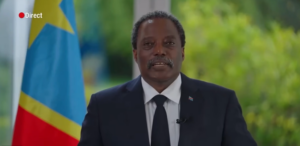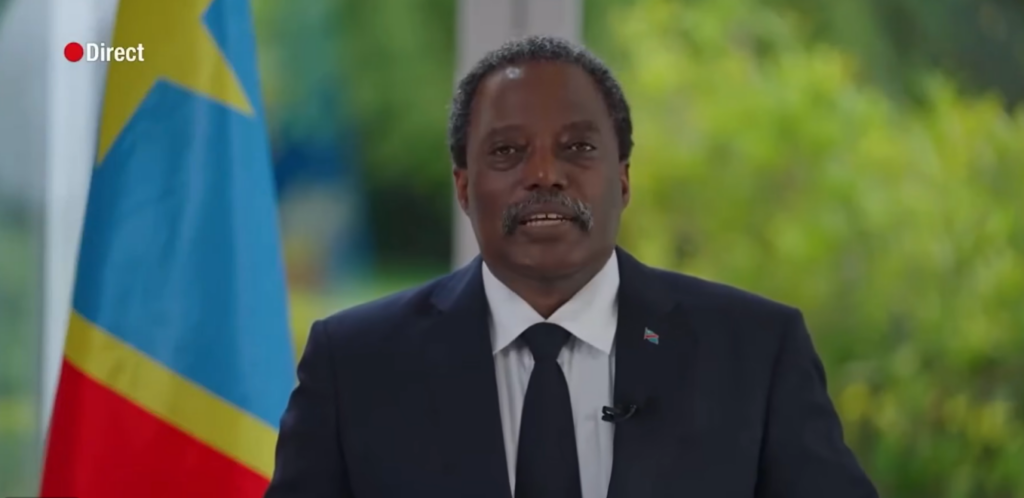
By formally assuming leadership of the Front for the National Rebirth (FRN) on October 12, 2026, former Democratic Republic of Congo (DRC) president Joseph Kabila has returned to the political stage in a dramatic military capacity. This new alliance, which unites the M23 armed group and ex-Alliance Fleuve Congo, strategically masks a rebellion backed by Rwanda—a move designed to sidestep international scrutiny over proxy forces tied to Paul Kagame. Yet this gamble risks igniting a powder keg in a country already crippled by systemic exploitation of its vast mineral wealth.
The Kabila legacy: from rebellion to political maneuvering
In 1996, Laurent-Désiré Kabila—father of Joseph—emerged as leader of the AFDL, a Rwanda-backed rebellion that toppled the regime of Mobutu Sese Seko. Installed in Kinshasa the following year, Laurent-Désiré Kabila soon sought to distance himself from his Rwandan patrons, sparking the Second Congo War before being assassinated in 2001. His son, Joseph, inherited the presidency at age 29, navigating nearly two decades of fragile balance between Kinshasa’s authority, eastern militias, and Rwanda’s regional ambitions.
Now, by openly aligning himself with the very proxies he once opposed, Joseph Kabila is no longer just a figurehead—he’s transforming a localized insurgency into a nationwide power bid. His involvement lends political legitimacy to movements long seen as foreign-backed armed factions, turning ethnic militias into instruments of national contestation.
From armed group to opposition banner: how Kabila reshapes the rebellion
The M23, historically perceived as a Rwandan proxy defending Tutsi Congolese interests, has long lacked credible political representation. With Kabila at its helm, the group gains a unifying figure rooted in state authority—a crucial shift from a fragmented rebellion to a coordinated opposition movement. As observers note, this alliance transforms what was once a border conflict into a campaign for regime change, with the stated goal of toppling President Félix Tshisekedi.
Yet behind this convergence of interests lie deeper layers of collusion. Analysts warn of a shadow network where institutionalized criminality and foreign interests converge, with state actors complicit in maintaining chaos to sustain illicit economic flows across eastern DRC.
DRC’s mineral wealth: a magnet for predation and conflict
Stretching over 2.3 million square kilometers—nearly 90 times the size of Rwanda—the DRC is a geographic giant with a fragile state structure. Its eastern provinces, including Kivu and Ituri, sit atop some of the world’s most valuable mineral deposits: gold, coltan, cobalt, zinc, and manganese. These resources fuel global supply chains, feeding demand from China to Western nations.
Yet this wealth is not a source of development—it’s a catalyst for external exploitation. Rwanda and allied militias extract Congolese minerals through clandestine networks, channeling coltan and other ores to international markets despite lacking domestic production. The result is a paradox: while eastern DRC descends into chronic insecurity, mining zones remain under ultra-secure private control, guarded by armed groups acting as de facto enforcement arms of extractive enterprises. The hypocrisy is staggering—condemnations of the crisis ring hollow when multinational buyers continue sourcing through intermediaries, perpetuating a cycle of violence and pillage.
The human cost: civilians trapped in a spiral of violence
The east remains a patchwork of over 150 armed factions—from self-defense militias and criminal gangs to jihadist networks like the ADF-Nalu—each vying for influence and resources. The civilian population bears the brunt. Decades of conflict have made eastern DRC one of the most dangerous places on earth for women and children, with sexual violence and mass killings reaching catastrophic levels.
By lending his name and political capital to the FRN, Joseph Kabila has crossed a dangerous threshold. His alliance does more than escalate the military conflict—it normalizes a war economy where suffering is collateral damage and stability is sacrificed for short-term gains. The question now is not whether the DRC will pay the price, but how high it will be.