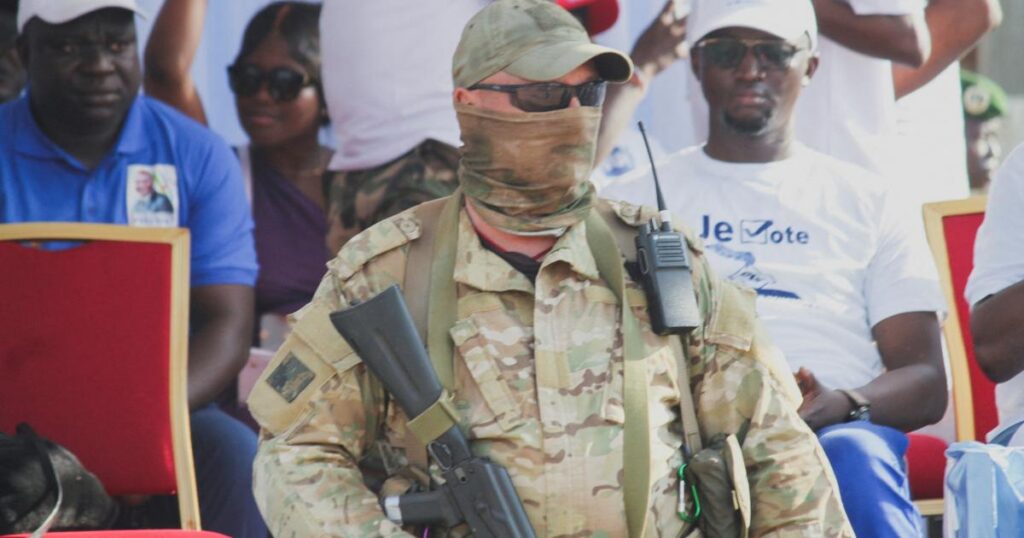
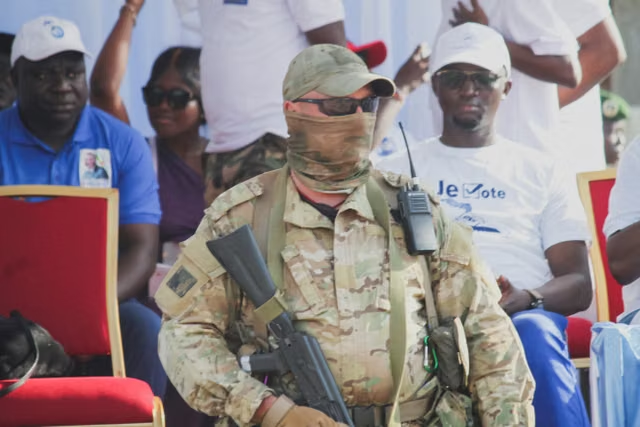
An “empire of drugs” thriving in the heart of Africa. The Russian paramilitary force Wagner Group has expanded its operations in the Central African Republic, leveraging the illicit tramadol trade to regain momentum, The Wall Street Journal reports.
Originally prescribed for mild pain, tramadol is being repackaged and concentrated into a potent stimulant—often dubbed “poor man’s cocaine”—and distributed across the region. Wagner’s influence in the country has only grown since its founder, Evgueni Prigojine, died in 2023, despite the rise of Russia’s state-backed Africa Corps.
Wagner’s enduring grip in central africa
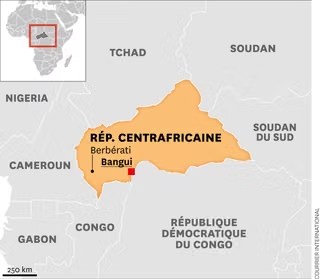
Since 2018, Wagner has maintained a strong foothold in the Central African Republic, now led by Prigojine’s son, Pavel. The country’s weak governance, mineral wealth (gold, diamonds, uranium), and dense forests make it an ideal base for illicit activities.
According to the Global Initiative, Wagner’s gold mining operations alone generate an estimated $180 million (€160 million) annually. These illegal exports, combined with control over state institutions, underscore the group’s deep entrenchment, as noted by the Center for Strategic Studies for Africa, backed by the Pentagon.
tramadol trade: a lucrative and dangerous operation
Tramadol enters the Central African Republic via the Democratic Republic of Congo, flowing into local markets under Wagner’s management. The group supplies the drug to elite presidential guards, the ‘Requins’ militia (known for armed patrols against opposition supporters), pro-Russia protesters, gold miners, and combatants in counterinsurgency operations—allegedly to “boost morale and courage in battle.”
Experts quoted in The Wall Street Journal warn of Wagner’s potential expansion into neighboring Sudan, facilitated by the Rapid Support Forces (RSF), whose operations near the Central African Republic border are growing.