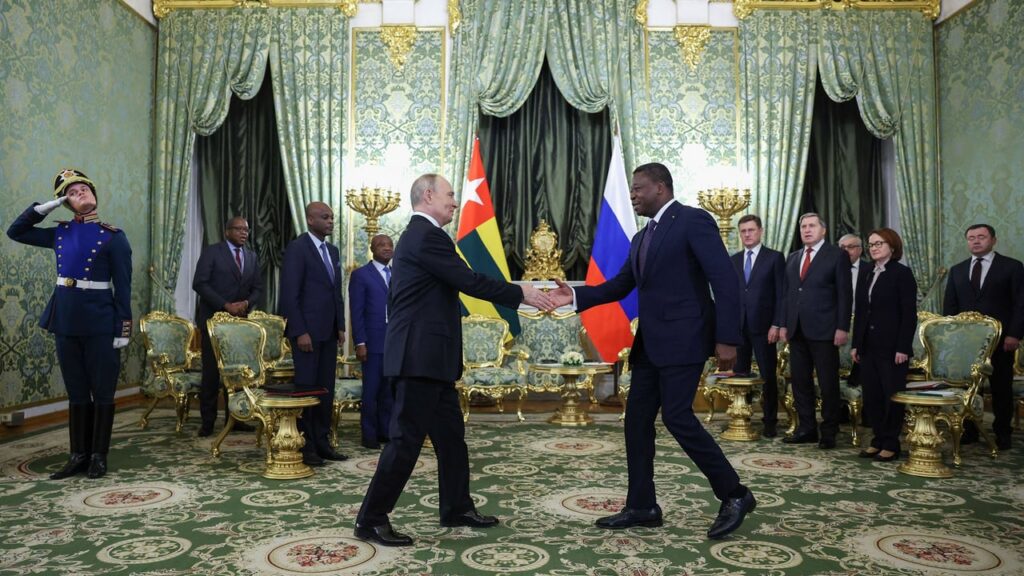
In recent years, Togo has quietly strengthened its security framework to counter the growing threat of jihadist groups spreading across the Sahel. While much attention has focused on traditional allies, Lomé has taken a bold step by exploring unconventional partnerships, particularly with the Africa Corps, the Russian military contingent active in Africa since 2025. This shift reflects a strategic recalibration in the country’s defense policy, blending diplomacy with bold military collaborations.
Analysts highlight that Togo’s approach is not just about bolstering its own defenses but also about securing broader regional stability. By engaging with Moscow’s Africa Corps, Lomé is tapping into a resource that has proven effective in other African nations facing similar security challenges. The Africa Corps, often seen as a modernized successor to the infamous Wagner Group, offers a mix of military expertise, logistical support, and rapid deployment capabilities—elements that Togo finds increasingly critical as regional threats evolve.
Turkey’s role in Togo’s evolving security landscape
Togo’s military partnerships extend beyond Russia. The country has also deepened its ties with Turkey, a nation that has emerged as a key player in Africa’s defense sector. Ankara’s involvement in Lomé’s security strategy includes provisions for aerial support and specialized training, aimed at enhancing Togo’s counterterrorism operations. This collaboration underscores a broader trend where African nations are diversifying their military alliances to address complex security threats.
The decision to work with both Turkey and Russia signals a pragmatic shift in Togo’s foreign policy. While Western partners remain influential, Lomé is clearly willing to explore new avenues to fortify its defenses. This approach reflects a broader regional trend, where countries like Niger, Burkina Faso, and Mali are also reassessing their military partnerships in response to shifting geopolitical dynamics.
Africa Corps: a game-changer for West African security?
The Africa Corps has rapidly gained prominence in West Africa, offering military assistance that aligns with the operational needs of countries like Togo. Since its establishment, the group has been deployed in several African nations, providing training, equipment, and strategic advice. For Togo, this partnership could prove instrumental in countering the jihadist insurgencies that have destabilized the Sahel.
However, the Africa Corps’ involvement is not without controversy. Critics argue that relying on Russian-backed military groups could introduce long-term geopolitical risks, including potential dependence on Moscow’s political agenda. Yet, for Lomé, the immediate benefits—such as enhanced military capabilities and rapid response options—appear to outweigh these concerns, at least for now.
How Togo’s military strategy compares to its neighbors
Togo’s approach mirrors that of other West African nations grappling with insecurity. For instance, Burkina Faso and Niger have also turned to non-traditional allies in their fight against jihadist groups. While each country’s strategy is tailored to its unique challenges, the underlying motivation remains consistent: securing the most effective military support available, regardless of the source.
In this context, Togo’s engagement with the Africa Corps and Turkey highlights a broader regional shift toward pragmatic security alliances. As jihadist threats continue to escalate, countries in the Sahel are increasingly prioritizing immediate security needs over long-term geopolitical considerations. This trend is reshaping the region’s military landscape, with implications for both local stability and international relations.
The future of Togo’s security partnerships
The coming years will determine whether Togo’s unconventional alliances yield lasting security benefits or introduce new challenges. If the Africa Corps and Turkey can deliver on their promises of enhanced military support, Lomé may emerge as a model for other nations seeking to diversify their defense strategies. However, the success of these partnerships will depend on several factors, including regional cooperation, geopolitical stability, and the evolving nature of the jihadist threat.
One thing is clear: Togo’s proactive approach to security reflects a broader trend in West Africa, where nations are no longer content to rely solely on traditional allies. Instead, they are exploring every available option to safeguard their future. As the region’s security challenges grow, so too will the demand for innovative military solutions—and Togo is positioning itself at the forefront of this movement.