
Togo’s strategic balancing act in a shifting geopolitical landscape
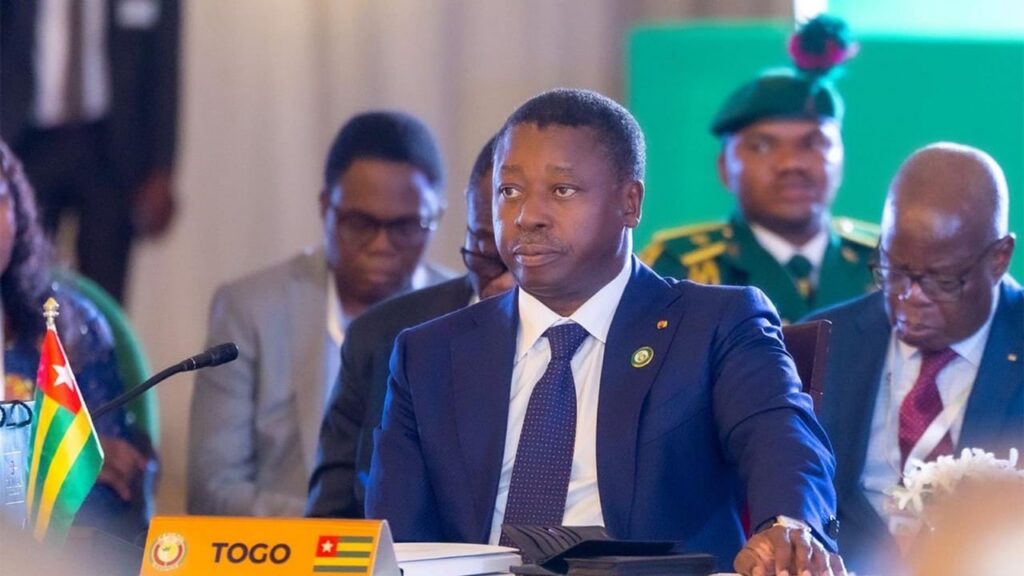
In the realm of international relations, silence often speaks volumes. On March 9, the Russian Defense Minister, Andreï Belousov, landed in Lomé, the capital of the Togo, for a high-profile visit. The visit, confirmed by a presidential source within the Togolese government, saw Belousov received by President Faure Essozimna Gnassingbé. Yet, despite the significance of this meeting, no official statement was released afterward—a deliberate choice that underscores the delicate balancing act Togo is performing on the global stage.
The art of diplomatic equilibrium
President Gnassingbé’s approach to diplomacy reflects a masterful strategy aimed at maintaining strong ties with multiple global partners without alienating any. This complex maneuvering is particularly evident in Togo’s relationships with Western blocs, regional alliances like the Economic Community of West African States (ECOWAS), and emerging partnerships with the Alliance of Sahel States (AES).
By engaging with both traditional allies and newer political blocs, Togo positions itself as a key player in West African geopolitics. This strategy not only enhances its diplomatic leverage but also allows it to navigate the pressures of competing international interests.
Russia’s growing influence in West Africa
The unannounced visit of the Russian Defense Minister highlights the increasing footprint of Moscow in the region. Russia’s engagement with countries like the Togo is part of a broader effort to expand its diplomatic and economic influence in West Africa. For Togo, this relationship offers opportunities for military cooperation, economic investment, and technological exchange, all of which can bolster its development agenda.
However, this growing proximity to Russia also places Togo in a delicate position. The country must carefully manage its relations with Western partners, including the European Union and the United States, who have expressed concerns over Russia’s expanding influence in Africa.
Navigating ECOWAS and the AES
Togo’s membership in ECOWAS requires it to adhere to the bloc’s collective stance on regional issues, particularly those related to governance and security. Yet, the formation of the Alliance of Sahel States (AES)—comprising Mali, Burkina Faso, and Niger—has introduced a new dynamic. The AES alliance advocates for a departure from traditional Western influence, favoring instead closer ties with Russia and other non-Western partners.
By maintaining open channels with both ECOWAS and the AES, Togo demonstrates its ability to reconcile conflicting regional priorities. This positions the country as a mediator capable of fostering dialogue and cooperation across diverse political landscapes.
The role of Togo in regional stability
Togo’s diplomatic efforts are not merely about balancing external relationships; they are also about ensuring regional stability. As a country situated at the crossroads of West and Central Africa, Togo plays a critical role in maintaining peace and security in the subregion. Its ability to navigate complex geopolitical waters makes it an indispensable partner for both regional and international actors.
President Gnassingbé’s strategy of equilibrism—balancing competing interests—reflects a deep understanding of the evolving geopolitical landscape. By avoiding overt alignment with any single bloc, Togo maximizes its diplomatic flexibility, ensuring it can adapt to changing circumstances while advancing its national interests.
Looking ahead: challenges and opportunities
As the global geopolitical landscape continues to shift, Togo faces both challenges and opportunities. Strengthening ties with emerging partners like Russia and the AES alliance offers new avenues for growth and development. However, it also requires careful negotiation to avoid alienating traditional allies who have long supported Togo’s progress.
For President Gnassingbé, the path forward will involve maintaining this delicate balance while ensuring that Togo’s strategic interests are always at the forefront. Whether through economic partnerships, military cooperation, or regional diplomacy, Togo’s approach to international relations sets a compelling example of how smaller nations can navigate a complex world.