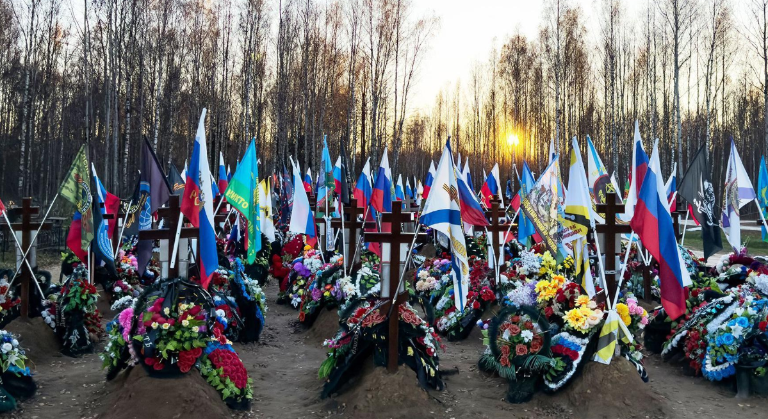
Unverified claims point to staggering losses for Moscow
Preliminary data stolen from Russia’s federal statistics agency suggests that over 412,000 Russian soldiers may have died since the full-scale invasion of Ukraine began in February 2022. If confirmed, the leaked certificates of death would force the world to reassess the true human toll of the conflict and its ripple effects on Russian society.
Breaking: hackers expose massive military death toll
Two Belarusian cyber-groups, Silent Crow and Cyberpartisans, claim to have infiltrated Rosstat’s servers and extracted internal records that include death certificates for Russian soldiers. The documents, which have not been independently verified, list 412,576 fatalities attributed to the war—a figure that dwarfs the Kremlin’s own published estimates.
Rosstat has acknowledged a cyberattack on its systems but denies that sensitive data was compromised or leaked. This discrepancy has left analysts scrambling to confirm whether the files are genuine or part of a coordinated disinformation campaign.
Why the discrepancy matters
The Kremlin has released only sparse casualty reports, most recently stating in September 2022 that 5,937 soldiers had died. Since then, Moscow has maintained a near-total silence on military losses, a policy that has fueled speculation and raised concerns about the sustainability of Russia’s war effort.
The leaked documents, if authentic, would represent one of the most damning indictments of the war’s human cost—one that could reshape international perceptions of Russia’s military capabilities and domestic stability.
Economic fallout: a shrinking labor force and rising social strain
The scale of the alleged losses extends far beyond battlefield casualties. Deaths, severe injuries, forced conscription, and mass emigration are draining Russia’s workforce—particularly in remote regions like Siberia and the Far East, where enlistment rates have surged. A generation of working-age men is being erased from the labor market, threatening key industries and local economies.
Small businesses and agricultural sectors, already reeling from sanctions, now face labor shortages that could delay recovery and investment for years. The demographic shock could also strain public services, pensions, and social safety nets, compounding the economic damage already visible across the country.
The families left in the dark
Behind every number is a family shattered by grief and uncertainty. Many Russians have received no official notification of their loved ones’ deaths, leaving them in legal limbo for benefits, pensions, and compensation. Without recognition from the state, grieving parents, spouses, and children are forced to navigate bureaucracy in a system that often denies their existence.
Local activists report growing anger and distrust toward federal authorities, with some communities forming private support networks to document casualties and demand accountability. The lack of transparency is not just a policy choice—it is a humanitarian crisis in itself.
What do these numbers really mean?
The 412,576 figure raises critical questions: Does it include only combat deaths, or does it also account for soldiers who died from injuries, illness, or suicide after deployment? Are missing soldiers presumed dead? Such distinctions are vital if policymakers, historians, and analysts are to understand the war’s true legacy.
Even if only partially accurate, the leaked data underscores the catastrophic human price of a war that has already entered its third year. For Russia, the absence of a credible, updated official death toll is no longer just a propaganda problem—it is a threat to national cohesion.
Conclusion: a war whose costs refuse to stay buried
Whether the leaked documents ultimately prove authentic or not, the claims alone have exposed glaring contradictions in Moscow’s narrative. In a nation where every life lost erodes stability, the silence surrounding Ukraine has become unsustainable. The real human cost of this war is still being calculated—and it may never be fully revealed.





