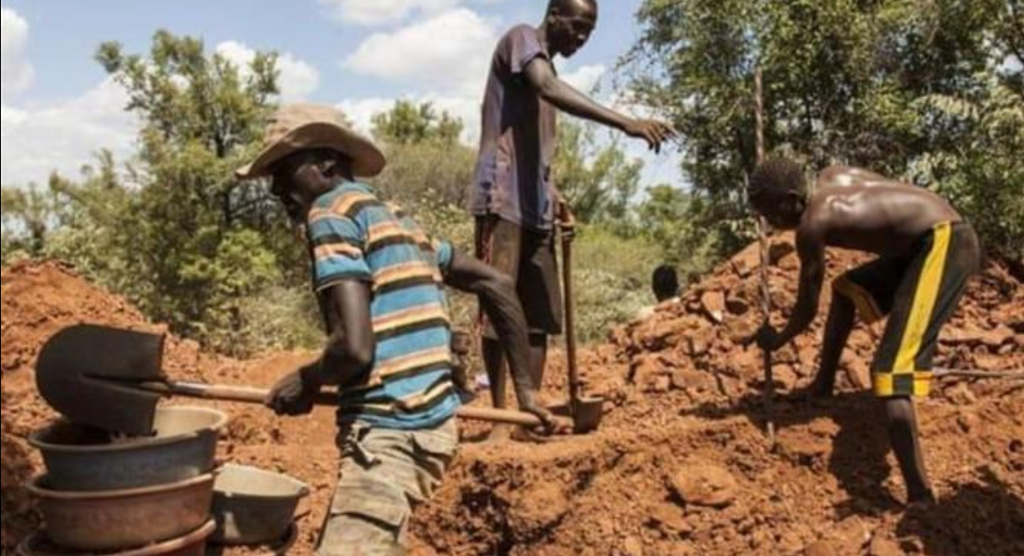
Thousands of Burkinabè gold miners expelled from Guinea now confront an even greater crisis: returning to a Burkina Faso gripped by terrorism, displacement, and economic collapse. Once driven south by desperation, these workers now return with empty pockets and dwindling hope, as the country struggles to absorb them amid ongoing violence and instability.
Why Burkinabè miners fled to Guinea—and why they were forced back
For many Burkinabè artisanal miners, Guinea offered a brief respite from the spiraling violence and economic hardship ravaging their homeland. The Siguiri region became a sanctuary where they could earn a living through gold panning, despite hazardous conditions and low wages. Their departure was not a choice of ambition, but of survival—leaving behind war-torn villages, abandoned fields, and families struggling to feed themselves.
But their refuge in Guinea has now collapsed. A sweeping crackdown by Guinean authorities targeting undocumented foreign miners has stripped these workers of their livelihoods overnight. The expulsion has left them without income, without shelter, and without a clear path forward as they face the stark reality of re-entering a country in deep turmoil.
The fragile illusion of returning home
The irony is cruel. After escaping violence in Burkina Faso, many miners now return to find their villages still under siege by armed groups. Some homes have been destroyed, fields lie fallow, and safety remains uncertain. For those who had settled in displacement camps within Burkina Faso, the situation is no better—overcrowded shelters, scarce food, and collapsing public services define their daily struggle.
Even those with modest savings face an uncertain future. Once their money runs out, what then? How will they support their families when jobs are scarce, markets are disrupted, and entire communities have been uprooted? The risk of falling deeper into poverty is not just personal—it threatens to destabilize already fragile regions.
Urban influx: pressure on already strained resources
Many expelled miners are now converging on cities like Ouagadougou and Bobo-Dioulasso, where displaced populations already overwhelm local services. Hospitals are overcrowded, schools are undersupplied, and competition for housing has driven rents beyond reach for the most vulnerable. Each new arrival adds pressure to a system already stretched to breaking point.
From economic desperation to security risks
The humanitarian toll is severe, but the security implications are alarming. Poverty, displacement, and loss of hope create fertile ground for recruitment by armed extremist groups. These organizations prey on disillusioned youth, offering financial incentives, false promises of protection, or a twisted sense of belonging. While not every unemployed miner will join such groups, the risk of radicalization grows when no alternatives exist.
This is not just a migration crisis—it is a ticking time bomb. Without immediate intervention, the expelled miners could become pawns in a larger conflict, their vulnerabilities exploited to fuel instability across Burkina Faso.
Can Burkina Faso offer a lifeline?
A coordinated response is essential. First, authorities must map the affected populations, identifying those who cannot safely return home due to ongoing violence. These individuals need urgent humanitarian aid, including food assistance, temporary shelter, and access to medical care.
Beyond emergency support, long-term solutions must be considered. Vocational training programs could help miners transition into other sectors. Microfinance initiatives may allow them to rebuild small businesses. Partnerships with local NGOs and international donors can provide the infrastructure needed to integrate them sustainably.
Most importantly, Burkina Faso must address the root causes that drove these workers to Guinea in the first place—rural insecurity, economic stagnation, and a lack of opportunity. Without systemic change, the cycle of displacement and expulsion will only deepen.
The moral and political imperative
This crisis is not just about numbers. It is about people—families who fled violence, only to be met with more hardship upon return. It is about a nation struggling to protect its citizens while facing internal and external pressures. The way Burkina Faso responds to these miners will define its resilience as a state and the trust its people place in its institutions.
Failure to act decisively could turn a migration tragedy into a security catastrophe. Success, however, could transform these returnees into agents of recovery—men and women rebuilding their lives and contributing to their country’s future. The choice is clear: will Burkina Faso leave them behind, or will it finally offer them a chance to belong?
The clock is ticking. The lives of thousands hang in the balance.





