When legal status becomes a political weapon in Niger
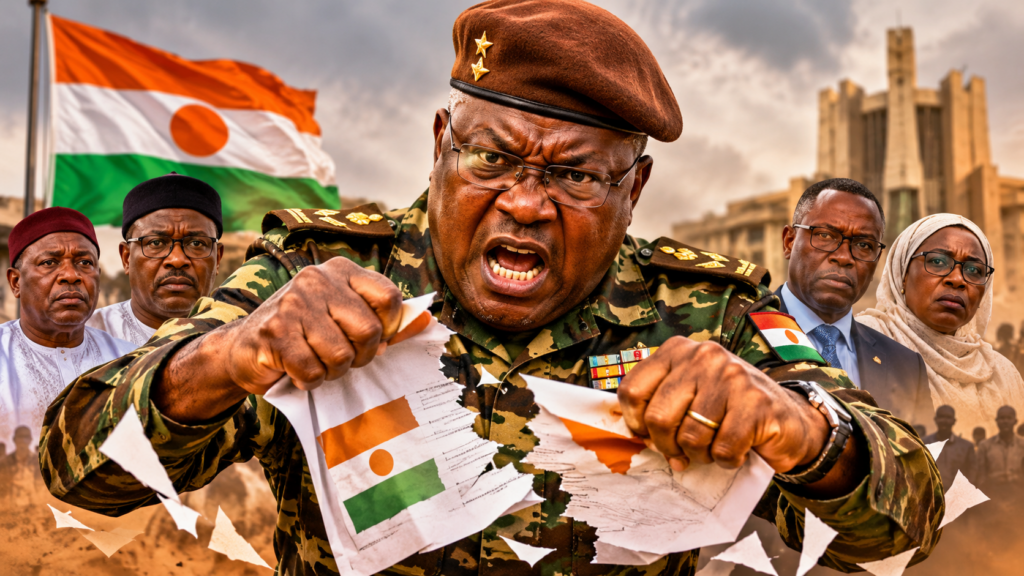
Since seizing power in July 2023, Niger’s military leadership has wielded citizenship revocation as a punitive measure against former officials of the Bazoum administration. The latest decree signed by General Abdourahamane Tiani on September 17, 2026 stripped five more individuals of their nationality, including former Prime Minister Ouhoumoudou Mahamadou, bringing the total to 25 provisional revocations since October 2024. While authorities frame these actions as essential to national security, critics argue they represent a calculated strategy to neutralize political opponents and prolong the post-coup power struggle.
From national security to political purge: the shifting purpose of citizenship revocation
The military junta’s justification for these revocations hinges on accusations such as undermining public order, collaborating with foreign powers, and endangering state security. Yet the selective targeting of former government figures particularly those with no proven ties to criminal activity raises serious doubts about the genuineness of these claims. Unlike a judicial process that requires concrete evidence and due process, the provisional nature of these revocations enables authorities to bypass traditional legal safeguards.
The case of Ouhoumoudou Mahamadou, a former prime minister under President Mohamed Bazoum, epitomizes the political dimensions of this policy. His inclusion in the latest decree, alongside other high-profile figures, suggests a deliberate effort to marginalize the old guard rather than address legitimate security threats.
Immediate consequences: administrative limbo and statelessness risks
For those affected, the ramifications extend beyond political disenfranchisement. Revocation of nationality strips individuals of access to consular protection, complicates international travel, and threatens the validity of passports and legal documents. In cases where the Nigerien passport is the sole nationality held, the risk of statelessness becomes acute a scenario that Human Rights Watch has flagged as a growing concern.
The provisional nature of the revocations does not lessen their impact. Even temporary loss of status can leave individuals stranded abroad, unable to renew travel documents or seek refuge elsewhere. For exiled officials, this constitutes an additional layer of pressure, one that could discourage dissent and silence critics of the current regime.
Questioning the legal framework: where do procedural safeguards stand?
The legal basis for these revocations stems from 2024 decrees addressing threats to national interests. Authorities have cited offenses such as spreading information capable of disturbing public order and electronic defamation. However, the sweeping language of these accusations leaves room for interpretation, raising concerns about selective enforcement and potential abuse.
A critical issue remains: are those accused given meaningful opportunities to review the evidence against them, present a defense, and challenge the decision in an independent court? Without robust procedural guarantees, the revocation of citizenship risks morphing into a tool for suppressing political opposition rather than protecting national security.
The blurred line between security and retaliation
Selective targeting: Revocations disproportionately affect former officials with no criminal convictions, suggesting a pattern of political retribution.
Lack of transparency: Authorities have not disclosed individualized justifications for each revocation, fueling speculation about ulterior motives.
Judicial impartiality: The absence of fair trial guarantees undermines the legitimacy of these measures.
Criticism of military rule does not equate to a threat to national security. Without clear, verifiable evidence linking each individual to specific crimes, the revocations risk becoming instruments of political control rather than legitimate law enforcement.
The broader cost: eroding trust and deepening divisions
Beyond the immediate human impact, the junta’s policy risks exacerbating political fractures in Niger. By systematically targeting figures associated with the Bazoum administration, the military leadership risks entrenching divisions that could hinder national reconciliation. A stable future for Niger depends not only on prosecuting legitimate security threats but also on upholding the rule of law and ensuring fair treatment for all citizens.
The provisional revocations may be framed as temporary measures, but their long-term effects administrative vulnerability, statelessness risks, and political marginalization could have lasting consequences. If pursued primarily as a strategy to weaken opposition rather than enforce security, these actions threaten to undermine the very institutions meant to protect Niger’s citizens.
The reckoning: balancing security with justice
The Nigerien government faces a pivotal moment. To maintain credibility, it must demonstrate that citizenship revocations are based on verifiable facts, not political vendettas. This requires transparent proceedings, adherence to due process, and a commitment to protecting the fundamental rights of all citizens regardless of their past affiliations.
For the former officials caught in this legal limbo, the stakes could not be higher. Their ability to challenge the revocations, secure legal representation, and contest the government’s actions will determine whether this policy serves as a legitimate security measure or a perpetuation of political conflict. The future of Niger’s democracy may well hinge on the answers to these questions.
By Georges Essomba — Journalist





