Morocco stands at a crossroads in the 21st century, where dazzling modernity and entrenched inequality coexist uneasily. While the Kingdom has invested heavily in cutting-edge infrastructure—high-speed rail, advanced industrial zones, and renewable energy hubs like Noor Ouarzazate—these achievements mask a stark reality for millions of Moroccans, particularly in rural areas and urban peripheries.
Rather than narrowing over time, the gap between the privileged and the marginalized has widened in recent decades. A growing segment of the population feels trapped in a two-tier system: one path reserved for regions plugged into global markets, another for those left behind in underdeveloped local economies and failing public services. This analysis doesn’t aim to condemn but to dissect the mechanisms fueling this divide and explore pathways toward genuine national cohesion.
Understanding the roots of disparity: entrenched causes, compounded effects
Uneven development: wealth concentrated, hinterlands neglected
Geography, not chance, defines Morocco’s social fracture. Decades of policy choices have prioritized coastal economic hubs—Casablanca-Settat, Rabat-Salé-Kénitra, and Tanger-Tétouan-Al Hoceïma—over inland regions. These three zones alone produce nearly 60% of the national GDP while housing just 40% of the population.
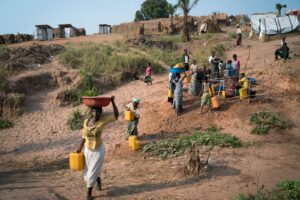
In contrast, mountainous areas like the Rif, Middle and High Atlas, and Anti-Atlas, along with rain-fed agricultural plains, suffer from chronic underinvestment. Poor road networks, shortages of medical professionals, and a lack of secondary schools within 10 kilometers plague these communities. In some villages, access to clean water remains a daily struggle. This isolation isn’t inevitable; it stems from structural neglect that local budgets, often meager and unevenly distributed, cannot address.
Education as a divider: where opportunity fails
The Moroccan education system, despite reforms, perpetuates exclusion. Official dropout rates exceed 300,000 students annually, yet the reality is far worse in remote rural areas, where half of all girls never complete primary school. Early marriage, poverty, and the absence of nearby secondary schools drive this exodus from education. The result? Entire generations enter the workforce without diplomas or basic skills.
With 70% of jobs in the informal sector—rising to over 80% in agriculture and household services—most workers lack contracts, healthcare coverage, pensions, or basic labor rights. The formal economy’s safety nets simply don’t reach them. This isn’t a story of resilient entrepreneurship; it’s a system that traps people in precarity.
The youth dilemma: urban unemployment, rural disillusionment
The consequences are starkest for Morocco’s youth. Urban unemployment among 15–24-year-olds consistently exceeds 45%, while graduate unemployment hovers around 20%. These numbers reveal a mismatch between education and labor market needs, fueling frustration and pushing many toward migration—whether internal (to overcrowded slums) or external (to Europe or Canada).
In peripheral urban areas, informal settlements swell as rural exodus accelerates. These communities, stripped of economic opportunities and social anchors, become breeding grounds for petty crime or, in extreme cases, extremism. The social cost of this exclusion extends beyond individual suffering; it erodes national stability.
Measuring inequality: a stubbornly high Gini coefficient
The Gini coefficient—Morocco’s stands at 0.39—offers a sobering snapshot of inequality. While not as extreme as some global outliers, it far exceeds levels seen in European social democracies (0.25–0.30). The wealthiest 10% control 30% of national income, while the poorest 40% share just 20%. Worse, consumption surveys suggest inequality has risen since 2014, despite economic growth, proving that prosperity hasn’t been inclusive.
The international mirror: image vs. reality
Morocco’s global reputation as an emerging power rests on high-profile projects like Tanger Med Port, Africa’s largest, the Al Boraq high-speed rail, and Noor Ouarzazate’s solar complex. Yet these achievements clash with sobering international rankings. The UN’s Human Development Index places Morocco in the “medium development” category, typically ranking between 120th and 125th worldwide—behind many Latin American nations and even African peers like Tunisia and Cape Verde.
International institutions like the World Bank and OECD highlight Morocco’s macroeconomic strengths but warn of its “structural vulnerability to external shocks,” from droughts to imported inflation. The recurring images of irregular migration to Europe underscore a harsh truth: for many young Moroccans, local stagnation feels more intolerable than the risks of perilous journeys. This exodus isn’t just a brain drain; it’s a contradiction to the official narrative of a thriving Morocco.
Toward a renewed social contract: progress and pitfalls
The status quo is untenable. The 2021 New Development Model (NMD) acknowledged this, framing growth as insufficient without redistribution and inclusion. Three priorities emerged, each fraught with challenges.
Expanding social protection: a Herculean task
The first pillar is universalizing healthcare and social coverage, slated for 2025. The mandatory health insurance (AMO) has expanded to include freelancers and non-salaried workers, while the National Social Registry (RNS) aims to target aid to the poorest, including 7 million schoolchildren and low-income families.
Yet success hinges on two fragile pillars: sustainable financing, which requires cracking down on tax evasion, and equitable healthcare access. In provinces like the Southeast or Middle Atlas, severe shortages of specialists persist. Without functional hospitals nearby, AMO risks becoming a theoretical right with no practical impact.
Tax reform: the elephant in the room
The second priority—a progressive tax overhaul—is politically sensitive. Morocco’s system is widely criticized for being complex, inefficient, and regressive. VAT disproportionately burdens the poor, while income tax offers loopholes for the wealthy through tax evasion, shell companies, and sectoral exemptions.
Proposed solutions include lowering VAT on staples (milk, wheat, oil), broadening the income tax base by reducing exemptions, and introducing a modest annual tax on large real estate and financial fortunes. While these measures align with international standards, powerful economic lobbies and under-resourced tax authorities make implementation a steep climb.
Local governance: the forgotten frontier
The third, often overlooked axis is territorial governance. Regions lack the fiscal autonomy to invest in schools, roads, and healthcare. Reforming local taxation—particularly professional and housing taxes—could empower poorer territories to fund their own development. Without meaningful fiscal equalization, regional disparities will only deepen.
A choice between stagnation and solidarity
The divide between Morocco’s showcase projects and its struggling communities is no longer a matter of perceived injustice. It’s a systemic risk that destabilizes the economy, erodes trust in institutions, and fuels radicalization.
The path forward demands overcoming three key hurdles: equitable financing through fairer taxation, restoring public education’s role as a ladder to social mobility, and ending the neglect of remote regions. Morocco possesses the technical resources and administrative capacity to meet this challenge. What’s missing is the political will to prioritize inclusive growth over raw economic expansion—a shift that could transform national strength into shared prosperity.