a forward-looking budget to address climate and social challenges
The Republic of Benin has taken a decisive step in reshaping its public policy framework by embedding climate resilience, gender equality, and territorial realities into the 2027 budget formulation. This initiative reflects a long-term vision that transcends conventional fiscal management, positioning public investment as a catalyst for sustainable development and societal resilience.
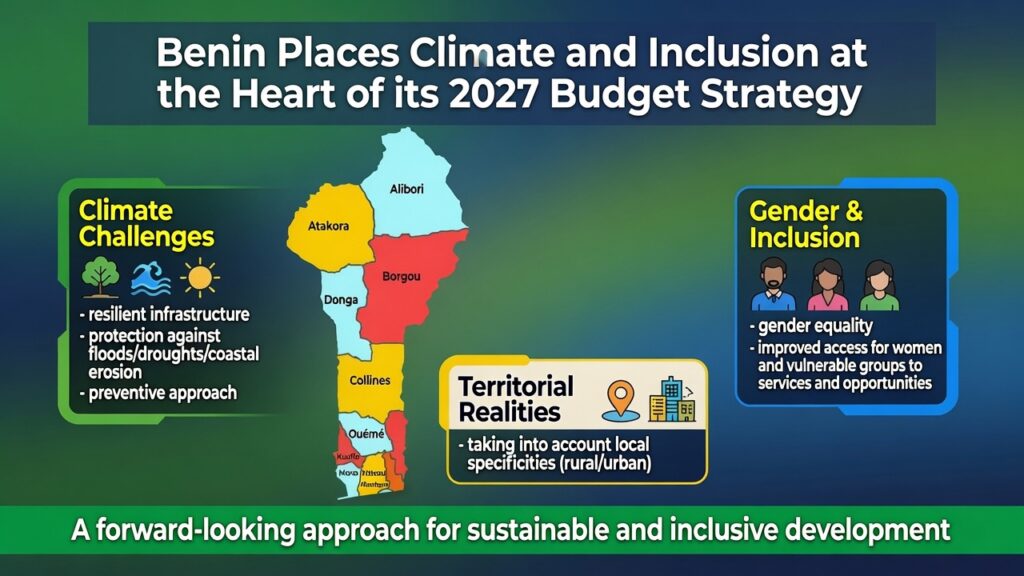
In an era marked by escalating climate-related disasters, dwindling natural resources, and persistent social disparities, the need for proactive rather than reactive governance has never been more evident. The 2027 budget framework embodies this principle by embedding risk anticipation into the heart of financial planning, ensuring that the country is better prepared to mitigate the impacts of extreme weather events such as floods, droughts, and coastal erosion.
climate resilience as a cornerstone of fiscal policy
The integration of climate considerations into budgetary decisions represents a paradigm shift in public finance management. By prioritising investments in resilient infrastructure, protective measures for at-risk communities, and adaptive strategies for vulnerable regions, Benin is not only reducing future economic and social costs but also fostering a culture of proactive governance. This approach underscores the nation’s commitment to sustainable development and aligns with global best practices in climate-sensitive fiscal planning.
promoting gender equality through budgetary inclusion
Another key innovation in the 2027 budget is the explicit incorporation of gender perspectives into financial allocations. Recognising that public policies often yield disparate outcomes for women, men, and marginalised groups, the government is taking deliberate steps to ensure equitable access to essential services, economic opportunities, and social protection mechanisms. This inclusive approach seeks to bridge existing gaps and empower women, youth, and other vulnerable populations, thereby fostering a more balanced and just society.
territorial realities at the heart of public investment
The 2027 budget framework also places a strong emphasis on territorial diversity, acknowledging that the needs of rural communities differ significantly from those of urban centres. By tailoring investments to local contexts, the state enhances the effectiveness of its interventions, ensuring that resources are allocated where they are most needed. This localisation strategy bridges the gap between national policies and grassroots realities, reinforcing the government’s responsiveness to citizen needs.
The revised budgetary approach demonstrates a forward-thinking administration that prioritises strategic planning over short-term expediency. By aligning financial resources with economic, social, and environmental transformations, Benin is positioning itself to navigate the complexities of the 21st century while minimising vulnerabilities.
This strategic orientation also bolsters the country’s standing among international partners and financial institutions. As global priorities increasingly favour climate-resilient, socially inclusive, and territorially adaptive fiscal policies, Benin’s proactive stance enhances its appeal as a destination for funding aimed at sustainable development, ecological transition, and regional resilience.
The 2027 budget framework is more than a technical exercise—it is a roadmap for a sustainable and balanced future. It reflects a government committed to fostering resilient growth, promoting social equity, and adapting to the evolving challenges of our time. Through this initiative, Benin is laying the foundation for a future where development is not only prosperous but also inclusive and enduring for all its citizens.