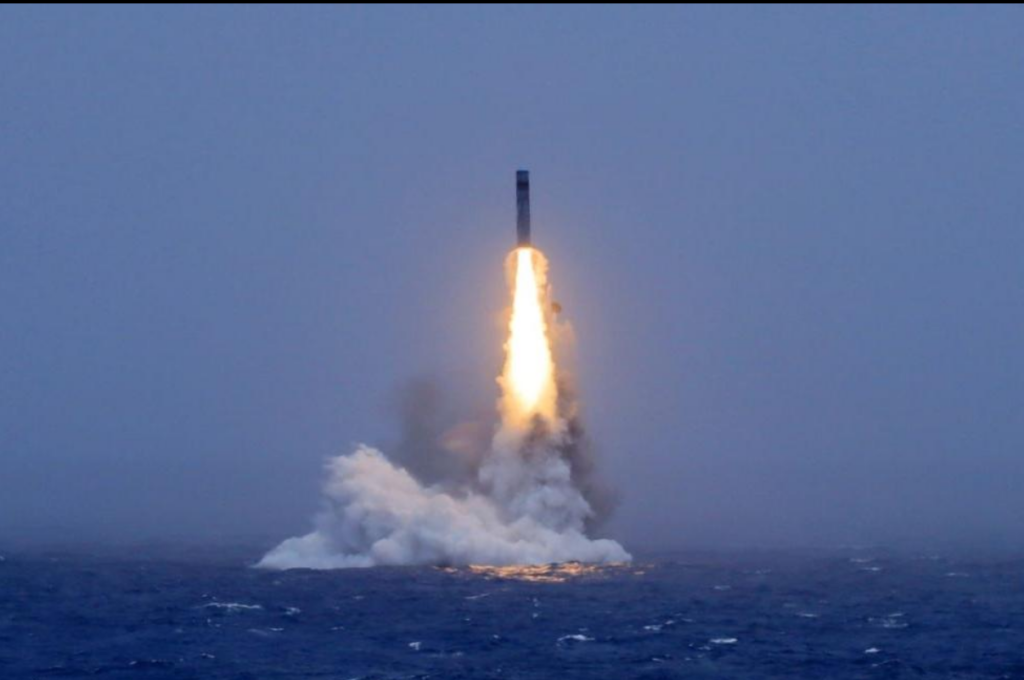
Taiwan is facing growing economic risks as China’s recent military maneuvers in the Western Pacific threaten to disrupt critical shipping lanes that underpin the island’s trade-dependent economy. With over 100 vessels deployed in unprecedented exercises near Taiwan and an alleged submarine-launched ballistic missile test, the escalation is raising alarms about potential supply chain disruptions and rising business costs.
China’s naval surge raises fears of economic blockade
The scale of China’s military buildup is raising concerns about its potential to disrupt Taiwan’s economy. According to defense sources, the exercises involved more than 100 Chinese ships—including components from multiple naval commands and the Liaoning carrier strike group—operating in coordinated formations rarely seen in peacetime. These maneuvers, conducted without prior notice, appear designed to test Taiwan’s ability to respond to a possible blockade.
Taiwanese officials warn that the exercises could signal China’s long-term strategy to restrict maritime access, even without an immediate armed conflict. The presence of 70 ships within Taiwan’s “first island chain”—a key maritime boundary—has already raised concerns among businesses relying on uninterrupted trade flows.
Submarine-launched missile test adds new layer of concern
Amid the naval maneuvers, Taiwanese security sources reported that a Chinese submarine launched a suspected intercontinental ballistic missile (ICBM) in the Yellow Sea. While details remain unverified, the test—if confirmed—would mark a significant escalation in China’s naval capabilities. Submarine-launched ballistic missiles (SLBMs) are notoriously difficult to detect, making them a potent tool for strategic deterrence and possible future coercion.
The timing of the alleged test is particularly worrisome. Conducted during large-scale naval exercises, it suggests China is refining its ability to project power while minimizing transparency. For businesses in Taiwan and neighboring economies, this development underscores the growing unpredictability of regional security.
Taiwan’s economy caught in the crossfire
The potential economic fallout from these military activities is already prompting reevaluation among Taiwanese industries. Semiconductor manufacturers, shipping companies, and logistics firms—key drivers of Taiwan’s economy—are assessing their exposure to supply chain disruptions. The island is a global leader in semiconductor production, and any prolonged disruption to shipping routes could have ripple effects worldwide.
- Semiconductor supply chains: Taiwan supplies over 60% of the world’s advanced semiconductors. Delays or rerouting of shipments could disrupt global electronics production.
- Export-dependent industries: Electronics, automotive parts, and machinery—Taiwan’s top exports—are heavily reliant on maritime trade.
- Energy security: Disruptions to oil and gas shipments through the South China Sea could raise fuel costs and logistics expenses.
Regional allies assess their vulnerability
Taiwan is not the only economy facing risks from China’s military activities. Japan, South Korea, and Southeast Asian nations are closely monitoring the situation due to their own reliance on maritime trade. The exercises, conducted near critical shipping lanes, highlight the vulnerability of these economies to sudden disruptions.
The Japanese government has already flagged concerns about the impact on its energy supplies and trade routes. The exercises coincide with rising geopolitical tensions, amplifying economic uncertainty across the Asia-Pacific region.
Diplomatic pressure fails to ease tensions
As military activities intensify, diplomatic responses have struggled to keep pace. The G7 nations recently issued a joint statement expressing concern over China’s military actions east of Taiwan, emphasizing risks to regional stability and freedom of navigation. However, such declarations have yet to translate into concrete measures to deter further escalation.
For businesses operating in Taiwan, the challenge now is balancing risk mitigation with operational continuity. Many are diversifying supply chains, increasing inventory levels, and exploring alternative trade routes—steps that could permanently reshape the region’s economic landscape.
What’s next for Taiwan’s business community?
The coming months will be critical in determining whether China’s military buildup is a prelude to a broader strategy of economic coercion. Taiwanese companies are preparing for a range of scenarios, from temporary disruptions to prolonged maritime restrictions. While no immediate conflict appears imminent, the economic pressure is becoming increasingly difficult to ignore.
The question now is: how far is China willing to push its ambitions in the Taiwan Strait—and what will be the cost to the region’s economy?





