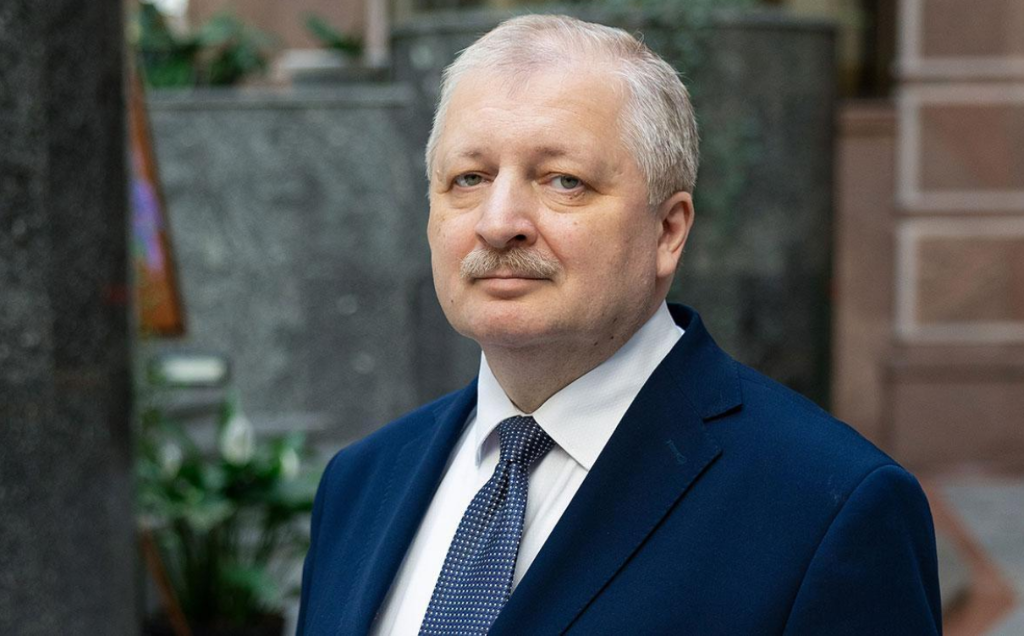
How the loss of a veteran diplomat disrupts Russian-American relations
The sudden passing of Aleksandr Dartchiev, Russia’s ambassador to the United States, has left a critical gap in Moscow’s diplomatic strategy. At 66 years old, the seasoned diplomat, who had held the post since March 2025, died unexpectedly, sending shockwaves through the corridors of power in Washington and beyond.
The Russian Foreign Ministry confirmed Dartchiev’s death in an official statement, though it initially provided no details about the circumstances. This lack of transparency fueled speculation, particularly as tensions between Russia and the US remain at historic highs. Economic sanctions, geopolitical rivalries, and the ongoing conflict in Ukraine have kept relations strained, making Dartchiev’s role more vital than ever.
Why Dartchiev’s expertise was irreplaceable at a pivotal moment
Dartchiev was not your average envoy. His career was defined by deep involvement in North American affairs, having served as Russia’s ambassador to Canada from 2014 to 2021. Before that, he held key positions within the Russian Foreign Ministry, specializing in US and Canadian relations. His decades of experience made him one of Moscow’s most trusted voices in Washington.
His appointment in early 2025 came at a critical juncture, as Russia sought to revive dialogue with the United States under a new administration. Despite the challenges of a fractured bilateral relationship, Dartchiev’s presence was seen as a bridge—someone who could navigate the complexities of Kremlin strategy while engaging with American policymakers.
Navigating a minefield of diplomatic challenges
- Ongoing sanctions and trade restrictions imposed by Washington
- Military tensions in Eastern Europe and beyond
- Cybersecurity disputes and accusations of espionage
- Energy policy conflicts and competition over global influence
In this high-stakes environment, Dartchiev’s sudden absence leaves Moscow scrambling to fill a role that requires both political acumen and operational expertise. The Kremlin’s next move—who it appoints as his successor—will be closely watched as a signal of its priorities in the US relationship.
Unanswered questions and the Kremlin’s silence
For days, Russian officials provided scant details about Dartchiev’s death, adding to the mystery. It wasn’t until Maria Zakharova, the Foreign Ministry spokesperson, addressed the press that clarity emerged: Dartchiev had died in Moscow from an unspecified chronic illness. While the statement aimed to quell rumors, the circumstances still raise eyebrows.
Without further medical or investigative details, questions linger. Was his condition linked to the stress of his role? Could geopolitical pressures have played a role? Officials have dismissed such theories, but in an era of deep mistrust between superpowers, transparency is often the first casualty.
A pivotal institution in a fractured world
Russia’s embassy in Washington is more than just a building—it’s a lifeline. Even in the frostiest of diplomatic climates, embassies serve as channels for communication, negotiation, and crisis management. When direct dialogue between leaders stalls, lower-level diplomats like Dartchiev keep the conversation alive.
His death comes at a time when global power struggles demand steady hands and strategic foresight. For Moscow, maintaining a credible presence in the US capital is non-negotiable. The challenge now is finding someone capable of stepping into Dartchiev’s shoes—someone who can uphold Russian interests while keeping a sliver of dialogue open.
What happens next for Russian diplomacy in the US?
The embassy will continue operations under interim leadership, but the void left by Dartchiev’s absence will be felt immediately. Key tasks include:
- Maintaining pressure on sanctions and trade policies
- Monitoring shifts in US foreign policy under the current administration
- Ensuring Russian narratives reach American policymakers
- Managing consular services for Russian citizens in the US
The Kremlin faces a delicate balancing act: finding a successor who can both command respect in Washington and align with Moscow’s broader objectives. Until then, the world watches—waiting to see how Russia adapts to this unexpected loss and what it means for an already volatile relationship.
The geopolitical chessboard: a weakened hand for Moscow?
Dartchiev’s death is more than a personal tragedy—it’s a strategic setback. In an international system where every move is scrutinized, losing a diplomat of his caliber could weaken Russia’s position at a critical moment. The US, meanwhile, may interpret the Kremlin’s hesitation in naming a replacement as a sign of disarray.
As the dust settles, one thing is clear: the ripple effects of Dartchiev’s passing will extend far beyond the walls of the Russian embassy. For policymakers, analysts, and citizens alike, the question remains—how will this sudden void reshape the already fragile relationship between two of the world’s most influential powers?





