Spanish diplomacy has rarely witnessed such sharp criticism. Foreign Minister José Manuel Albares has accused the opposition Partido Popular (PP) of adopting an “anti-Morocco stance”, escalating a political feud that transcends typical government-opposition clashes. The clash highlights a deeper tension: the PP’s rhetoric risks undermining Spain’s carefully cultivated strategic partnership with Morocco, a relationship built on migration control, economic cooperation, and security collaboration.
Since 2022, Spain and Morocco have deepened ties through fourteen bilateral agreements signed in December 2025, reinforcing cooperation across trade, policing, and joint ventures—including co-hosting the 2030 FIFA World Cup with Portugal. Yet, as the PP vies for power, its evolving stance on Morocco, particularly the Western Sahara issue, raises critical questions about its future foreign policy.
the western Sahara dilemma: continuity or reversal?
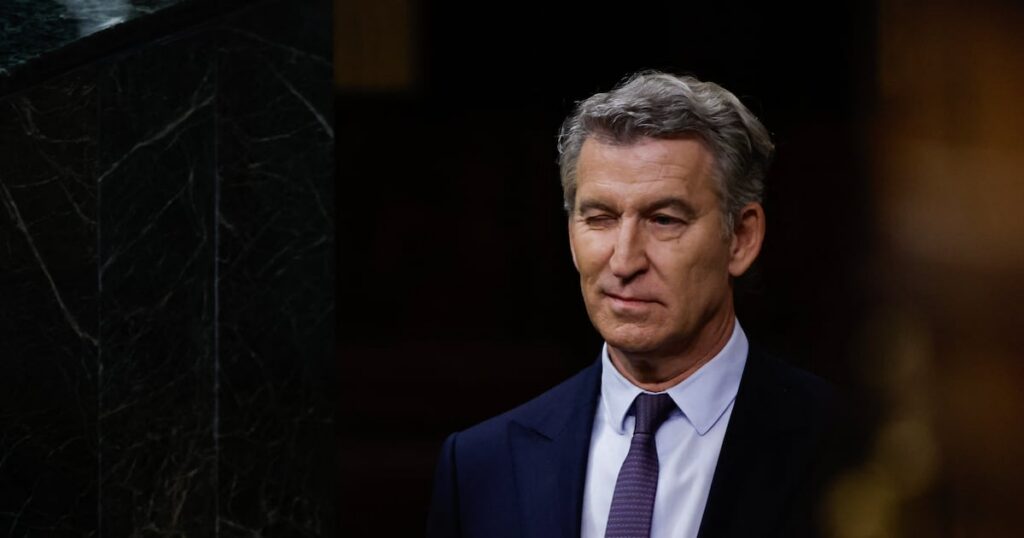
The PP’s most glaring contradiction lies in its stance on Western Sahara. In March 2022, Spain broke from decades of neutrality by endorsing Morocco’s autonomy plan as the “most serious, credible, and realistic” solution. The PP, then led by Alberto Núñez Feijóo, condemned the shift as an unconsulted policy shift, framing it as a breach of Spain’s diplomatic consensus.
Publicly, the PP now claims to uphold international law and UN resolutions without explicitly endorsing Morocco’s proposal. Its internal divisions reveal a party divided—some factions advocate for close ties with Rabat, while others align with separatist positions, a tension epitomized in July 2025 when a Polisario representative attended the PP’s national congress, sparking outrage in Morocco.
In February 2026, Albares accused the PP of a “double discourse”, alleging secret emissaries lobbied Moroccan officials to support positions the party publicly opposed. The accusation underscores a core dilemma: if the PP uses the Sahara dispute to attack the government now, what happens if it wins power? Reversing Spain’s current stance would not merely mean altering a diplomatic statement—it would reopen one of the most volatile issues in Moroccan-Spanish relations.
economic and security stakes overshadow political posturing
Spain’s Morocco policy is no longer a partisan choice but a strategic necessity. Beyond diplomacy, the two nations collaborate on counter-terrorism, migration management, and economic integration. The 2030 World Cup, jointly hosted with Portugal, further binds their futures. A PP government inheriting this relationship would face a stark reality: undoing years of cooperation could destabilize critical sectors.
Feijóo’s party has also faced pressure from Vox, whose embrace of “national priority” policies—granting preference to Spanish nationals in public benefits—has forced the PP to clarify its stance. While some PP leaders insist immigrants in legal status enjoy equal rights, the debate has exposed fissures within the party, with Vox successfully shaping the national discourse on immigration.
the pragmatism trap: can the PP reconcile rhetoric and reality?
The PP’s challenge is clear: its opposition attacks on Morocco clash with the pragmatic realities of governance. Privately, the party may adopt a more conciliatory approach, as suggested by Albares’ accusations of backchannel diplomacy. Yet publicly, it risks alienating voters or voters of the PP who demand a harder line.
The question is no longer whether the PP is “anti-Morocco”—as Albares claims—but how far it would go to weaponize the relationship for electoral gains. If Feijóo secures the Moncloa Palace, he will inherit a Morocco policy far removed from the pre-2022 era. The choice between ideological consistency and strategic necessity will define his government’s early foreign policy moves.
For Morocco, a stable, predictable partner in Madrid remains essential. For Spain, the cost of reversing course—whether on the Sahara, migration, or security—could outweigh any short-term political dividends. The PP’s contradictions may soon face their toughest test yet.